The Bank of England Dropped Wallet Caps. Its £40B Stablecoin Guardrail Moves the Risk to Issuers
The Bank of England replaced proposed wallet holding caps with a £40 billion issuer guardrail. Here is what the shift means for liquidity, treasury concentration, redemption planning and wallet monitoring.
Check a wallet before you act
Run a FreezeRadar scan for issuer-freeze signals, sanctions exposure, counterparty risk, and freezeable asset sensitivity before moving funds.
What the Bank of England decided
On 22 June 2026, the Bank published its policy statement and draft Code of Practice for sterling-denominated systemic stablecoins. The framework is meant for stablecoins used widely enough in payments to become systemically important. It does not cover the predominantly crypto-trading use cases that remain under the Financial Conduct Authority’s remit.
The final direction differs from the Bank’s November 2025 consultation in two important ways.
First, the Bank dropped the temporary per-person and per-business holding limits it had considered. Instead, each systemic stablecoin would begin with a £40 billion issuance guardrail. The Bank says the guardrail will be reviewed regularly and removed once risks to credit provision have been addressed.
Second, an issuer may hold up to 70% of backing assets in short-term UK government debt, up from the previously proposed 60%. The remainder would be held as deposits at the Bank of England, providing immediately available liquidity for redemptions. The policy is therefore trying to balance three goals that pull in different directions: a viable issuer business model, dependable redemption, and protection against a rapid migration of deposits away from commercial banks.
The consultation closes on 22 September 2026. The Bank intends to finalise the Code of Practice by the end of 2026, with regulated systemic stablecoins able to operate in the UK from 2027.
Why replacing wallet caps matters
Individual holding limits look simple in a policy document and become difficult as soon as they meet a permissionless blockchain.
A person can control multiple addresses. A company may operate separate treasury, settlement and customer-funds wallets. Custodians pool assets on behalf of many beneficial owners. Smart contracts can hold tokens for thousands of users without exposing a clean one-wallet-to-one-customer mapping. Enforcing a true person-level cap would therefore require extensive identity linkage and coordination among issuers, intermediaries and wallet providers.
The £40 billion issuer guardrail avoids much of that machinery. Households and businesses can use the token without an artificial wallet balance ceiling, while the Bank still limits the aggregate shift from bank deposits into a systemic stablecoin during the regime’s early years.
But the risk has not disappeared. It has moved from fragmented end-user limits to a single concentration point. A stablecoin approaching its guardrail may need to slow issuance, manage distribution or seek regulatory engagement. Firms that treat the token as cash-equivalent working capital could discover that minting capacity is not infinitely elastic at precisely the moment demand accelerates.
That makes aggregate supply a treasury risk indicator, not merely a market statistic.
The 70/30 reserve structure creates a real liquidity question
Allowing 70% of backing assets in short-term gilts should improve issuer economics. Interest income can fund compliance, operations and resilience. It can also make sterling issuance commercially credible against dollar stablecoins whose reserve portfolios already earn substantial yield.
The trade-off is liquidity transformation. A central-bank deposit is immediately available at par. A gilt is highly liquid, but it must still be sold or financed when redemptions arrive. In ordinary markets, that difference may look small. During a confidence event, the sequence and speed of liquidation matter.
Treasury teams should therefore avoid reducing reserve analysis to “fully backed.” The more useful questions are:
- What proportion of reserves is immediately available for redemption?
- What is the maturity profile of the gilt portfolio?
- How quickly can the issuer convert securities into settlement cash?
- Are redemption operations available outside normal market hours?
- What happens if a large holder exits while gilt markets are volatile?
The Bank’s required central-bank deposit component is designed to create a liquidity buffer. It does not eliminate run dynamics, operational outages or execution risk.
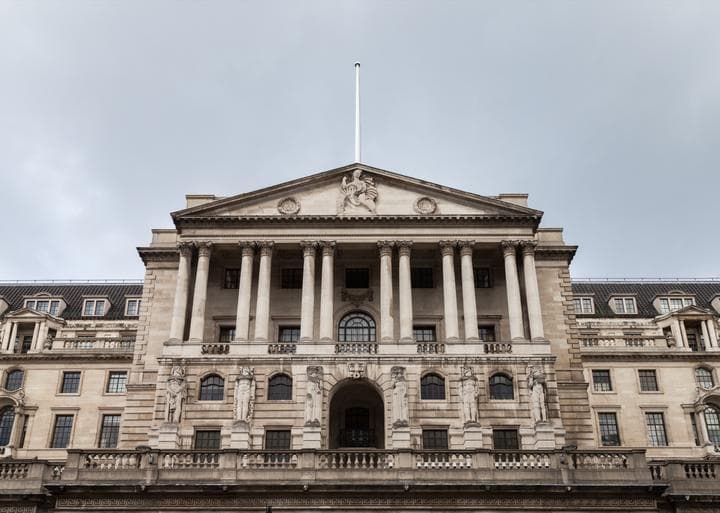
Image: Bank of England, London. Elisa.rolle, via Wikimedia Commons, licensed under CC BY-SA 3.0.
Wallet monitoring still matters under a system-level cap
Dropping personal holding limits does not make address-level monitoring less important. It changes what monitoring must explain.
A stablecoin issuer still needs controls for sanctions, fraud, legal orders and operational security. Intermediaries still need to understand direct and indirect exposure. A token can be prudentially well backed and still create counterparty risk for a recipient if the sending wallet is sanctioned, connected to a mixer or involved in a disputed flow.
This is where the distinction between reserve safety and wallet safety becomes essential. Reserve rules answer whether the issuer should be able to honour the token. Wallet intelligence helps answer whether a particular transfer is acceptable, reviewable or likely to trigger intervention.
FreezeRadar’s guide to stablecoin compliance explains why blacklist authority, redemption terms and ongoing screening belong in the same operating model. Our overview of freezeable assets also covers the issuer-control layer that remains present even when the regulatory debate is focused on reserves and systemic stability.
For a systemic sterling stablecoin, teams should monitor at least four layers:
1. The issuer
Track authorisation status, reserve disclosures, redemption performance, operational incidents and changes to the token’s legal terms. The issuer’s ability to manage the £40 billion guardrail will be part of its risk profile.
2. The token and contracts
Confirm which contracts and chains are officially supported. Review upgrade, pause, blacklist and minting authorities. A regulated label does not remove smart-contract administration risk.
3. The wallet and counterparties
Screen direct sanctions exposure and high-risk labels, then assess meaningful one-hop and two-hop relationships. A clean issuer does not make every circulating token flow clean. FreezeRadar’s wallet monitoring strategy provides a practical model for turning these signals into watchlists and escalation rules.
4. The market and redemption route
Watch supply relative to the issuance guardrail, exchange depth, secondary-market discounts, mint and burn activity, and the availability of direct redemption. Teams holding the token through an exchange or custodian should separately assess that intermediary’s access to the issuer.
The guardrail can change counterparty behaviour before it is reached
The most important effects may appear well below £40 billion.
Market makers will price the reliability of minting and redemption. Exchanges will decide how much sterling liquidity to commit. Payment firms will choose whether to integrate one issuer or several. Corporate treasurers will set concentration limits based on the probability that a coin can absorb demand during a market event.
If one stablecoin grows rapidly toward the guardrail, counterparties may diversify before any formal restriction is applied. That can fragment liquidity across issuers and chains. It can also create new bridge and wrapper risks if users seek synthetic exposure when canonical issuance becomes constrained.
Teams should be especially cautious with tokens that resemble the regulated asset but do not provide the same direct claim on the issuer. A wrapped or bridged version may add a custodian, bridge contract or liquidity pool between the holder and redemption. The headline reserve framework does not automatically protect those additional layers.
This is why asset registries must identify exact contracts, chains and issuers rather than treating every ticker as interchangeable.
What operational teams should do next
The draft rules are not yet the final regime, but they are specific enough to shape preparation.
Treasury teams should define stablecoin concentration limits that sit below the regulatory maximum and incorporate both issuer supply and their own redemption dependence. They should document a route from token to bank money that does not rely on one exchange, one custodian or one period of market liquidity.
Compliance teams should resist the assumption that removal of user caps means lighter wallet controls. The Bank simplified one prudential mechanism; it did not remove sanctions, fraud or issuer-intervention obligations. Screening should be continuous for material counterparties, with alerts for new designations, blacklist events and changes in indirect exposure.
Product teams should distinguish systemic payment use from non-systemic crypto-market use. The Bank and FCA will supervise different parts of the regime, and a product may cross that boundary as it scales. Contract, custody and disclosure decisions should anticipate that transition.
Finally, risk committees should add supply-to-guardrail utilisation to their monitoring dashboards. A simple percentage will not tell the whole story, but it can prompt earlier review of minting access, market depth and alternative settlement rails.
Key takeaway
The Bank of England has chosen an architecture that is easier for users and more concentrated at the issuer level. Removing personal holding caps avoids a difficult identity-and-wallet enforcement problem. The £40 billion issuance guardrail and 70/30 reserve structure replace it with a clearer set of issuer, liquidity and concentration risks.
That is a workable trade, but only if firms monitor the whole stack. A stablecoin can be well regulated, fully backed and widely usable while a specific wallet, contract, bridge or redemption route remains risky. The operational standard should therefore be broader than checking the issuer’s licence: understand the asset, the address, the counterparties and the exit path.
References
- Bank of England: policy statement and draft rules for systemic stablecoins
- Bank of England: Sterling-denominated systemic stablecoins
- Bank of England: November 2025 proposed regulatory regime
- Bank of England: the role of holding limits
- Reuters: Bank of England softens stablecoin rules in final policy draft
- CoinDesk: Bank of England drops strict holding limits and sets an issuer guardrail
Cover image: Bank of England, London. Diego Delso, via Wikimedia Commons, licensed under CC BY-SA 4.0.
Sources (6)
Bank of England launches policy statement and draft rules on regulating systemic stablecoins
Bank of England
Primary announcement published 22 June 2026.
Sterling-denominated systemic stablecoins
Bank of England
Primary policy statement and draft Code of Practice.
Proposed regulatory regime for sterling-denominated systemic stablecoins
Bank of England
November 2025 consultation used to compare the revised framework.
The role of holding limits for sterling-denominated systemic stablecoins and a potential digital pound
Bank of England
Background analysis of the holding-limit mechanism the final policy replaced.
Bank of England softens stablecoin rules in final policy draft
Reuters
Independent reporting published 22 June 2026.
Bank of England drops strict stablecoin holding limits and sets an issuer guardrail
CoinDesk
Market-structure analysis published 22 June 2026.
Related reading
Continue exploring FreezeRadar knowledge content.



On this page
Get posts like this by email
A daily or weekly digest of FreezeRadar freeze activity.
By FreezeRadar Team
Research and product team behind FreezeRadar.