Bessent Says U.S. Iran-Linked Crypto Seizures Reached $1 Billion. The Wallet-Risk Lesson Is Bigger Than the Number
Treasury Secretary Scott Bessent reportedly said U.S. authorities have seized about $1 billion in Iran-linked crypto. For stablecoin and treasury teams, the real story is intervention risk, sanctions proximity, and wallet-level exposure.

Treasury Secretary Scott Bessent reportedly said on May 29, 2026 that U.S. authorities have now seized about $1 billion in cryptocurrency linked to Iran. The number matters, but the more important point is structural: crypto seizures are no longer a side note in sanctions policy. They are becoming a live instrument of state financial pressure, and the target is no longer just an exchange account or a named institution. It is the wallet graph.
That is exactly where FreezeRadar’s lens is useful. A billion-dollar seizure headline is not only a geopolitical story. It is a wallet-risk story. It tells treasury teams, exchanges, brokers, OTC desks, DeFi operators, and stablecoin users that sanctions exposure is now being operationalized through blockchain analytics, issuer controls, exchange monitoring, and coordinated government action.
There is one important sourcing caveat. The freshest reports on May 29 cite Bessent saying the cumulative figure has reached about $1 billion. The most recent Treasury press releases before that still used the official phrasing that Economic Fury had led to the freezing of nearly half a billion dollars in regime-linked cryptocurrency. So the cleanest reading is this: the official public paper trail had already documented a major crypto-freeze campaign, and Bessent’s new figure, if reported accurately, signals a sharp escalation in the size of Iran-linked crypto assets under U.S. control or immobilization.
Check a wallet before you act
Run a FreezeRadar scan for issuer-freeze signals, sanctions exposure, counterparty risk, and freezeable asset sensitivity before moving funds.
What Happened
The reported $1 billion figure follows a sequence of U.S. actions under Operation Economic Fury, the Trump administration’s pressure campaign against Iran’s financial networks. Treasury releases in May described a broad effort against Iranian oil sales, shadow banking, maritime extortion, weapons procurement networks, and foreign companies accused of helping Tehran move money.
Crypto has become part of that campaign. On April 23, Tether said it supported a U.S. Government freeze of more than $344 million in USDT across two addresses after receiving information from U.S. authorities about activity tied to unlawful conduct. On April 24, Bessent said Treasury’s Office of Foreign Assets Control was sanctioning multiple wallets tied to Iran, resulting in a freeze of $344 million in cryptocurrency. By late April, Bessent was publicly discussing nearly $500 million in Iranian crypto seizures. Treasury releases on May 8, May 19, and May 27 continued to reference actions that had led to freezing nearly half a billion dollars in regime-linked cryptocurrency.
The May 29 reporting pushes the stated cumulative figure to about $1 billion. If accurate, that means the campaign has roughly doubled from the earlier public tally in about a month.
Why the Number Matters
A billion dollars is large enough to change how the market should think about sanctions enforcement. Crypto is often discussed as if it sits outside financial chokepoints. That framing is now badly dated. The network layer may be decentralized, but many of the assets, bridges, exchanges, stablecoin issuers, brokers, and liquidity venues around it are not.
A seizure campaign can work through several mechanisms:
- Issuer freezes, especially for stablecoins such as USDT and USDC.
- OFAC designations of specific wallets and associated entities.
- Exchange account freezes and compliance holds.
- Law-enforcement seizure of custodial assets or private keys.
- Pressure on counterparties, brokers, and financial institutions that facilitate conversion.
- Secondary sanctions risk for firms that continue to serve designated networks.
That mix matters because a wallet can be technically self-custodied and still become commercially toxic. If a wallet is designated, funded by a designated entity, or close to a sanctioned cluster, counterparties may refuse to receive from it even if the underlying chain still processes transactions.
Stablecoins Are the Center of Gravity
The Iran-linked freezes are especially important because they appear heavily connected to stablecoin rails. Stablecoins are useful to sanctioned actors for the same reasons they are useful to legitimate users: they are dollar-denominated, liquid, fast, and easy to move across borders. But those same properties make them attractive targets for issuer and law-enforcement intervention.
USDT on Tron is a useful example. It has deep liquidity, low fees, and broad informal adoption. It also has issuer-level blacklist functionality. If authorities identify a wallet holding USDT, the issuer can make the token balance non-transferable. The tokens still appear on-chain, but the user cannot move them. That is not a theoretical risk; the April $344 million freeze made it visible at scale.
For treasury teams, this creates a simple rule: stablecoin balances should never be evaluated only by face value. A $10 million USDT balance is not equivalent to $10 million of usable liquidity if the wallet sits near sanctions exposure, a high-risk broker, a frozen counterparty, or an OFAC-designated cluster.
The Wallet-Risk Lesson
The Bessent seizure story is a warning about graph contamination. A wallet does not need to belong to a sanctioned government to become a problem. It can receive from a sanctioned intermediary, interact with a broker later tied to the IRGC, consolidate funds with a flagged exchange account, or touch a stablecoin address that becomes part of a law-enforcement action.
This is where many retail users and even some businesses misunderstand freeze risk. They think the relevant question is, “Am I sanctioned?” A better operational question is, “Can I explain where this balance came from, who sent it, and whether any upstream wallet creates sanctions exposure?”
That distinction matters in practical workflows:
- OTC desks need to screen sending wallets before settlement, not after funds arrive.
- Exchanges need to watch clusters, not only single addresses.
- DeFi teams need to understand indirect exposure through bridges, pools, and stablecoin inflows.
- Treasury teams need source-of-funds records tied to transaction hashes.
- Businesses receiving stablecoins need policies for rejecting or quarantining risky inbound funds.
FreezeRadar’s guide to wallet monitoring strategy covers this operating model in more detail. The short version is that wallet screening is no longer a nice-to-have. It is part of treasury hygiene.
Why This Is Different From a Traditional Bank Freeze
A bank freeze usually happens inside a known account system. The institution can identify the account holder, the jurisdiction, the records, and the customer relationship. Crypto changes that shape. The enforcement surface is distributed across addresses, issuers, exchanges, analytics providers, custodians, bridges, and off-chain counterparties.
That distribution makes enforcement harder in some ways and easier in others. It is harder because funds can move quickly and across borders. It is easier because public blockchain data creates a durable transaction graph. Once an address is identified, historical flows can be mapped, counterparties can be screened, and stablecoin issuers or exchanges can be asked to intervene.
This is why the seizure number is less important than the method. If authorities can move from address identification to issuer freeze to public sanctions designation, then every counterparty connected to that graph has to reassess exposure.
The Iran Angle: Crypto as a Sanctions Workaround
Iran-linked crypto activity has been discussed for years, but 2026 made the issue more concrete. Reporting and official statements have tied Iranian wallets to stablecoins, exchange infrastructure, oil proceeds, shadow banking, and sanctions evasion. Treasury’s May releases also show that the crypto campaign is not separate from broader pressure on oil sales, maritime activity, weapons procurement, and foreign exchange networks.
That is a critical point. The crypto seizure story is not about one wallet. It is about the fusion of on-chain and off-chain financial intelligence. A wallet becomes relevant because it connects to a person, vessel, exchange house, bank, broker, oil payment, procurement network, or sanctioned institution.
This is why users who accept funds from unknown brokers inherit risk they cannot see by looking only at the current transaction. The immediate sender may look clean. The upstream cluster may not.
Operational Implications for Teams
For exchanges and payment processors, the key implication is speed. Once Treasury or OFAC identifies an address cluster, slow response can become a regulatory problem. Sanctions screening needs to update quickly, and compliance teams need a process for freezing, rejecting, or escalating deposits linked to designated networks.
For corporate treasuries, the implication is documentation. If funds arrive from a counterparty later linked to Iran sanctions exposure, the company needs records showing why the payment was received, who sent it, whether screening occurred, and what remediation steps were taken.
For DeFi teams, the implication is indirect exposure. Protocols may not have the same control model as centralized issuers, but frontends, bridges, liquidity providers, and stablecoin components can still be affected by sanctions decisions.
For ordinary stablecoin users, the lesson is counterparty discipline. Do not accept large stablecoin transfers from anonymous brokers, Telegram dealers, unusually discounted OTC sources, or counterparties who refuse to disclose the sending address before settlement.
What to Watch Next
The most important next signal is whether Treasury confirms the $1 billion figure in an official release, hearing, transcript, or sanctions notice. The second signal is whether additional wallet addresses become public through OFAC designations. The third is whether more issuer freezes follow, especially across USDT, USDC, and tokenized assets used in cross-border settlement.
Teams should also watch for changes in exchange behavior. When a seizure campaign grows from hundreds of millions to a billion dollars, exchanges and brokers tend to tighten monitoring around related clusters. That can cause secondary effects: delayed deposits, frozen accounts, rejected withdrawals, enhanced due diligence requests, and stricter review of users who touched risky counterparties without realizing it.
Key Takeaway
The reported $1 billion Iran-linked crypto seizure is not just a headline about government power. It is a signal that wallet-level sanctions enforcement has matured. Public chains are traceable, stablecoins are controllable, exchanges are pressure points, and counterparties can inherit risk from the graph around them.
For FreezeRadar readers, the practical conclusion is clear: do not treat stablecoin balances as clean just because they arrived successfully. Screen the sender, understand the upstream path, preserve source-of-funds evidence, and monitor important wallets continuously. The difference between usable liquidity and frozen exposure is increasingly a question of wallet history.
References
- Bessent Says US Has Seized $1 Billion in Iran-Linked Crypto - Bloomingbit, May 29, 2026.
- US Reaches $1 Billion Seized Iran Crypto to Date: Bessent’s Big Update - BeInCrypto, May 29, 2026.
- Economic Fury Targets Iranian Maritime Extortion - U.S. Department of the Treasury, May 27, 2026.
- Economic Fury Disrupts Networks Supplying Weapons and UAV Components to Iran - U.S. Department of the Treasury, May 8, 2026.
- Tether supports freeze of more than $344 million in USDT in coordination with OFAC and U.S. law enforcement - Tether, April 23, 2026.
- US freezes $344 million in cryptocurrency tied to Iran, Treasury says - Iran International, April 24, 2026.
Image and source notes
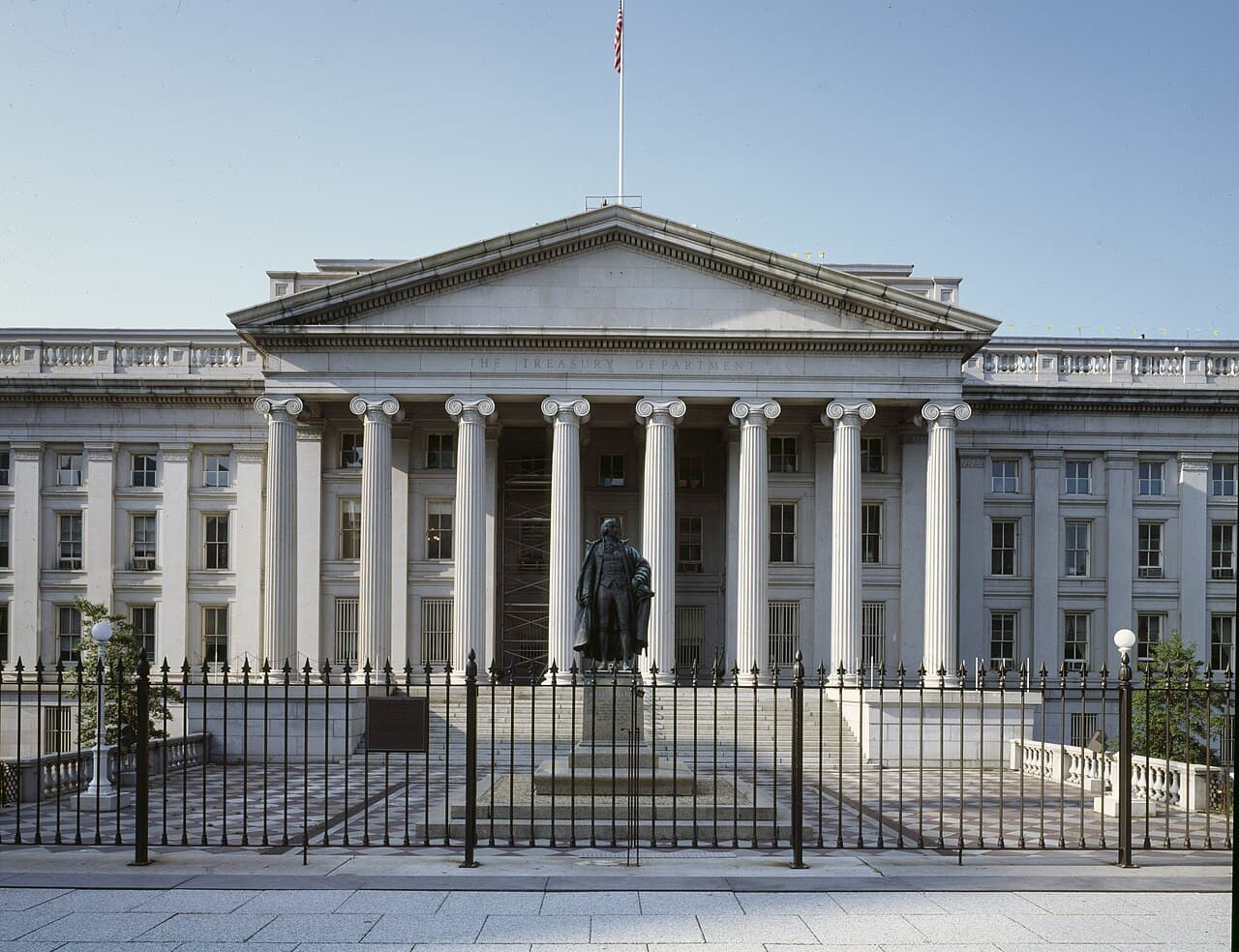
Cover image: Wikimedia Commons file Treasury Building (32648233951).jpg, a U.S. Department of the Treasury work in the public domain. Local file: /content-media/iran-crypto-seizure-treasury-cover.jpg.
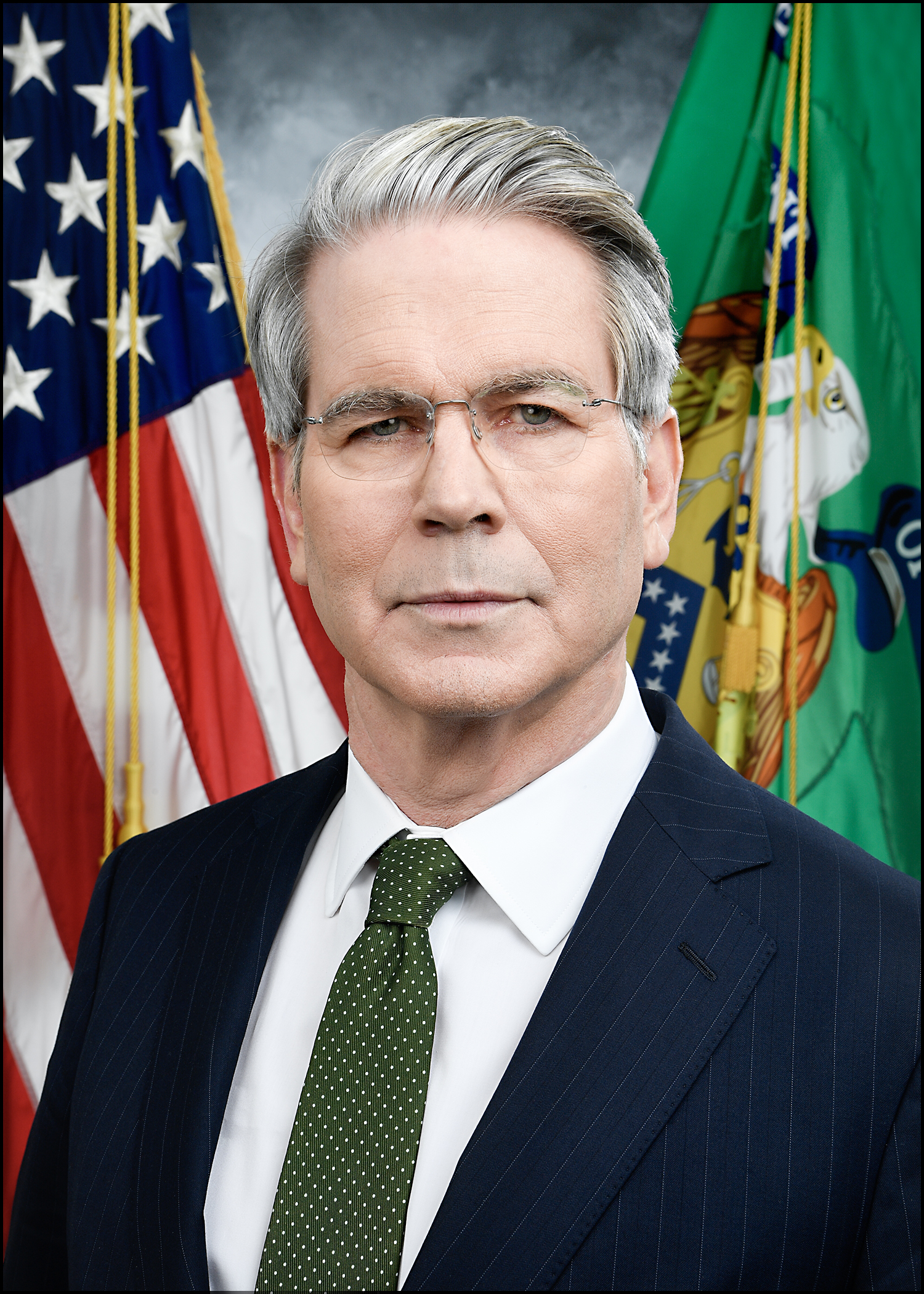
Inline image: Wikimedia Commons file Official portrait of Treasury Secretary Scott Bessent.jpg, U.S. federal government work in the public domain in the United States. Local file: /content-media/iran-crypto-seizure-bessent-inline.jpg.
Sources (6)
Bessent Says US Has Seized $1 Billion in Iran-Linked Crypto
Bloomingbit
Fresh report on Bessent saying U.S. Iran-linked crypto seizures reached about $1 billion.
US Reaches $1 Billion Seized Iran Crypto to Date: Bessent’s Big Update
BeInCrypto
Related May 29 report on the updated seizure figure and remarks.
Economic Fury Targets Iranian Maritime Extortion
U.S. Department of the Treasury
Official May 27 Treasury release describing Economic Fury and nearly half a billion dollars in regime-linked crypto frozen.
Economic Fury Disrupts Networks Supplying Weapons and UAV Components to Iran
U.S. Department of the Treasury
Official May 8 Treasury release connecting Economic Fury to frozen regime-linked cryptocurrency.
Tether supports freeze of more than $344 million in USDT in coordination with OFAC and U.S. law enforcement
Tether
Primary issuer announcement for the April 23 USDT freeze.
US freezes $344 million in cryptocurrency tied to Iran, Treasury says
Iran International
April 24 report quoting Bessent on OFAC wallet sanctions and the $344 million freeze.
Related reading
Continue exploring FreezeRadar knowledge content.


Get posts like this by email
A daily or weekly digest of FreezeRadar freeze activity.
By FreezeRadar Team
Research and product team behind FreezeRadar.