Circle, Drift, and the New Question Around USDC Freeze Risk
The Circle lawsuit over the Drift exploit is not just a crypto legal fight. It is a live test of how stablecoin freeze authority, legal process, and DeFi monitoring collide when stolen funds move across chains.

On April 17, 2026, fresh reporting put a sharper legal frame around one of the most uncomfortable questions in stablecoin operations: when a centralized issuer can technically freeze a token, what happens when it does not? Circle Internet Group, the issuer of USDC, is facing a proposed class action in Massachusetts tied to the April 1 Drift Protocol exploit. The complaint alleges that attackers were able to move roughly $230 million of USDC after a broader exploit estimated around $280 million, including transfers across chains through Circle's Cross-Chain Transfer Protocol, or CCTP.
The case is early. Allegations are not findings. Circle has not been found liable, and the facts around what Circle knew, when it knew it, what requests it received, and whether any lawful order existed will matter enormously. But the operational issue is already clear enough for treasury, compliance, and DeFi risk teams: freezeability is not the same thing as intervention. A token can be technically controllable and still not be frozen in the window when a loss is unfolding.
That distinction sits directly inside FreezeRadar's coverage area. We track freezeable assets and issuer-controlled assets because they carry a different risk shape from permissionless assets. USDC, USDT, PAXG, XAUt, and similar instruments are not merely balances on a chain. They are claims or representations issued by identifiable organizations, with policies, legal duties, contractual terms, blacklist functions, and law-enforcement workflows around them. Those controls can protect counterparties in some cases. They can also create dependency, uncertainty, and timing risk.
Check a wallet before you act
Run a FreezeRadar scan for issuer-freeze signals, sanctions exposure, counterparty risk, and freezeable asset sensitivity before moving funds.
What Happened
According to the Justia docket, McCollum v. Circle Internet Group, Inc. et al was filed in the U.S. District Court for the District of Massachusetts on April 14, 2026. The public reporting wave on April 17 is what brought the case into the wider crypto market conversation. The suit centers on losses connected to the April 1 Drift Protocol exploit, a major Solana DeFi incident that reportedly drained hundreds of millions of dollars in user funds.
The plaintiffs allege that Circle had the technical capability and contractual authority to freeze USDC as stolen funds moved, but failed to intervene during a several-hour window. Investing.com reported on April 17 that the complaint claims attackers moved about $230 million of USDC after the broader Drift exploit and that those funds crossed chains using Circle's CCTP. Other coverage added a second important dimension: Drift's recovery discussions and reported shift toward USDT for settlement after the incident turned the dispute into a market-structure story, not just a litigation headline.
That matters because CCTP is not an obscure bridge. Circle describes it as a permissionless onchain utility for native USDC transfers across supported blockchains, using a burn-and-mint model rather than wrapped liquidity pools. In normal treasury operations, that is a feature: it reduces wrapped-token risk and helps teams rebalance USDC across venues. In a fast-moving exploit, the same speed and native settlement can compress the intervention window.
The Legal Fight Is Really About Timing
The debate around Circle's conduct is often framed too simply: either Circle should freeze stolen funds whenever the chain makes that possible, or Circle should never act without a court order. The operational reality is messier.
Circle's position, as summarized in April 10 coverage of its public response, is that USDC freezes are legal obligations tied to lawful process, not discretionary calls made because social media, investigators, or affected users are shouting loudly enough. That position is not trivial. Issuers operate under property-rights constraints, regulatory expectations, privacy rules, sanctions obligations, and liability risk. Freezing the wrong wallet can cause real harm. Freezing without proper authority can create precedent that makes a stablecoin look arbitrary rather than rule-bound.
But the Drift allegations press on the other side of the ledger. If a stablecoin can move through issuer-linked infrastructure at high speed while a major exploit is live, and if attackers can finish the movement before legal process catches up, the practical protection value of the freeze function becomes uncertain. That is the timing gap. It is not just whether Circle can freeze. It is whether the legal, operational, and monitoring process can produce an authorized freeze before the money has already moved, swapped, or fragmented.
For institutions, that is the question worth taking seriously. A freeze function that arrives after the funds leave the relevant asset or chain may still matter for attribution, recovery, or deterrence, but it may not protect working capital in the moment of crisis.
Why This Matters for USDC Treasury Risk
USDC is widely used because it is liquid, transparent relative to many alternatives, and deeply embedded across exchanges, Solana, Ethereum, Base, Arbitrum, Polygon, and other networks. Many teams treat it as operational cash. They move it between venues, protocols, market makers, custody accounts, and payment rails. That makes any uncertainty around intervention policy a treasury issue.
The Drift case highlights three different treasury risks.
First, there is asset-control dependency. Holding an issuer-controlled token means relying on the issuer's legal and operational process. That process may help if a counterparty is sanctioned or a court order arrives. It may not help if an exploit unfolds faster than the intervention channel.
Second, there is venue dependency. CCTP and similar infrastructure make cross-chain liquidity cleaner, but they also make monitoring harder. A treasury desk that watches only the source-chain address can miss the operational significance of a burn-and-mint movement into another chain. Cross-chain activity should be treated as a state change, not as a minor transfer detail.
Third, there is policy uncertainty. If the market starts to believe that USDC intervention is slower or more constrained than USDT intervention in exploit scenarios, protocols may adjust collateral, settlement, and recovery assumptions. The reported Drift move toward USDT after the exploit is a signal that issuer behavior can become part of protocol design and liquidity selection.
None of this means one stablecoin is universally safer than another. It means treasury teams should stop treating freezeability as a binary comfort blanket.
The Monitoring Lesson: Watch the Flow, Not Just the Label
A sanctions or wallet-risk program that only asks whether an address is currently blacklisted is underpowered. The Drift/Circle dispute shows why. The operational question during an exploit is not only whether the address is already named by OFAC, already blacklisted by an issuer, or already tagged by an exchange. The question is whether the flow is moving toward a state where intervention, recovery, or reporting becomes materially harder.
For FreezeRadar-style monitoring, that means several signals deserve attention at the same time:
- sudden large USDC outflows from a protocol or treasury-controlled address;
- rapid cross-chain movement through CCTP or other bridge-like infrastructure;
- high-velocity fragmentation across many transactions;
- interaction with counterparties that already carry sanctions, mixer, scam, ransomware, or high-risk exchange labels;
- first-hop and two-hop exposure after the initial transfer;
- issuer blacklist status on the original wallet and on major counterparties;
- whether funds remain in a freezeable asset or have been converted into a less controllable asset.
This is exactly why our guides on DeFi indirect exposure, two-hop exposure analysis, and OFAC screening for crypto teams separate direct matches from surrounding flow context. A clean address at minute one can become operationally risky by minute six if it receives funds from an exploit path, bridges them, fragments them, and routes them through counterparties that reduce recovery options.
What Compliance Teams Should Take From the Lawsuit
The most useful takeaway is not that issuers are good or bad. It is that compliance teams need documented assumptions about issuer intervention.
If a business holds or receives USDC, the team should know how it would escalate a suspected exploit, what evidence it would package, who would contact law enforcement, who would contact the issuer, and what information would be required to support a freeze request. If the answer is informal Slack panic, the organization does not have a freeze-risk process. It has vibes with a ticket number.
Teams should also avoid overstating what wallet screening can promise. Screening can identify sanctions exposure, high-risk counterparties, suspicious flow patterns, and blacklist status. It cannot guarantee that an issuer will freeze funds before an attacker moves them. That limitation should be reflected in treasury policies, counterparty onboarding, incident response plans, and customer-facing risk language.
For DeFi protocols, the lesson is even sharper. If a protocol's main settlement asset is issuer-controlled, the protocol should model intervention latency as part of risk management. That includes incident drills: how quickly can the team detect abnormal flow, produce a coherent evidence packet, identify destination-chain addresses, and escalate through legal channels? If CCTP or another cross-chain rail is part of normal operations, it should also be part of abnormal-flow monitoring.
What Treasury Desks Should Watch Next
There are a few near-term indicators worth tracking.
Watch the litigation path. Early motions may clarify what plaintiffs claim Circle knew during the relevant window, what communications were made, and whether the court treats issuer non-intervention as a plausible duty question or an overreach theory.
Watch Drift's recovery and settlement design. If Drift meaningfully migrates settlement activity toward USDT, that will be a market signal that protocol operators are pricing issuer behavior into stablecoin choice. A single protocol does not define the market, but it can expose how quickly liquidity preferences can shift after a high-profile loss.
Watch issuer policy language. Circle, Tether, Paxos, and tokenized-asset issuers may become more explicit about when they will freeze, when they will not, what legal process they require, and what emergency channels exist. Ambiguity is expensive during incident response.
Watch cross-chain telemetry. The next major exploit will likely not stay politely on one chain. Monitoring needs to follow native assets across bridge, burn-and-mint, exchange deposit, and swap paths. A treasury team that sees only its starting chain is looking at a partial map.
Key Takeaway
The Circle/Drift lawsuit turns a familiar crypto argument into an operational risk question. Freezeable assets can be frozen, but that does not mean they will be frozen quickly, predictably, or in the exact window when victims need intervention. The gap between technical control and lawful action is now part of stablecoin risk.
For teams using USDC or any issuer-controlled asset, the answer is not to panic or to pretend that freeze functions are meaningless. The answer is to monitor flow quality, map issuer dependencies, document escalation paths, and treat cross-chain movement as a first-class risk signal. In a market where dollars move at blockchain speed and legal authority moves at institutional speed, the difference between those clocks is where a lot of future risk will live.
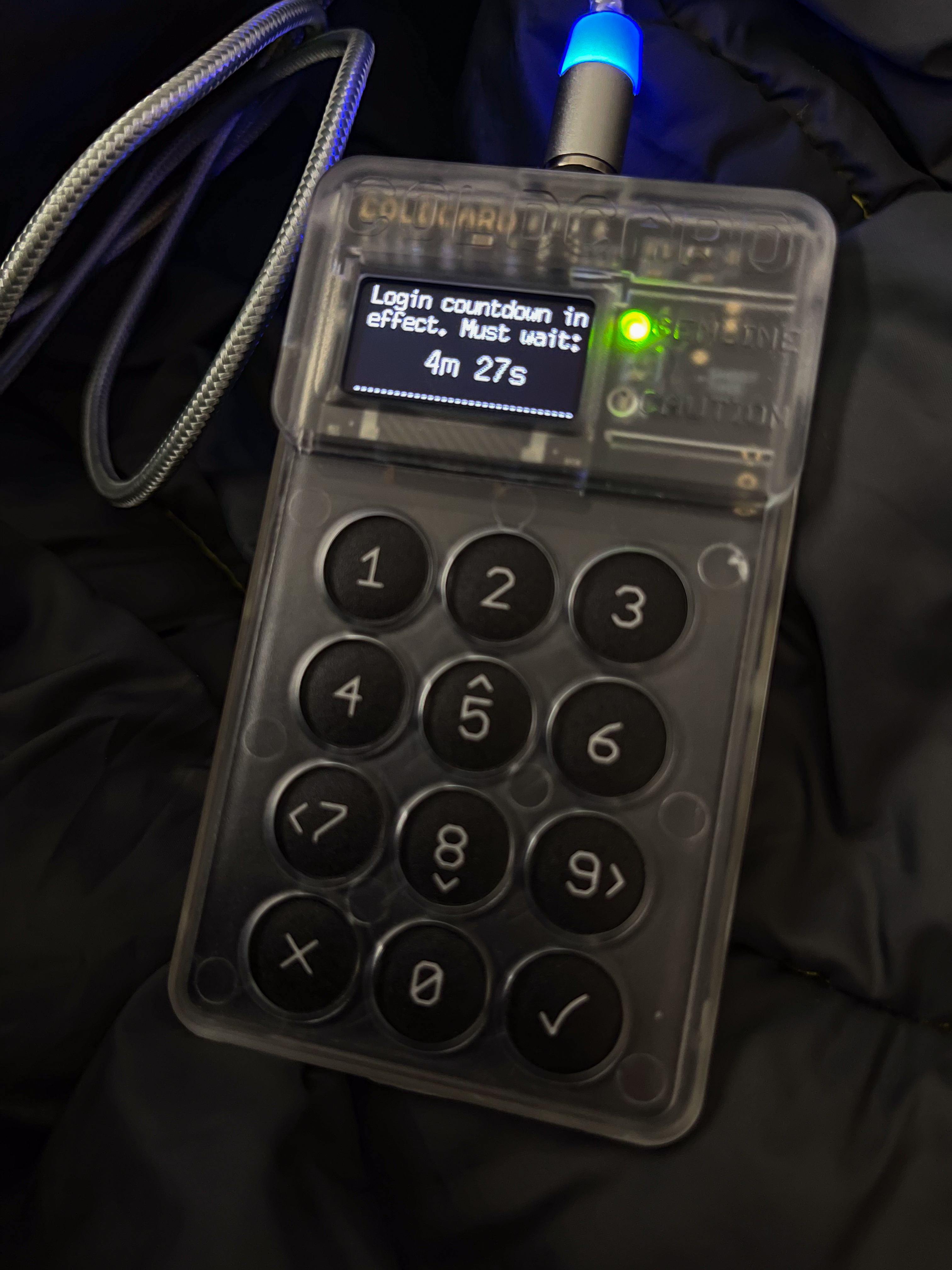
Image credits: cover image is the John Joseph Moakley United States Courthouse in Boston by Beyond My Ken, CC BY-SA 4.0 via Wikimedia Commons. Inline image is a Coldcard hardware wallet photo by Tony Webster, CC BY 2.0 via Wikimedia Commons.
Sources (6)
McCollum v. Circle Internet Group, Inc. et al docket
Justia
Case docket showing the April 14, 2026 filing in the District of Massachusetts.
Circle faces lawsuit over failure to freeze funds in Drift Protocol hack
Investing.com
April 17, 2026 report summarizing the proposed class action and freeze allegations.
Circle USDC Faces Class-action Suit Over its Handling of Drift Protocol Hack
Tekedia
Related April 17 coverage of the lawsuit, CCTP movement, and issuer-policy debate.
Drift sets USDT relaunch after exploit and Tether-backed recovery plan
COIN360
Context on Drift recovery plans, USDT migration, and the broader settlement-layer implications.
Cross-Chain Transfer Protocol
Circle Docs
Circle documentation describing CCTP native USDC transfer mechanics.
2017 Moakley US Courthouse from Boston Harbor
Wikimedia Commons
Cover image source, Beyond My Ken, CC BY-SA 4.0.
Related reading
Continue exploring FreezeRadar knowledge content.


On this page
Get posts like this by email
A daily or weekly digest of FreezeRadar freeze activity.
By FreezeRadar Team
Research and product team behind FreezeRadar.