How to Reduce the Chance Your Crypto Wallet Gets Frozen
A practical FreezeRadar playbook for reducing USDT, USDC, PAXG, and other freezeable-asset wallet risk before funds arrive, including the mistakes that most often trigger review.
Check a wallet before you act
Run a FreezeRadar scan for issuer-freeze signals, sanctions exposure, counterparty risk, and freezeable asset sensitivity before moving funds.
First principle: no wallet is freeze-proof if the asset is freezeable
The most common mistake is treating self-custody as if it removes issuer risk. It does not. With native coins such as BTC or ETH, no centralized issuer can usually freeze a specific balance at the token-contract level. With many stablecoins and tokenized assets, the picture is different. Issuers may operate smart contracts with blacklist, pause, or administrative controls, and those controls can be used in response to sanctions, court orders, law-enforcement requests, fraud incidents, or terms-of-service violations.
That does not make every holder high-risk. It means the asset itself has an intervention layer. A clean wallet can still hold a freezeable asset; the point is to understand the asset model before you build treasury operations around it. If your business depends on USDT, USDC, PAXG, or similar assets, your freeze-risk process should be closer to payment operations than to casual token holding.
A useful starting point is our guide to freezeable assets, which explains how issuer control changes the risk profile of stablecoins and tokenized assets. The operational takeaway is simple: if the asset can be frozen, you need monitoring, documentation, and counterparty hygiene before funds move.
Screen counterparties before receiving funds
Most avoidable freeze risk enters through inbound funds. People often check only their own address and ignore where the money is coming from. That is backward. If a wallet receives from a sanctioned address, a known scam cluster, a ransomware wallet, a mixer withdrawal, or a high-risk exchange, the receiving wallet may inherit indirect exposure even if the owner did nothing wrong.
For individuals, this means being careful with peer-to-peer deals, Telegram brokers, informal OTC desks, and unknown counterparties who offer unusually good rates. For businesses, it means screening deposit sources, customer wallets, treasury counterparties, and payout addresses before settlement. A transfer that looks profitable for five minutes can become expensive if it creates a freeze review, an exchange account lock, or a source-of-funds inquiry.
Practical steps:
- Ask for the sending address before the payment arrives.
- Screen the address for sanctions, blacklist, scam, mixer, and high-risk exchange exposure.
- Avoid accepting stablecoins from counterparties who refuse to identify the sending wallet.
- Treat sudden address changes during a deal as a risk signal.
- Re-check counterparties over time, because labels and sanctions status can change.
FreezeRadar is built around this exact problem: wallet risk is often indirect. A wallet may not be sanctioned itself, but its counterparties and upstream sources can still create review risk. Our wallet monitoring strategy guide goes deeper on how to turn that into a repeatable control.
Keep clean treasury wallets separate from experimental wallets
Another common mistake is using one wallet for everything: business receipts, DeFi experiments, personal transfers, exchange withdrawals, airdrops, bridge testing, NFT mints, and customer payments. That creates a messy graph. If one activity becomes risky, it can contaminate the operational wallet’s history.
Separation is boring, but it works. A treasury wallet should have a narrow purpose. It should receive from known sources, pay known destinations, and avoid unnecessary interactions with contracts or counterparties that have no business reason to touch the wallet. Experimental DeFi activity belongs in a different wallet. Personal payments belong in a different wallet. Customer deposit flows should be separated from long-term reserves whenever possible.
This is not about hiding activity. It is about making activity explainable. When a wallet has a clear function, a compliance team, exchange, issuer, auditor, or internal reviewer can understand it faster. When a wallet has hundreds of unrelated behaviors, every review becomes harder.
Avoid mixers, sanctioned protocols, and suspicious routing
Mixers, privacy pools, and obfuscation services are one of the fastest ways to create review friction, especially when stablecoins are involved. Even when a user thinks the amount is small or the intent is privacy rather than crime, many screening systems treat mixer proximity as a serious risk signal. If an address receives funds that recently passed through a sanctioned mixer or a high-risk obfuscation path, the wallet may face exchange rejection, enhanced due diligence, or issuer review.
The same logic applies to suspicious routing. If funds hop through many fresh wallets, bridges, unknown intermediaries, and exchange deposit addresses for no clear reason, the resulting transaction graph can look like laundering behavior even when the owner is merely trying to be clever. Clean operations should be easy to explain.
Better practice:
- Do not route operational stablecoin funds through mixers.
- Do not accept funds that recently came out of sanctioned or high-risk services.
- Avoid unnecessary hop chains between wallets you control.
- Keep bridge use documented and tied to a clear operational reason.
- Treat unexplained third-party routing as a reason to pause a deal.
The point is not to overreact to every bridge or DeFi interaction. It is to recognize that obfuscation and high-risk proximity are different from normal transaction routing. In freezeable assets, that difference matters.
Document source of funds before anyone asks
Most people start collecting documents only after an account is locked or funds are frozen. That is too late. If you handle meaningful stablecoin balances, you should maintain a source-of-funds record while the transaction is fresh.
Good documentation does not need to be theatrical. It should be clear, dated, and connected to the wallet activity. For individuals, this may include exchange withdrawal records, sale invoices, payroll records, investment exits, or signed OTC communications. For companies, it may include customer invoices, counterparty agreements, KYC records where lawful and appropriate, accounting entries, bank settlement records, and transaction hashes mapped to business events.
The most useful habit is linking every important inbound transfer to a reason. Why did the funds arrive? Who sent them? What service or agreement does the payment relate to? Which address sent it? Was the source screened before receipt? If a reviewer asks those questions later, a prepared answer can shorten the process dramatically.
Documentation does not guarantee that an issuer, exchange, or authority will release funds. But weak documentation can make even legitimate funds look harder to defend.
Use reputable on-ramps, exchanges, and OTC counterparties
Counterparty quality matters. Some freezes begin because funds passed through a broker, OTC desk, or exchange cluster with poor controls. Users often focus on price and speed, then discover that the cheapest source had the dirtiest flow.
For stablecoins, the safer pattern is to use reputable, accountable counterparties with clear business identity, consistent wallet infrastructure, and transaction records. If you use OTC, ask for documentation. If you use P2P, avoid sellers who rotate addresses aggressively, split payments strangely, or refuse basic source questions. If a deal depends on secrecy, speed pressure, or a rate that is much better than the market, it is probably not a clean treasury deal.
Businesses should go further. They should maintain approved counterparty lists, review counterparties periodically, and avoid ad hoc wallets entering treasury flows without screening. The cost of a missed risk signal can be higher than the spread saved on a transaction.
Monitor after receipt as well as before receipt
Risk is dynamic. A counterparty can be clean today and sanctioned next month. A wallet can later be linked to a scam, ransomware campaign, or enforcement action. A transaction that looked ordinary can become relevant after investigators map a larger cluster.
That is why one-time checks are not enough for important wallets. Teams should monitor treasury addresses, major counterparties, and high-value customer flows over time. Watch for direct sanctions matches, issuer blacklist events, known scam links, sudden inbound concentration from one source, and exposure to high-risk services. If a risk signal appears, escalate internally before funds move further through the business.
Monitoring also helps avoid a second mistake: continuing to reuse a wallet after it has become operationally noisy. If an address has accumulated risky inbound flows, it may be better to stop using it for clean treasury operations and preserve the evidence trail rather than keep adding new funds to the same address.
Be careful with Tron USDT and high-volume stablecoin corridors
Tron USDT is widely used because it is cheap and fast. That same popularity makes it a major corridor for legitimate commerce, informal brokers, scams, sanctions exposure, and enforcement attention. The network itself is not the problem. The operational issue is that high-volume stablecoin corridors can mix many different risk profiles, and users often accept funds from unknown sources because fees are low and settlement is quick.
If you receive USDT on Tron, pay extra attention to the sending wallet, the broker, and the transaction pattern. Repeated small incoming payments from unrelated addresses, funds from known high-risk services, or consolidation through broker wallets can all complicate reviews. Our USDT on Tron sanctions-risk guide explains why the corridor deserves specific monitoring rather than generic stablecoin controls.
Mistakes that increase freeze risk
The mistakes below show up again and again in wallet reviews:
- Accepting funds first and asking questions later.
- Using one wallet for treasury, DeFi, personal transfers, and experiments.
- Receiving stablecoins from anonymous OTC brokers with no source records.
- Routing operational funds through mixers, privacy tools, or unnecessary hop chains.
- Ignoring small inbound transfers from suspicious addresses.
- Assuming that a clean exchange account makes every external deposit clean.
- Keeping no transaction notes, invoices, screenshots, or counterparty records.
- Continuing to use a wallet after it receives clearly risky funds.
- Treating USDT, USDC, PAXG, and tokenized assets as if they have the same intervention profile as native coins.
- Trying to solve a freeze by moving related funds quickly through more wallets.
That last mistake deserves emphasis. If a wallet is under review or exposed to a serious risk signal, frantic movement can make the graph worse. Clean remediation usually means preserving records, identifying the exposure, contacting the relevant platform or issuer through proper channels when appropriate, and getting qualified legal or compliance advice for serious cases. It does not mean hiding the trail.
A practical prevention checklist
For individuals:
- Use separate wallets for savings, active trading, DeFi, and incoming P2P payments.
- Screen unknown senders before accepting stablecoins.
- Keep exchange withdrawal records and deal notes.
- Avoid funds from mixers, suspicious brokers, and too-good-to-be-true P2P rates.
- Do not reuse a wallet that has received obviously risky funds for clean long-term holdings.
For businesses and treasury teams:
- Maintain approved treasury wallets with narrow purposes.
- Screen inbound and outbound counterparties before settlement.
- Set thresholds for enhanced review on high-value or high-risk flows.
- Monitor key wallets continuously, beyond onboarding.
- Keep source-of-funds evidence mapped to transaction hashes.
- Separate customer deposits, operating balances, reserves, and experimental activity.
- Define escalation steps for sanctions, issuer blacklist, scam, ransomware, and mixer exposure.
For DeFi users:
- Keep DeFi experimentation away from stablecoin treasury wallets.
- Understand that indirect exposure can come through liquidity pools, bridges, and counterparties.
- Avoid interacting with contracts or pools that have known sanctions or exploit history.
- Document why funds moved through a protocol if the amount is material.
What to watch next
Freeze risk is becoming more operational, not less. Issuers are more responsive to law enforcement, analytics coverage is improving, and exchanges are under pressure to detect indirect exposure. At the same time, stablecoins are becoming more central to payments, payroll, OTC settlement, DeFi collateral, and cross-border treasury workflows. That combination means more legitimate users will need basic wallet hygiene.
The next wave of risk will likely come from indirect exposure rather than obvious direct sanctions matches. Teams should pay attention to upstream provenance, high-risk broker networks, bridge-linked flows, and wallet clusters that look clean at the surface but sit close to sanctioned or illicit activity. This is exactly where monitoring tools matter: they help you see the risk before an issuer, exchange, or investigator forces the issue.
Key takeaway
You cannot make a freezeable asset impossible to freeze. You can make your wallet harder to misunderstand, easier to defend, and less likely to receive avoidable risk in the first place. The strongest prevention strategy is not a trick. It is disciplined wallet separation, counterparty screening, clean documentation, continuous monitoring, and a refusal to accept funds whose story does not make sense.
For a deeper foundation, read FreezeRadar’s guides on stablecoin compliance, freezeable assets, and wallet monitoring strategy. Together, they form the operating model: understand the asset, screen the flow, preserve the evidence, and keep risky activity out of treasury wallets.
References
- OFAC Sanctions Compliance Guidance for the Virtual Currency Industry - OFAC.
- Circle USDC Terms - Circle.
- Paxos Illegal Activity Terms - Paxos.
- Tether supports freeze of more than $344 million in USDT in coordination with OFAC and U.S. law enforcement - Tether.
- Sanctions glossary - Chainalysis.
- Tether holds firm on decision not to freeze Tornado Cash addresses, awaits law enforcement instruction - Tether.
Image and source notes
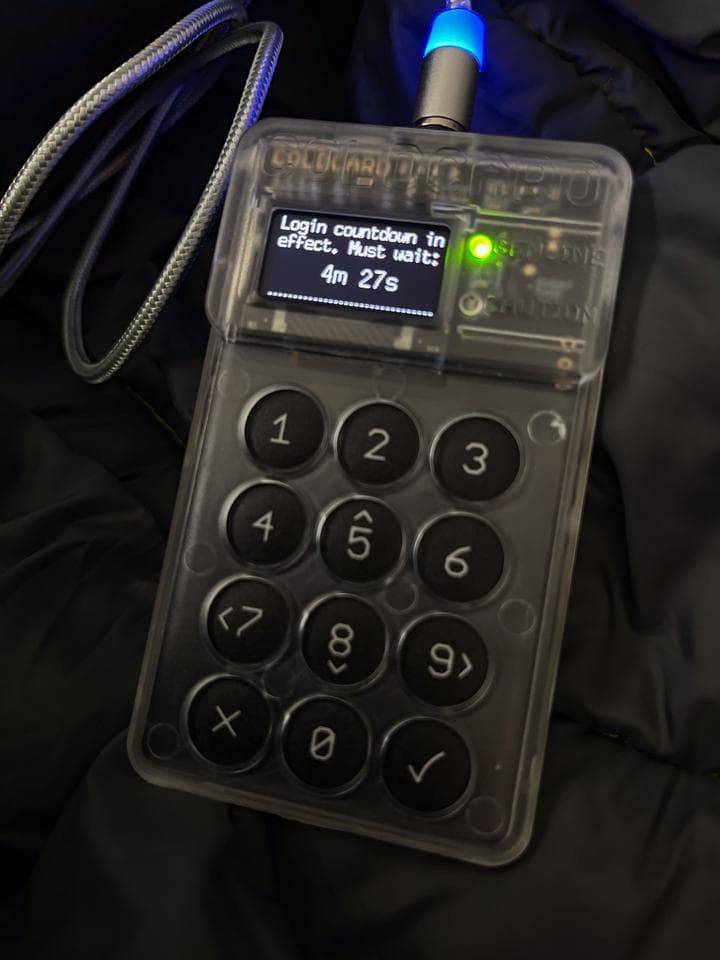
Cover image: Wikimedia Commons file Coldcard Hardware Cryptocurrency Wallet - Crypto.jpg, credited to Tony Webster, Creative Commons Attribution 2.0 Generic license. Local file: /content-media/wallet-freeze-prevention-hardware-wallet-cover.jpg.
Inline image: Wikimedia Commons file Trezor Model T.jpg, credited to FlippyFlink, CC0 1.0 public domain dedication. Local file: /content-media/wallet-freeze-prevention-trezor-inline.jpg.
Sources (6)
OFAC Sanctions Compliance Guidance for the Virtual Currency Industry
OFAC
Primary sanctions compliance guidance for virtual currency businesses.
Circle USDC Terms
Circle
Issuer terms explaining compliance and address-control conditions for USDC.
Paxos Illegal Activity Terms
Paxos
Issuer policy context for tokenized asset intervention and illegal activity controls.
Tether supports freeze of more than $344 million in USDT in coordination with OFAC and U.S. law enforcement
Tether
Issuer example showing law-enforcement and OFAC-linked freezing actions.
Sanctions glossary
Chainalysis
Explainer on sanctions exposure and blockchain analytics context.
Tether holds firm on decision not to freeze Tornado Cash addresses, awaits law enforcement instruction
Tether
Issuer statement illustrating how legal instructions can shape freeze decisions.
Related reading
Continue exploring FreezeRadar knowledge content.

On this page
Get posts like this by email
A daily or weekly digest of FreezeRadar freeze activity.
By FreezeRadar Team
Research and product team behind FreezeRadar.