OFAC's Iraq Oil Sanctions Show Why Wallet Risk Teams Need Commodity-Sanctions Context
Treasury's May 7 action against Iraqi oil-sector actors is a reminder that sanctions exposure does not stay neatly inside banks, vessels, or wallets. Stablecoin and wallet-monitoring teams need to track the real-world networks behind on-chain flows.
Check a wallet before you act
Run a FreezeRadar scan for issuer-freeze signals, sanctions exposure, counterparty risk, and freezeable asset sensitivity before moving funds.
What Treasury Designated
Treasury's May 7 release named Ali Maarij Al-Bahadly, Iraq's Deputy Minister of Oil, and alleged that he helped divert Iraqi oil products for the benefit of the Iranian regime and Iran-backed militias. OFAC also designated senior figures connected to Asa'ib Ahl Al-Haq and Kata'ib Sayyid Al-Shuhada, along with several Iraqi companies operating in the oil and transport sectors.
The fact pattern is important because the case is not built around a single bad wallet or one exchange account. Treasury describes a networked model: access to Iraqi oil products, documentation that allegedly obscured origin, companies operating in shipping or petroleum support, militia-linked economic officials, and connections to previously designated oil smuggling networks.
That is how sanctions risk usually enters treasury operations. It rarely arrives with a label that says "sanctioned proceeds." It arrives as a vendor, a broker, an invoice, a settlement wallet, a commodity-linked payment, or a chain of intermediaries that looked normal until the public designation caught up with the network.
Why This Matters for Stablecoin and Wallet Monitoring
Stablecoins are attractive in this context for the same reason they are useful in legitimate treasury workflows: they settle quickly, preserve dollar-like accounting, and move across borders without the friction of correspondent banking. Those properties do not make stablecoins illicit. They do make stablecoins relevant when sanctioned actors need settlement paths around traditional controls.
The operational risk is not limited to direct sanctions matches. A wallet may have no direct SDN hit today and still become risky tomorrow because a connected company, broker, beneficial owner, vessel operator, or militia-linked business is designated. If the wallet receives issuer-controlled assets, that risk can translate into freezes, exchange holds, enhanced due diligence, delayed redemption, or loss of banking confidence.
That is the FreezeRadar theme: sanctions exposure and freezeability risk are connected. A stablecoin balance is more than an on-chain number. It is a claim inside an issuer-controlled system, subject to blacklists, law-enforcement requests, and compliance escalation. For the operating model behind that distinction, see our guide to stablecoin compliance.
The May 7 action reinforces three practical points.
First, monitoring must be event-driven. New OFAC designations should trigger review of existing customers, saved wallets, recent inbound transfers, counterparty aliases, and address-book entries. Waiting for periodic onboarding refreshes is too slow.
Second, counterparties need context. A wallet connected to a commodity broker, regional OTC desk, or payment intermediary should be evaluated differently after Treasury names a related network. The risk is not simply "Iran" or "Iraq." It is whether the observed transaction pattern is plausibly connected to the named sanctions-evasion channel.
Third, teams need evidence discipline. A designation is no warrant to treat every adjacent wallet as blocked. But it does justify stronger review where names, aliases, websites, business registrations, payment references, shipping documentation, or wallet flows overlap with the designated network.
The Digital-Asset Signal Inside a Commodity Case
Treasury's release says the Economic Fury campaign has disrupted oil revenue, targeted shadow banking networks, and taken actions that led to the freezing of nearly half a billion dollars in regime-linked cryptocurrency. It also states that Treasury will target both traditional sanctions-evasion schemes and the exploitation of digital assets.
That is the sentence compliance teams should not skip.
It signals that Treasury does not view crypto as a separate enforcement lane. It sees digital assets as one settlement layer inside broader sanctions-evasion architecture. In practice, that means the same case can touch vessels, invoices, front companies, commodity cargoes, OTC brokers, centralized exchanges, stablecoin issuers, and self-custody wallets.
For wallet-intelligence systems, this is a design requirement. Screening should not stop at "is this exact address on the SDN list?" It should support direct sanctions checks, issuer blacklist checks, risky counterparty exposure, funding-source review, and case notes that explain why a wallet was escalated. We cover the control logic in more depth in OFAC screening for crypto teams.
This is also why indirect exposure matters. If a wallet receives stablecoins from an intermediary that repeatedly routes funds through newly designated networks, the receiving wallet may deserve a higher review tier even without a direct OFAC listing. The control should be proportionate, not mechanical: stronger evidence gets stronger action.
What Treasury and Compliance Analyses Are Converging On
Recent legal and blockchain-intelligence analyses point in the same direction. Treasury's April 2026 proposed rule for permitted payment stablecoin issuers would require formal AML/CFT and sanctions programs. Morrison Foerster's May 7 analysis of that proposal highlights customer due diligence, beneficial-ownership collection for legal-entity customers, risk assessments, and sanctions compliance modeled on OFAC's framework.
Chainalysis and TRM Labs have also described a larger shift: state-linked sanctions evasion is no longer a peripheral crypto problem. Their 2026 reports describe stablecoins, exchange infrastructure, brokers, and regional settlement channels as part of sanctions-evasion systems involving Iran, Russia, and other high-risk networks.
These are not identical sources, and they should not be flattened into one claim. Treasury is making legal designations and policy proposals. Law firms are interpreting regulatory obligations. Blockchain analytics firms are describing transaction patterns and threat models. The useful point is that all three are moving toward the same operational conclusion: wallet monitoring needs to understand sanctions context, beyond address syntax.
Image credit: U.S. Department of the Treasury public-domain photograph, via Wikimedia Commons.
Operational Checklist for Treasury and Compliance Teams
The May 7 designations should prompt a focused review, not a panic response.
Start with your watchlists. Add the newly designated individuals and entities, including aliases and linked companies, to screening workflows. Where your tooling supports it, preserve the source date, authority, and OFAC program tags. That makes later case review easier. For practical alert design, the relevant companion piece is our wallet monitoring strategy.
Review recent stablecoin inflows from commodity-linked counterparties. Focus on higher-risk corridors, brokers, and OTC settlement paths rather than trying to infer intent from geography alone. The goal is to find meaningful overlap with the designated network, not to over-block legitimate regional activity.
Check business metadata. Company names, websites, registration numbers, vessel references, port references, and payment memo data can matter as much as wallet addresses. Sanctions evasion often hides behind documentation, so monitoring systems should not treat on-chain data as the only evidence source.
Separate direct hits from indirect risk. A direct SDN match or issuer blacklist signal should trigger hard escalation. A one-hop or two-hop connection should trigger review calibrated to value, frequency, recency, and counterparty type.
Document every decision. If you clear an alert, explain why. If you restrict a wallet, capture the evidence. If you ask for source-of-funds documentation, tie the request to a specific risk signal. That discipline protects both the business and legitimate users.
What to Watch Next
The next signal will not necessarily be another oil-sector designation. It may be an OFAC update naming a payment intermediary, a regional exchange, a broker, a vessel operator, a corporate service provider, or a crypto address tied to the same sanctions-evasion economy.
Stablecoin issuers and exchanges are also part of the watch surface. If additional freezes or blacklist actions follow, they may reveal which rails were used for settlement and how quickly issuer controls are being applied after public designations.
Teams should also watch for regulatory follow-through on stablecoin issuer obligations. The proposed AML and sanctions framework for payment stablecoin issuers points toward more formal expectations around sanctions programs, risk assessment, and monitoring. For businesses that receive stablecoins, that means issuers and banking partners may ask sharper questions about wallet provenance.
Key Takeaway
Treasury's May 7 Iraq oil action is a reminder that sanctions risk is not confined to the category in the headline. An oil-smuggling network can create wallet risk. A militia-finance case can create stablecoin review exposure. A commodity designation can affect treasury operations if funds move through issuer-controlled digital assets.
For FreezeRadar readers, the practical lesson is simple: treat sanctions news as monitoring input. Update watchlists quickly, screen wallets with context, distinguish direct blocked-property risk from indirect exposure, and pay special attention when stablecoins are involved. Freezeable assets are useful because they can move fast. They are risky for the same reason when the counterparty story changes overnight.
Image Credits
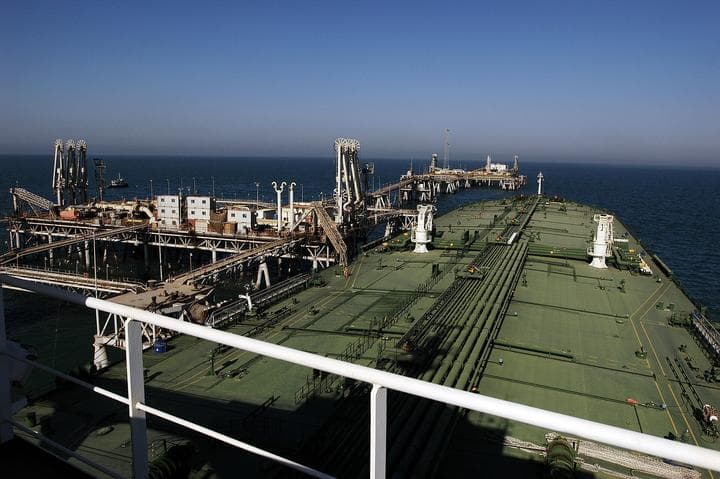
Cover: Wikimedia Commons, U.S. Navy public-domain image, "An oil tanker docked to the Al Basrah Oil Terminal (ABOT) takes on crude oil in the Persian Gulf." https://commons.wikimedia.org/wiki/File:US_Navy_051111-N-8163B-032_An_oil_tanker_docked_to_the_Al_Basrah_Oil_Terminal_(ABOT)_takes_on_crude_oil_in_the_Persian_Gulf.jpg
Inline: Wikimedia Commons, U.S. Department of the Treasury public-domain photograph. https://commons.wikimedia.org/wiki/File:Treasury_Building_(32648233951).jpg
References
- Economic Fury Targets Iraqi Oil Official, Iran-Backed Terrorist Militias in Iraq
- Counter Terrorism and Iran-related Designations; Cuba Designation and Designations Updates
- Treasury Targets Diverse Networks Facilitating Iranian Oil Trade
- Treasury Proposes Rule to Implement the GENIUS Act's Requirements to Counter Illicit Finance
- Treasury Proposes New AML/CFT and Sanctions Obligations for Payment Stablecoin Issuers Under the GENIUS Act
- Crypto Sanctions: 2026 Crypto Crime Report
Sources (6)
Economic Fury Targets Iraqi Oil Official, Iran-Backed Terrorist Militias in Iraq
U.S. Department of the Treasury
Primary source; published May 7, 2026.
Counter Terrorism and Iran-related Designations; Cuba Designation and Designations Updates
OFAC
Official May 7, 2026 sanctions-list update.
Treasury Targets Diverse Networks Facilitating Iranian Oil Trade
U.S. Department of the Treasury
Related Iranian oil-trade sanctions context.
Treasury Proposes Rule to Implement the GENIUS Act's Requirements to Counter Illicit Finance
U.S. Department of the Treasury
Stablecoin issuer AML/CFT and sanctions-policy context.
Treasury Proposes New AML/CFT and Sanctions Obligations for Payment Stablecoin Issuers Under the GENIUS Act
Morrison Foerster
Related legal analysis; published May 7, 2026.
Crypto Sanctions: 2026 Crypto Crime Report
Chainalysis
Related blockchain-intelligence analysis.
Related reading
Continue exploring FreezeRadar knowledge content.


On this page
Get posts like this by email
A daily or weekly digest of FreezeRadar freeze activity.
By FreezeRadar Team
Research and product team behind FreezeRadar.