OFAC Named 134 ISIS-K Crypto Wallets. Tether Froze the TRON Side, but the Risk Did Not End There
OFAC's July 1 ISIS-K update turned 134 crypto addresses into direct sanctions identifiers. The operational lesson is the split between freezeable USDT on TRON and harder-to-control rails.
Check a wallet before you act
Run a FreezeRadar scan for issuer-freeze signals, sanctions exposure, counterparty risk, and freezeable asset sensitivity before moving funds.
What OFAC Did on July 1
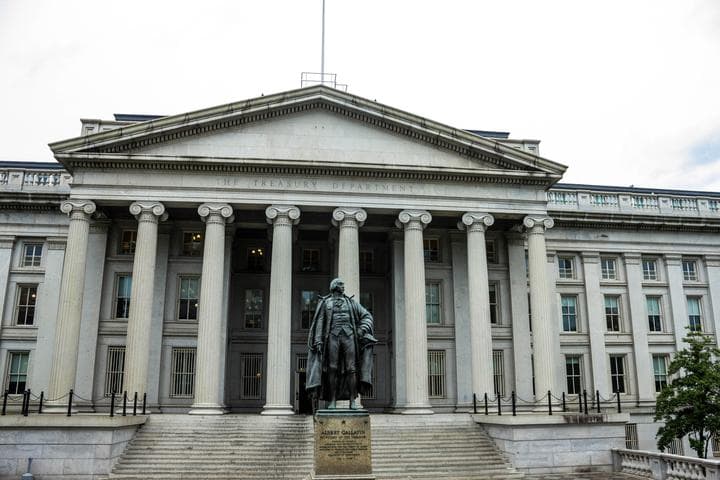
The primary source is OFAC's own July 1, 2026 Recent Actions notice. The page updated the ISIL Khorasan entry, also known as ISIS-K, and added digital currency addresses to the SDN record. The update lists three XMR addresses and a long sequence of TRX addresses under the same designated entity, which carries Foreign Terrorist Organization and Specially Designated Global Terrorist markers.
This matters because the addresses are not merely adjacent to a sanctioned actor. They are listed as identifiers for a sanctioned actor. That distinction is operationally decisive. A wallet with indirect exposure to a risky counterparty may require context, risk weighting, lookback windows, and policy judgment. A wallet on the SDN list requires a different response: block, reject, report, escalate, and prevent further service depending on jurisdiction and role.
Chainalysis summarized the update as 134 cryptocurrency wallet addresses: 131 on TRON and three on Monero. It also said the TRON addresses had received more than $1.4 million and sent more than $880,000 since 2023. Those figures are not massive compared with exchange hacks or bridge exploits, but terrorist financing rarely behaves like a single high-value exploit. The pattern is usually smaller flows, repeated addresses, donation infrastructure, exchange touchpoints, informal brokers, and a long operational tail.
That is why this action is more useful as a monitoring case study than as a seizure headline. It shows how public sanctions identifiers, blockchain analytics, issuer controls, and asset design interact when the same real-world target touches different crypto rails.
The Freeze Happened Where the Asset Allowed It
Tether's reported freeze of all 131 TRON addresses is the immediate stablecoin-control event. USDT is not simply a bearer asset moving on a neutral rail. On TRON, as on other supported chains, USDT is a token contract administered by an issuer with blacklist authority. When the issuer blacklists a specific address, the token at that address can no longer move through the normal transfer path.
For wallet-risk teams, that creates a very specific operational model:
- the sanctions list tells teams which addresses are directly attributed;
- the issuer blacklist tells teams where token movement has been disabled;
- chain history tells teams who funded, received from, or routed near the wallets before the freeze;
- internal customer data tells teams whether the exposure belongs to a user, a counterparty, a deposit source, or a service provider.
Those four layers should not be collapsed into one field called "risk." They answer different questions. A direct OFAC hit is a hard compliance event. A Tether freeze is an issuer action. A two-hop exposure is a monitoring signal. A customer relationship is a business and legal context. The teams that respond well keep those layers separate until policy requires a combined decision.
This is the same theme FreezeRadar has covered in earlier analysis of USDT on TRON sanctions risk and wallet monitoring strategy: low-friction stablecoin rails are operationally useful precisely because they move quickly, cheaply, and globally. The compliance cost is that risky flows can also scale through those rails until an issuer, exchange, analytics provider, or regulator intervenes.
Monero Shows the Limit of Issuer Intervention
The three Monero addresses in the OFAC update are the clean contrast. OFAC can list an XMR address. Screening vendors can ingest the identifier. Exchanges and custodians can block deposits or withdrawals where they can identify exposure. But there is no Tether-style issuer that can freeze the asset at the contract layer, because Monero has no comparable issuer-controlled token contract.
That does not make the designation symbolic. It makes the control problem different. A listed Monero address changes the compliance status of counterparties and services interacting with it, but it does not produce a smart-contract freeze. The response shifts from issuer intervention to surveillance, service denial, reporting, and law-enforcement tracing where possible.
This is one reason stablecoin freeze data should be read carefully. A freeze proves that an issuer acted on a specific rail. It does not prove that all economic activity connected to the actor stopped. If the same network uses a non-freezeable asset, a privacy coin, cash, informal value transfer, or a chain where the relevant issuer has no control, monitoring teams still need to watch the surrounding pattern.
What This Means for Exchanges, Custodians, and Payment Teams
The practical implication is simple: sanctions updates must be treated as event-driven data, not as a weekly vendor refresh.
When OFAC adds digital currency identifiers on July 1, a team that screens deposits on July 2 cannot rely on yesterday's static list. Every active wallet-monitoring system needs a path for near-real-time list ingestion, re-screening of active customer wallets, and re-screening of relevant historical counterparties. That is especially important for stablecoin businesses because the freeze event can create downstream customer support, liquidity, and accounting questions within hours.
Consider a payment company that accepted USDT on TRON from a customer wallet two weeks before the designation. The wallet was not a direct SDN identifier at the time of receipt, but it later appears in an OFAC update. The right response is not a generic panic flag. The team needs to answer specific questions:
- Was the address directly involved in the payment, or was it only a later counterparty?
- Did the company still hold any funds from that customer or wallet?
- Was the exposure before or after the designation timestamp?
- Did any funds move through an exchange, broker, bridge, or swap service that changes attribution confidence?
- Did the issuer freeze affect balances the company expected to receive, redeem, or return?
Those questions determine whether the issue is a direct blocking matter, an enhanced due diligence review, a suspicious activity investigation, a customer communication problem, or only a watchlist update.
Why Treasury Teams Should Care Even If They Never Touch ISIS-K
Most corporate treasury teams will never intentionally interact with a terrorist-financing wallet. That is not the risk. The risk is that stablecoin operations create indirect exposure through customers, suppliers, OTC desks, payroll vendors, settlement partners, liquidity providers, and third-party wallets.
The July 1 update is a reminder that the asset itself can become operationally unavailable if the issuer freezes a wallet in the chain of custody. If a business receives USDT from a counterparty that later becomes listed, the problem is more than reputational. It can become a settlement, redemption, accounting, and legal escalation issue. Funds can be blocked at the issuer level, counterparties can be unable to complete transfers, and compliance teams may need to reconstruct transaction history under time pressure.
Treasury teams should therefore separate three controls:
Direct Screening
Direct screening asks whether the sending wallet, receiving wallet, or treasury-controlled address is on a sanctions list or issuer blacklist. This is the minimum control. It is necessary, but not enough.
Exposure Monitoring
Exposure monitoring asks whether the wallet recently interacted with high-risk, sanctioned, frozen, mixer-linked, scam-linked, or otherwise material counterparties. This is where two-hop exposure analysis becomes useful, especially on TRON where cheap transfers can create dense transaction neighborhoods.
Asset-Control Awareness
Asset-control awareness asks whether the token can be frozen, burned, paused, redeemed only through controlled channels, or otherwise affected by an issuer or administrator. This is where USDT, USDC, PAXG, and similar assets differ from non-issuer-controlled crypto assets.
The ISIS-K action sits at the intersection of all three. It is a direct sanctions update, a network exposure problem, and an issuer-control case.
The Monitoring Lesson: Keep Lists, Freezes, and Flows Separate
One weak response to this story would be to say "Tether froze the wallets, so the issue is handled." That misses the operational point. The freeze handles one asset rail for one set of listed addresses. It does not automatically resolve historical exposure, adjacent counterparties, service touchpoints, or non-freezeable assets.
Another weak response would be to treat every TRON USDT interaction as suspicious. That also fails. TRON is a high-volume stablecoin rail used by legitimate businesses and retail users because it is cheap and fast. The right control is not blanket rejection. It is sharper segmentation:
- direct sanctions identifiers should trigger hard blocking workflows;
- issuer-blacklisted wallets should trigger freeze-aware escalation;
- recently connected wallets should trigger exposure-weighted review;
- old or tiny indirect exposures should be contextualized rather than overtreated;
- active customer wallets should be continuously re-screened after new list updates.
This is where wallet-risk systems should be explainable. A compliance analyst needs to know whether the alert came from OFAC, an issuer blacklist, a curated high-risk label, a two-hop counterparty, a bridge, a DEX, or a behavioral pattern. Without that separation, teams either underreact to real direct hits or overreact to noisy proximity.
What To Watch Next
The immediate next step is list ingestion. Exchanges, custodians, payment processors, and stablecoin desks should confirm that the July 1 OFAC identifiers are in their sanctions databases and that active wallet books have been re-screened. They should also confirm whether their vendors distinguish TRON addresses, XMR addresses, issuer freezes, and historical flow exposure in separate fields.
The second step is counterparty review. Chainalysis noted that the TRON wallets showed exposure to mainstream services and Syria-based crypto exchangers. That is not a reason to label every connected service as illicit. It is a reason to review whether the same routing pattern appears in active customer traffic.
The third step is issuer monitoring. If Tether froze all 131 TRON addresses, teams should treat the issuer-freeze state as a live signal alongside sanctions list state. A wallet can be sanctioned but not freezeable. A wallet can be frozen by an issuer before or after public attribution. Those differences matter for operations.
Finally, treasury teams should review contingency rules for stablecoin receipts. If a wallet used for settlement becomes blocked or if a counterparty's funds are frozen mid-process, who owns the escalation? Legal, compliance, treasury, customer operations, or all of them? The answer should be decided before the next incident.
Key Takeaway
The July 1 OFAC update is a compact case study in modern crypto enforcement. Sanctions identifiers define the compliance obligation. Stablecoin issuer controls determine whether funds can be frozen at the token layer. Chain analytics determines who else needs review. Treasury and operations teams determine whether the response is timely, documented, and proportionate.
For FreezeRadar's purposes, the lesson is not that freezeable assets are unsafe. The lesson is that freezeable assets require a different operating model. USDT on TRON can be neutralized fast when an issuer acts, which is a powerful compliance feature. But the same case also shows why teams cannot outsource the whole problem to issuer intervention. They still need direct screening, indirect exposure analysis, issuer-blacklist monitoring, and clear playbooks for what happens when a wallet becomes a sanctions event overnight.
References
- OFAC, "Counter Narcotics Designations; Counter Terrorism Designations and Designation Update," July 1, 2026.
- Chainalysis, "OFAC Updates ISIS-Khorasan Sanctions with Over 100 Cryptocurrency Wallets," July 1, 2026.
- Scorechain, "OFAC ISIL Khorasan sanctions update: 134 crypto addresses added," July 2026.
- Unchained, "Tether Freezes 131 TRON Wallets Tied to ISIS-K," July 2026.
- Crypto Briefing, "US Treasury sanctions over 100 ISIS-K crypto addresses, blocking $1.4M in funds," July 2, 2026.
- CoinLaw, "Tether Freezes 131 TRON Wallets OFAC Sanctioned Over ISIS-K," July 2026.
Sources (6)
Counter Narcotics Designations; Counter Terrorism Designations and Designation Update
Office of Foreign Assets Control
Primary July 1, 2026 sanctions update listing ISIL Khorasan digital currency identifiers.
OFAC Updates ISIS-Khorasan Sanctions with Over 100 Cryptocurrency Wallets
Chainalysis
Blockchain analytics summary of the 134 addresses, TRON and Monero split, and Tether freeze.
OFAC ISIL Khorasan sanctions update: 134 crypto addresses added
Scorechain
Compliance analysis of direct sanctions attribution and operational screening impact.
Tether Freezes 131 TRON Wallets Tied to ISIS-K
Unchained
Related reporting on the issuer freeze and the TRON versus Monero control difference.
US Treasury sanctions over 100 ISIS-K crypto addresses, blocking $1.4M in funds
Crypto Briefing
Related market-structure coverage of the address update and same-day stablecoin freeze.
Tether Freezes 131 TRON Wallets OFAC Sanctioned Over ISIS-K
CoinLaw
Related explainer on freezeable USDT, Monero limits, and sanctions obligations.
Related reading
Continue exploring FreezeRadar knowledge content.


On this page
Get posts like this by email
A daily or weekly digest of FreezeRadar freeze activity.
By FreezeRadar Team
Research and product team behind FreezeRadar.