Tether Froze $72M in USDT on Tron. The Real Risk Was the Intervention Window
A 120.2 million USDT flow fragmented across exchanges, instant swaps, bridges, and Monero before Tether froze the remaining $72 million. Here is what monitoring teams should learn.

A 120.2 million USDT flow appeared on Tron on June 11, then began breaking apart across exchange deposit addresses, instant exchangers, cross-chain routes, and large Monero orders. By the morning of June 12, Tether had blacklisted a directly related Tron address and immobilized 72,030,295 USDT that had not yet escaped the issuer-controlled rail.
The headline number is large, but the more important signal is the sequence. This was not simply another example of Tether proving that USDT can be frozen. It was a live demonstration of the short and uneven intervention window that opens when suspicious value moves from a transparent, freezeable stablecoin into a fragmented set of venues and less traceable assets.
For treasury, exchange, compliance, and wallet-monitoring teams, that sequence changes the practical question. The issue is no longer only whether an address is blacklisted when it arrives. The issue is whether a team can recognize an accelerating risk pattern before the issuer, an exchange, or an investigator turns the surrounding wallet cluster into an operational problem.
Check a wallet before you act
Run a FreezeRadar scan for issuer-freeze signals, sanctions exposure, counterparty risk, and freezeable asset sensitivity before moving funds.
What happened in the 120.2 million USDT flow
On-chain investigator ZachXBT reported that a Tron address received 120.2 million USDT on June 11, 2026. The address then began distributing funds rapidly. Public reporting based on the trace identified more than 12 million USDT sent to KuCoin deposit addresses, about 8 million routed through instant exchangers, and more than 8 million moved from Tron toward Bitcoin and Ethereum through Near Intents.
The same entity was also linked to large Monero orders during a sharp move in XMR. Reported figures vary slightly by outlet and observation time, but the common sequence is clear: a concentrated stablecoin balance arrived, fragmented across several exit paths, and coincided with enough demand in a thinner privacy-coin market to move the price materially.
Tether then blacklisted a related Tron address holding approximately 72.03 million USDT. The exact origin of the funds and the legal or investigative basis for the intervention had not been publicly established at publication time. That distinction matters. Suspicious transaction structure is evidence for escalation, not proof of a specific crime, sanctions violation, or ownership attribution.
What can be stated with confidence is narrower and operationally important: most of the residual USDT at the blacklisted address became immobile, while value that had already crossed into exchange accounts, instant swaps, bridges, or other assets required a different response from the relevant intermediaries.
The freeze did not stop a transaction. It closed one part of a route
USDT on Tron is an issuer-controlled token. Tether can add an address to its blacklist, preventing the address from transferring the USDT it holds. Private-key control does not override that contract-level restriction.
That power is meaningful, but it is not universal. Tether can stop USDT that remains within its control perimeter. It cannot use the USDT blacklist to reverse Bitcoin, Ethereum, or Monero transfers after conversion. It also cannot by itself freeze balances already credited inside another company’s omnibus system. Those outcomes depend on the receiving exchange, bridge, swap provider, or law-enforcement process.
This makes the June 11-12 flow a useful map of intervention boundaries:
- USDT still at the linked Tron address: directly exposed to Tether’s blacklist authority.
- USDT sent to exchange deposit addresses: potentially restrainable by the exchange, subject to identification speed and internal controls.
- Funds sent to instant exchangers: dependent on the service’s records, screening, and willingness or legal obligation to cooperate.
- Value bridged into other chains or assets: still traceable in parts, but no longer controllable through the original USDT contract.
- Value converted into Monero: much harder to follow after conversion because the transaction graph is intentionally obscured.
The event therefore should not be read as “72 million dollars was saved” or “48 million dollars escaped.” Public information is not sufficient for either conclusion. It should be read as a race between graph expansion and the number of control points capable of acting.
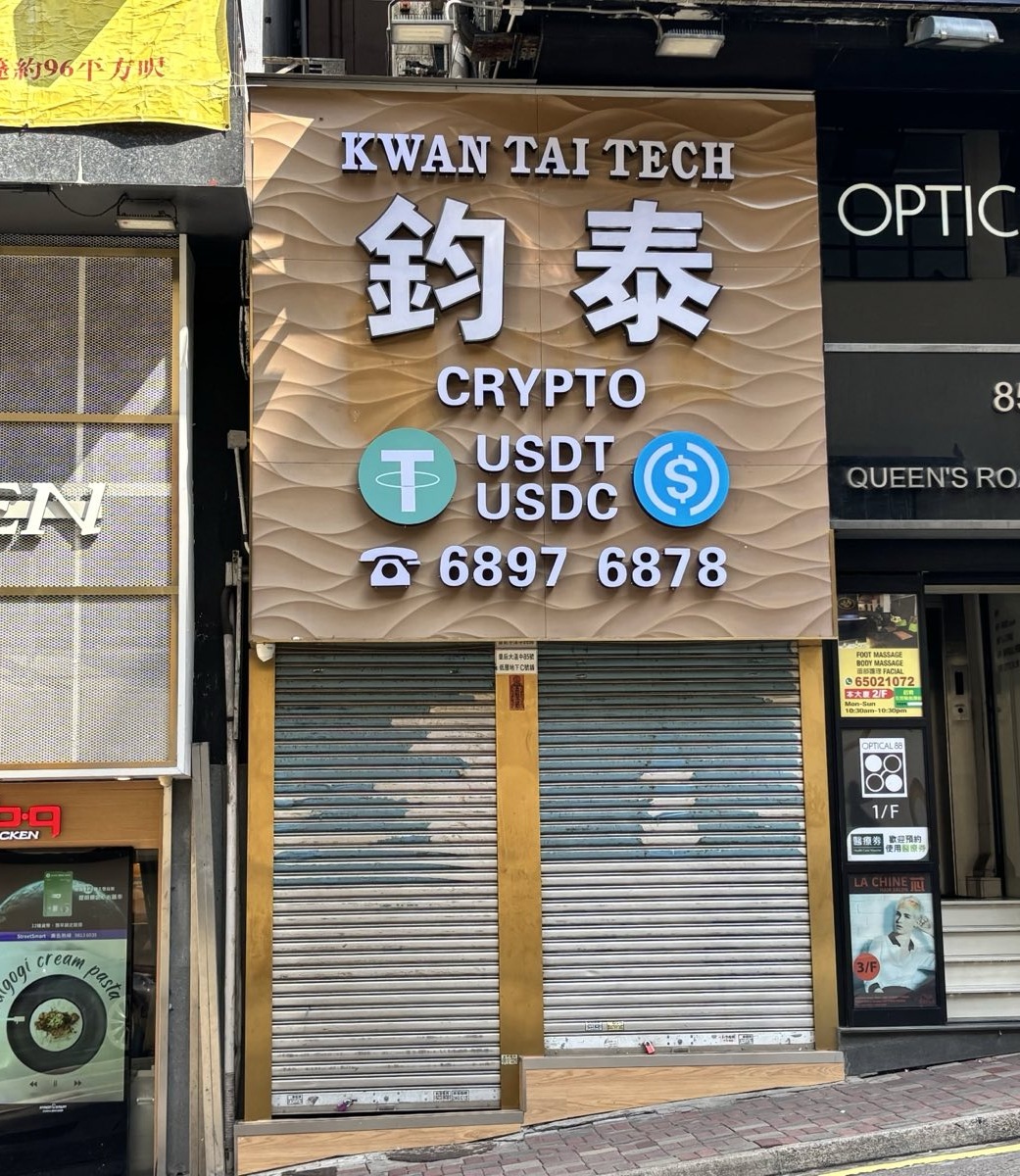
Image: “Over-the-counter crypto exchange” by Arutoria, via Wikimedia Commons, licensed under CC BY-SA 4.0.
Why static wallet screening would have missed the most important part
A pre-transaction screen answers a necessary question: what was known about this wallet at the moment of review? It does not answer what the wallet started doing five minutes later.
The address at the center of a new incident may have little useful history before receiving funds. A clean result can be technically correct and still become stale almost immediately. In this case, the behavior after the large inbound transfer was the strongest early signal: rapid fragmentation, multiple service types, cross-chain movement, and apparent conversion pressure into a privacy asset.
That is why wallet monitoring should be treated as a decision system rather than a periodic compliance report. High-value stablecoin wallets need event-driven rules that react to changes in behavior and counterparties.
Useful triggers include:
- a new wallet receiving an unusually large first or early inflow;
- rapid fan-out to multiple deposit addresses or service categories;
- interaction with instant exchangers shortly after receipt;
- movement through bridges that expands the investigation across chains;
- conversion patterns involving privacy-enhancing assets or services;
- a new issuer blacklist event affecting the wallet or a direct counterparty;
- a sharp increase in transfer velocity that is inconsistent with the wallet’s prior role.
None of these signals should produce an automatic accusation. Together, however, they justify a faster review, tighter withdrawal controls, or a temporary pause while ownership and source-of-funds questions are resolved.
Counterparty risk moved faster than the blacklist
The freeze also illustrates why direct-address screening is too narrow for operational risk.
Before the blacklist event, counterparties receiving funds from the source cluster faced a changing risk profile. An exchange deposit address might have received funds when neither the sending address nor its related wallet was yet blacklisted. Hours later, public tracing and issuer action could make that same deposit part of an urgent investigation.
Teams need to preserve the state of their evidence at decision time while also re-screening the graph as labels change. A defensible record should distinguish:
- what was known when the transaction was accepted;
- what behavior emerged afterward;
- when a blacklist, sanctions label, or credible attribution appeared;
- what action the team took after the risk changed.
This is particularly important for indirect exposure. A wallet does not need to appear on a formal list to become operationally sensitive. A direct connection to a newly frozen address, a deposit path identified by an investigator, or a high-confidence link to a dispersal cluster can affect whether funds should be credited, released, or escalated.
FreezeRadar’s two-hop exposure framework is relevant here, but the lesson is not that every second-degree connection is dangerous. Distance must be combined with direction, timing, asset, value, and attribution confidence. A small historical interaction is not equivalent to receiving millions during an active dispersal event.
Tron remains the high-speed operating environment for USDT risk
The episode also reinforces the specific monitoring challenge of USDT on Tron. Tron’s low fees and deep USDT usage make it efficient for legitimate payments, treasury transfers, remittances, and exchange settlement. The same characteristics allow a large balance to fragment quickly across many destinations.
That creates two mistakes for risk teams to avoid.
The first is treating Tron usage itself as suspicious. It is not. The network carries enormous legitimate stablecoin activity, and broad de-risking would generate poor decisions and unnecessary friction.
The second is applying monitoring designed for slower, less fragmented flows. A daily rescreen may be too slow when funds can move through several service categories in minutes. Tron USDT controls should emphasize velocity, fan-out, recipient type, and live blacklist checks rather than relying only on static address labels.
The network also exposes a data-quality problem. Deposit addresses can be short-lived, services may rotate infrastructure, and attribution sources can disagree. Monitoring systems should retain source and confidence for every label instead of converting uncertain identity hints into hard facts.
The Monero move is a market-structure signal, not proof of motive
Several reports connected the entity’s Monero orders with XMR’s rapid price increase. This is relevant because a large conversion can reveal urgency and because thinner markets can broadcast the effect of concentrated demand.
But price movement alone does not establish laundering, manipulation, or criminal intent. The analytical value comes from combining market behavior with the transaction path. A large new USDT balance, rapid dispersal, exchange deposits, instant swaps, bridging, and substantial privacy-asset orders form a more meaningful pattern than an XMR candle viewed in isolation.
For exchanges and market makers, this means surveillance teams should be able to connect on-chain funding behavior with order-book anomalies. Crypto compliance and market surveillance are often separated organizationally, yet this event shows why their alerts should meet. An unusual price move may be the visible consequence of a wallet-risk event occurring one layer earlier.
What treasury and compliance teams should change now
The practical response is not to stop using USDT or Tron. It is to acknowledge that issuer-controlled settlement has a changing risk state.
Set monitoring intensity by value and velocity
A low-value operating wallet and a newly funded nine-figure wallet should not share the same alert cadence. Large first inflows and rapid fan-out deserve near-real-time review.
Re-screen after settlement, not only before it
Receiving a transaction is not the end of the risk decision. Re-screen material inbound funds after confirmation and again before withdrawal, redemption, or onward treasury movement.
Track issuer actions as first-class events
Blacklist additions and removals should update case priority immediately. Teams handling freezeable assets need to know whether the asset itself remains transferable, not merely whether the wallet appears in a sanctions dataset.
Preserve graph context
Store direct counterparties, material two-hop paths, timestamps, assets, and values. A later blacklist can make earlier context essential for explaining why a decision was reasonable at the time.
Predefine escalation across teams
Compliance, fraud, treasury, and market-surveillance teams should know who can pause a transfer, restrict a withdrawal, contact a venue, or preserve evidence. The intervention window is too short to invent that process during an incident.
Key takeaway: monitor the route, not just the frozen endpoint
The June 12 freeze is a clear example of both the power and the limit of issuer intervention. Tether immobilized roughly 72 million USDT at a related Tron address. At the same time, the broader flow had already touched several venues, crossed asset and chain boundaries, and reportedly affected a privacy-coin market.
The operational lesson is sharper than the familiar statement that stablecoins are centralized. A freezeable asset creates a control point, but effective intervention depends on detecting the route while value is still inside reachable control points.
Teams should watch for graph acceleration: large new funding, rapid fragmentation, service hopping, bridging, privacy conversion, and changing labels. A blacklist is often the most visible event in the case. It may not be the earliest or most useful signal.
References and image credits
- ZachXBT links wallet to XMR surge as Tether freezes $72M USDT — crypto.news, June 12, 2026.
- Tether Freezes $72M in USDT Tied to a $120M Tron Transfer — SpendNode, June 12, 2026.
- Tether Freezes $72M USDT on Tron After ZachXBT Trace — Our Crypto Talk, June 12, 2026.
- ZachXBT Tracks $120M USDT Transfer as Tether Freezes $72M — Coin Edition, June 12, 2026.
- Tether Introduces New Policy to Strengthen Ecosystem Security — Tether, December 9, 2023.
- Cover image: Tether USDT by Spuspita, CC BY-SA 4.0. Inline image: Over-the-counter crypto exchange by Arutoria, CC BY-SA 4.0.
Sources (5)
ZachXBT links wallet to XMR surge as Tether freezes $72M USDT
crypto.news
June 12, 2026 reporting on the traced flow and blacklist event.
Tether Freezes $72M in USDT Tied to a $120M Tron Transfer
SpendNode
June 12, 2026 event summary and contract-control context.
Tether Freezes $72M USDT on Tron After ZachXBT Trace
Our Crypto Talk
June 12, 2026 timeline and address-level details.
ZachXBT Tracks $120M USDT Transfer as Tether Freezes $72M
Coin Edition
June 12, 2026 comparison of venue, bridge, and Monero routes.
Tether Introduces New Policy to Strengthen Ecosystem Security
Tether
Primary issuer statement describing its voluntary secondary-market wallet-freezing policy.
Related reading
Continue exploring FreezeRadar knowledge content.


On this page
Get posts like this by email
A daily or weekly digest of FreezeRadar freeze activity.
By FreezeRadar Team
Research and product team behind FreezeRadar.