Tether, OFAC, and the $344 Million USDT Freeze: What Wallet Monitoring Teams Should Learn Now
Tether's April 23 freeze of more than $344 million in USDT, followed by OFAC's April 24 sanctions update, is a live example of how issuer-controlled stablecoins, sanctions enforcement, and wallet monitoring now intersect.
Tether, OFAC, and the $344 Million USDT Freeze: What Wallet Monitoring Teams Should Learn Now
Tether’s freeze of more than $344 million in USDT on April 23, 2026 was not just another enforcement headline. One day later, on April 24, 2026, the U.S. Department of the Treasury’s Office of Foreign Assets Control, or OFAC, updated its sanctions actions tied to Iran. By April 27, 2026, blockchain-analysis firms were already connecting the frozen Tron addresses to the broader sanctions move and to Iran-linked financial infrastructure.
That sequence matters because it shows, in compressed form, what freezeable-asset risk looks like when a stablecoin issuer, a sanctions authority, and public blockchain rails all converge around the same wallets. For operations, treasury, compliance, and risk teams, this is the real lesson: stablecoins are no longer just settlement instruments. In important cases, they are also enforcement surfaces.
FreezeRadar’s core thesis is that issuer-controlled assets need a different monitoring model from bearer-style crypto assets. This week’s USDT freeze is exactly why. If an issuer can freeze, if OFAC can designate, and if the funds move on a transparent rail like Tron, then wallet risk stops being a simple direct-list problem. It becomes a timing, attribution, and escalation problem.
Check a wallet before you act
Run a FreezeRadar scan for issuer-freeze signals, sanctions exposure, counterparty risk, and freezeable asset sensitivity before moving funds.
What happened in the April 23 to April 24 window
On April 23, 2026, Tether said it had supported the U.S. government in freezing more than $344 million in USDT across two addresses. The company said the wallets had been identified after U.S. authorities shared information tied to unlawful conduct. Tether did not initially frame the announcement around Iran specifically, but it did make clear that the action fit its normal cooperation model for sanctions evasion, criminal networks, and other illicit activity.
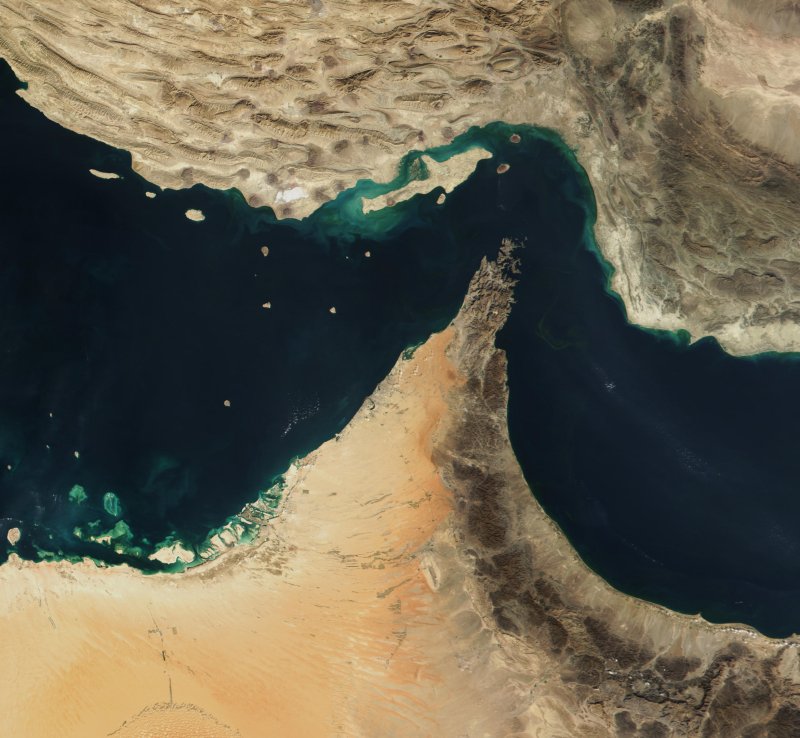
Inline image credit: NASA/GSFC MODIS Land Rapid Response Team via Wikimedia Commons, public domain.
On April 24, 2026, OFAC published an Iran-related sanctions update and linked it to Treasury’s broader "Economic Fury" action against a network supporting Iran’s oil trade and shadow fleet. Secondary reporting on the same day noted that Treasury Secretary Scott Bessent described the action as part of a campaign to restrict Tehran’s ability to move funds. Cointelegraph also reported that two Tron addresses with a combined $344 million were included in the sanctions context.
By April 27, 2026, Chainalysis published an analysis arguing that the two publicly visible frozen Tron addresses matched the balances in Tether’s announcement and were included in OFAC’s updated sanctions picture. That analysis added important market structure context: stablecoin flows were not peripheral to the sanctions story. They were part of the infrastructure around it.
One practical nuance matters here. Market headlines often blur "freeze," "block," and "seize." They are not identical. In this case, the key operational fact is that Tether froze the USDT at the issuer level. That does not mean ordinary market participants should assume a conventional cash seizure had already occurred in the same legal sense. For monitoring teams, precision matters because blocked value can still create reporting, legal, treasury, and counterparty consequences even when popular summaries use looser language.
Why this was bigger than a normal blacklist event
Stablecoin blacklisting is not new. Tether and Circle have both taken restrictive action in prior law-enforcement and sanctions-related cases. What makes this episode more important is the size, the timing, and the geopolitical context.
First, the amount was large enough to be strategically relevant. A freeze above $344 million is not a retail support issue or an isolated fraud clean-up. It is a reminder that stablecoin balances can sit at the center of state-linked, sanctions-sensitive, or nationally significant financial flows.
Second, the freeze and the sanctions update landed within roughly 24 hours of each other. That short gap is important because it reduces the comfort some teams still take from a two-step assumption: that on-chain funds can move first and enforcement will only become relevant much later. In this case, issuer control and sanctions action were functionally adjacent.
Third, the rail was Tron-based USDT. That matters because USDT on TRON already deserves a sharper monitoring model. It is one of crypto’s most operationally efficient dollar rails, which is exactly why it is useful to both legitimate and illegitimate actors. Low-friction settlement does not lower risk by itself. In some settings, it compresses the time available to recognize and escalate risk.
What this says about issuer-controlled stablecoins
The freeze is a live reminder that freezeable assets are products with control surfaces, not just balances on-chain. Tether’s ability to stop movement at the token level is not an abstract governance detail. It is part of the asset’s operating model.
That has two consequences that teams often fail to hold in mind at the same time.
The first is protective. Issuer control can help law enforcement, block stolen or sanctioned funds, and keep a token from functioning as a frictionless escape valve for bad actors.
The second is constraining. If your treasury, customers, or counterparties rely on issuer-controlled assets, then your operating model depends partly on how issuers interpret legal process, risk alerts, and law-enforcement requests. A token can be liquid, widely accepted, and still subject to intervention risk that changes its practical behavior in a crisis.
This is why the "can freeze" versus "will freeze" distinction matters. Teams that treat freezeability as a simple comfort feature miss the operational question. The relevant question is how quickly an issuer can act, under what authority, and after what evidence threshold. The answer affects recovery expectations, settlement assumptions, and counterparty policy.
Why sanctions screening alone is not enough
A weak response to this week’s story would be to conclude that the answer is simply "screen against OFAC." OFAC screening is necessary, but it is not sufficient.
A better response starts with defensible OFAC screening workflows, then moves outward into counterparty intelligence, routing analysis, and issuer-specific controls. The reason is simple: in real stablecoin enforcement cases, operationally important risk often appears before the address is public, before a label becomes obvious, or before a sanctions update is widely reflected across internal systems.
That means wallet monitoring has to look for:
- large-value concentration in a small number of counterparties;
- repeated contact with high-risk services or jurisdictions;
- movement across issuer-controlled rails where freeze sensitivity is high;
- cross-chain or DeFi routing that may not erase exposure but can complicate attribution;
- sudden behavior shifts that suggest a wallet is moving from ordinary settlement into evasive movement.
This is where DeFi indirect exposure becomes relevant even in a story centered on sanctions and stablecoins. If funds move through bridges, aggregators, or fast-moving intermediary wallets, the absence of a direct sanctions hit at one moment does not mean the path is operationally clean. Monitoring teams need to follow the route, not just the latest visible address.
The treasury implication: stablecoins are now intervention-sensitive operating cash
Many firms still treat large-cap stablecoins as near-neutral operational cash. That is increasingly incomplete.
For treasury teams, the April 23 to April 24 sequence is a reminder that issuer-controlled stablecoins carry at least four overlapping risks at once:
- liquidity and transfer utility;
- issuer intervention risk;
- sanctions adjacency risk;
- documentation and escalation risk.
If a business receives USDT from a counterparty with weak provenance, the question is not only whether the funds will arrive. The question is whether those funds remain operationally reliable once reviewed by an issuer, exchange, banking partner, or regulator.
That should change treasury behavior in practical ways. Large receipts on freeze-sensitive rails should be documented better. Wallet roles should be segmented more aggressively. Teams should know which balances are customer receipts, which are treasury reserves, which are investigation balances, and which are high-speed market-making inventories. If a freeze or review hits one bucket, the blast radius should not automatically spread to the whole business.
What wallet monitoring teams should do next
This story does not justify panic, and it does not justify blanket exclusion of Tron or USDT. It does justify a higher operational standard.
Teams should review three things immediately.
1. Escalation timing
How quickly can your team recognize a materially suspicious stablecoin flow, identify the relevant counterparties, and escalate internally? If the answer depends on manual spreadsheet work or one overworked analyst, your response time is already too slow for high-velocity stablecoin incidents.
2. Asset-specific policy
Do your controls distinguish between bearer-style crypto and issuer-controlled assets? They should. USDT, USDC, PAXG, XAUt, and similar assets need policy that reflects blacklist risk, issuer intervention, and legal process exposure.
3. Counterparty and route context
Direct list checks are table stakes. The harder and more valuable question is whether the wallet sits inside a path that would look unacceptable once the full route is reviewed. That includes one-hop exposure, two-hop exposure, sudden routing complexity, and concentration patterns that can signal non-ordinary use.
What to watch from here
There are at least four next-step signals worth watching after this freeze.
First, whether OFAC or Treasury publishes more wallet-specific context around the designated addresses and any linked networks.
Second, whether Tether provides more detail about how its compliance and law-enforcement coordination process worked in this case, especially around timing and identification.
Third, whether exchanges, OTC desks, or treasury operators start adjusting how they treat large inbound Tron USDT balances from hard-to-document counterparties.
Fourth, whether analysts uncover more stablecoin routing through adjacent DeFi or intermediary-wallet infrastructure tied to the same broader network. If they do, the compliance lesson will be even clearer: operationally meaningful exposure often sits around the target wallets, not only on them.
Key takeaway
Tether’s April 23, 2026 freeze of more than $344 million in USDT, followed by OFAC’s April 24, 2026 Iran-related sanctions update, is one of the clearest recent examples of stablecoins functioning as both money rails and enforcement rails.
For wallet monitoring teams, that means the old question "is this address sanctioned right now?" is no longer enough. The better question is whether the address, its counterparties, and its route create a realistic risk of issuer intervention, sanctions escalation, or operational loss of utility.
That is the frame FreezeRadar was built for. In issuer-controlled assets, the real risk is rarely just the wallet in isolation. It is the combination of who controls the asset, who touched the flow, how quickly the money can move, and whether your team can recognize the problem before someone else freezes the balance for you.
Sources
- Tether, "Tether Supports Freeze of More Than $344 Million in USD₮ in Coordination with OFAC and U.S. Law Enforcement," published April 23, 2026. https://tether.io/news/tether-supports-freeze-of-more-than-344-million-in-usdt-in-coordination-with-ofac-and-u-s-law-enforcement/
- OFAC, "Iran-related Designations; Counter Terrorism and Iran-related Designation Update; Issuance of Iran-related General License," published April 24, 2026. https://ofac.treasury.gov/recent-actions/20260424
- U.S. Department of the Treasury, "Economic Fury Targets Global Network Fueling Iran’s Oil Trade and Shadow Fleet," published April 24, 2026. https://home.treasury.gov/news/press-releases/sb0472
- Cointelegraph, "US authorities freeze $344M in crypto linked to Iran," published April 24, 2026. https://cointelegraph.com/news/united-states-freeze-crypto-iran
- Chainalysis, "OFAC Updates Central Bank of Iran Designation Following Tether Seizure," published April 27, 2026. https://www.chainalysis.com/blog/central-bank-of-iran-designation-ofac-update-april-2026/
Image credits
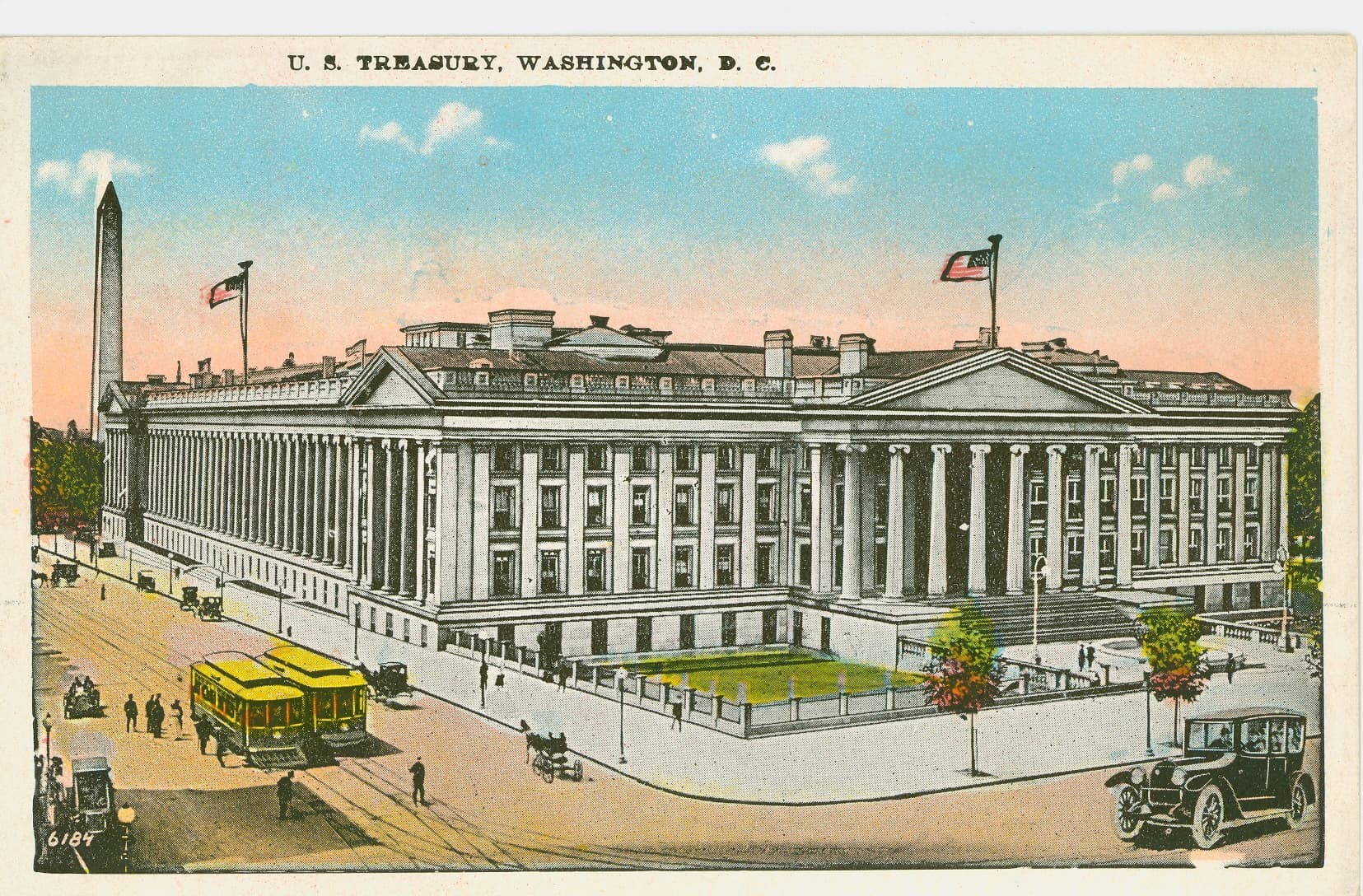
- Cover image: Wikimedia Commons, "File:U.S. Treasury Building.jpg" (Library of Congress / Reynolds), public domain in the United States. https://commons.wikimedia.org/wiki/File:U.S._Treasury_Building.jpg
- Inline image: NASA/GSFC MODIS Land Rapid Response Team via Wikimedia Commons, "File:Straße von Hormuz.jpg," public domain. https://commons.wikimedia.org/wiki/File:Stra%C3%9Fe_von_Hormuz.jpg
Sources (5)
Tether Supports Freeze of More Than $344 Million in USD₮ in Coordination with OFAC and U.S. Law Enforcement
Tether
Primary issuer announcement published April 23, 2026.
Iran-related Designations; Counter Terrorism and Iran-related Designation Update; Issuance of Iran-related General License
OFAC
Primary sanctions action published April 24, 2026.
Economic Fury Targets Global Network Fueling Iran's Oil Trade and Shadow Fleet
U.S. Department of the Treasury
Primary Treasury press release published April 24, 2026.
US authorities freeze $344M in crypto linked to Iran
Cointelegraph
Secondary same-day reporting used for cross-checking public framing.
OFAC Updates Central Bank of Iran Designation Following Tether Seizure
Chainalysis
Follow-up analysis published April 27, 2026.
Related reading
Continue exploring FreezeRadar knowledge content.

On this page
Get posts like this by email
A daily or weekly digest of FreezeRadar freeze activity.
By FreezeRadar Team
Research and product team behind FreezeRadar.