Tether’s $141 Billion Treasury Stack: What the New USDT Reserve Numbers Mean for Wallet and Treasury Risk
Tether’s May 1, 2026 attestation was more than a profit update. It was a live signal about reserve concentration, interest-rate dependence, audit scrutiny, and the operational assumptions teams make when they hold or accept USDT.
Check a wallet before you act
Run a FreezeRadar scan for issuer-freeze signals, sanctions exposure, counterparty risk, and freezeable asset sensitivity before moving funds.
What Tether announced
Tether’s official statement emphasized four points.
First, the company said the reserve buffer rose to a record $8.23 billion. That is the amount by which reported assets exceeded reported liabilities at quarter-end.
Second, Tether said the reserve base remains concentrated in short-duration, high-quality liquid instruments, with around $141 billion of direct and indirect U.S. Treasury-bill exposure. That is the operational center of gravity in the attestation, because it tells the market that Tether is still leaning hard on sovereign short-term paper rather than on credit risk, long-duration duration bets, or more opaque reserve buckets.
Third, Tether highlighted diversification outside Treasuries, including roughly $20 billion in physical gold and $7 billion in Bitcoin. Those positions sit beside the core reserve story, not in place of it.
Fourth, Tether said the audit process formally commenced during the quarter. That line matters because the market has lived for years with the difference between an attestation and a full audit. The company clearly wants readers to understand that the process is moving forward.
The related coverage split quickly into two camps. Some outlets focused on the size and apparent resilience of the reserve base. Others focused on what still remains unresolved: the reserve stack is still being described through an attestation process, and the largest profit engine in the system remains closely tied to short-term interest rates.
Why the Treasury-heavy backing matters more than the profit headline
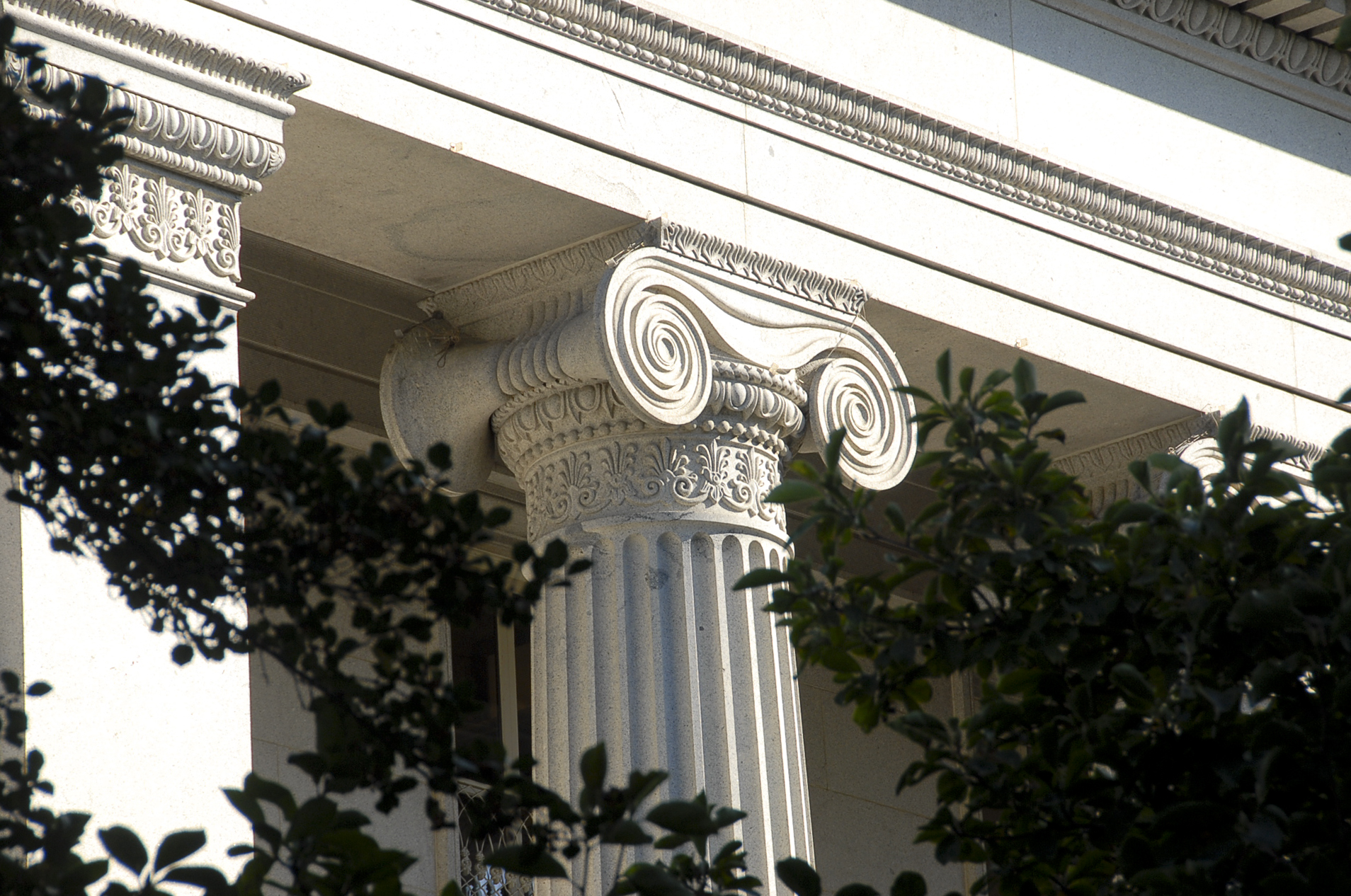
Inline image credit: existing local FreezeRadar Treasury image, source tracked in automation records as Wikimedia Commons, public domain.
The easiest headline from this story is the profit number. The more useful one is the reserve composition.
Tether’s profit stands out, but for operating teams that profit figure is mostly derivative. The real question is what kind of reserve engine is carrying the world’s largest stablecoin and how sensitive that engine is to outside conditions. In this case, the answer is fairly clear: Tether’s reserve model is still deeply tied to short-dated U.S. government paper.
That has three immediate consequences.
1. USDT increasingly behaves like a private wrapper around sovereign liquidity
When an issuer says roughly $141 billion of its reserve exposure sits in Treasury bills, it is telling the market that a very large part of its stability proposition rests on the credit quality and liquidity of the U.S. government’s short-term debt market. That is not inherently bad. In fact, compared with weaker reserve choices, it is one of the more reassuring options available to a stablecoin issuer.
But it means teams should stop thinking about USDT only as an onchain payments tool. At scale, it is also an operational claim on a reserve system whose quality depends on sovereign paper, repo-like liquidity management, and the issuer’s own governance discipline.
2. High rates are doing real economic work inside the stablecoin model
Several related analyses made the same point from different angles: with such a large Treasury allocation, short-term yields are not background noise. They are part of the business model.
That matters for treasury and risk teams because a reserve base that earns strongly in a high-rate environment can look unusually robust precisely when money markets are doing the heavy lifting. If short-term rates compress materially, the economics behind that reserve buffer also change. That does not mean USDT becomes unsafe overnight. It means teams should understand that an issuer’s surplus generation is partly macro-dependent, not purely structural.
3. “Backed by Treasuries” does not eliminate issuer-control risk
This is where the FreezeRadar lens matters most. Strong reserves and issuer control are not opposites. They coexist.
A token can be backed by high-quality liquid assets and still be operationally risky for a particular wallet or workflow if the issuer can freeze, delay, review, or otherwise intervene. That is why reserve quality should never be mistaken for a substitute for wallet monitoring. The right way to use this story is alongside, not instead of, controls like stablecoin-specific operating policy, wallet segmentation, and clearer stablecoin selection criteria.
The unresolved issue is still confidence, beyond collateral
A useful pattern showed up across the related coverage.
The bullish coverage stressed size, profitability, and the fact that Tether’s reserve buffer would itself rank among the larger stablecoins. The more skeptical coverage stressed that readers are still looking at an attestation, not a completed full audit, and that non-Treasury holdings such as gold and Bitcoin can still introduce volatility around the surplus layer.
Both views contain something important.
Reserve strength matters because it affects redemption confidence, liquidity assumptions, and the probability that a stress event becomes a solvency event. But confidence in a stablecoin is never just a matter of raw collateral value. It also depends on what can be verified independently, how quickly reserve composition can change, what legal entities sit where in the chain, and how the issuer behaves under pressure.
That is especially true for teams that do not interact with Tether as direct institutional redemption customers. If your business holds or accepts USDT, your real experience of safety is shaped by more than the attestation itself. It is shaped by venue access, documentation quality, counterparties, chain choice, sanctions exposure, and whether an intervention event would trap funds in an operating wallet at the wrong moment.
What this means for treasury, compliance, and wallet-monitoring teams
The operational lesson is not “Tether looks strong, so relax.” It is “the largest stablecoin rail is getting even more systemically important, so weak controls become more expensive.”
Here are the practical implications.
Treat reserve news as wallet-policy input
If a single issuer is carrying this much Treasury-backed liquidity, then changes in that issuer’s reserve disclosures, audit posture, and governance deserve formal review inside your stablecoin policy. Do not leave attestation headlines in the marketing or PR bucket. They should feed into your approved-asset review process.
Separate asset confidence from wallet confidence
A team may conclude that USDT remains operationally acceptable at the asset level while still tightening rules on where it can be received, how long it can sit in certain wallets, and what documentation is required before it becomes treasury-available cash. Those are different decisions and should stay separate.
Watch concentration risk in your own operations
The more systemically important USDT becomes, the more dangerous it is to let receipt wallets, partner wallets, treasury wallets, and investigation wallets blur together. If an issuer review, exchange hold, or sanctions escalation touches one address, the blast radius should be limited by design. That is the same logic behind wallet watchlist strategy, and it matters more as stablecoin balances scale.
Keep audit status in the monitoring conversation
This story does not argue that Tether’s reserves are weak. It argues that teams should keep distinguishing between what has been attested, what has been audited, and what remains dependent on issuer representations. The moment teams stop making that distinction, they start turning confidence into assumption.
What to watch next
There are four follow-up signals worth monitoring after the May 1 update.
First, whether Tether provides any more concrete timeline or scope detail around the formal audit process.
Second, whether the next quarter changes the reserve mix in a way that materially increases or decreases sensitivity to short-term rates.
Third, whether counterparties, exchanges, and treasury operators become more willing to treat USDT as a primary operating dollar because of this reserve posture, especially after recent freeze and enforcement headlines.
Fourth, whether market participants start paying closer attention to the gap between balance-sheet strength and intervention risk. That gap is where many real-world operational problems still live.
Key takeaway
Tether’s May 1, 2026 attestation matters because it refreshes the risk picture around the most important issuer-controlled dollar token in crypto.
Yes, the numbers are large. Yes, Treasury-heavy reserves are more defensible than many alternative reserve models. Yes, an audit process formally beginning is directionally meaningful.
But for treasury, compliance, and operations teams, the real takeaway is narrower and more useful: USDT is becoming even more embedded in crypto market structure while remaining an issuer-governed asset with reserve, redemption, and intervention dependencies that have to be managed deliberately.
In other words, stronger backing does not make wallet risk disappear. It makes it more important to separate liquidity confidence from operational confidence, and to keep monitoring the issuer, the reserve model, and the wallets at the same time.
Sources
- Tether, “Tether Posts $1.04B Q1 2026 Profit Despite Highly Volatile Global Markets, Reaches All-Time-Highs $8.23B Reserve Buffer, and Maintains U.S. Treasury-Heavy Backing,” published May 1, 2026. https://tether.io/news/tether-posts-1-04b-q1-2026-profit-despite-highly-volatile-global-markets-reaches-all-time-highs-8-23b-reserve-buffer-and-maintains-u-s-treasury-heavy-backing/
- BeInCrypto, “Tether Prints $1 Billion Q1 Profit, But Its $8.23 Billion War Chest Remains Contested,” published May 1, 2026. https://beincrypto.com/tether-q1-2026-profit-buffer/
- Blockonomi, “Tether Posts $1.04B Q1 2026 Profit as Reserve Buffer Hits Record $8.23B High,” published May 1, 2026. https://blockonomi.com/tether-posts-1-04b-q1-2026-profit-as-reserve-buffer-hits-record-8-23b-high/
- Decrypt, “Tether Reports Billion-Dollar Q1 Profit Amid Crypto Slump, And Says Audit Has Begun,” published May 1, 2026. https://decrypt.co/366324/tether-reports-billion-dollar-profit-amid-crypto-slump-audit-begun
- Crowdfund Insider, “Tether Reports $1 Billion+ in Profit For Q1 2026, Shares Reserve Report,” published May 1, 2026. https://www.crowdfundinsider.com/2026/05/276745-tether-reports-1-billion-in-profit-for-q1-2026-shares-reserve-report/
Image notes
- Cover image: Wikimedia Commons, "Treasury Building (32648233951).jpg" by U.S. Department of the Treasury, public domain. https://commons.wikimedia.org/wiki/File:Treasury_Building_(32648233951).jpg
- Inline image: same U.S. Treasury Building image reused locally for CMS readiness because DB/app verification was blocked in this run. Source tracked in prior automation notes as Wikimedia Commons, public domain.
References
- Tether Posts $1.04B Q1 2026 Profit Despite Highly Volatile Global Markets, Reaches All-Time-Highs $8.23B Reserve Buffer, and Maintains U.S. Treasury-Heavy Backing
- Tether Prints $1 Billion Q1 Profit, But Its $8.23 Billion War Chest Remains Contested
- Tether Posts $1.04B Q1 2026 Profit as Reserve Buffer Hits Record $8.23B High
- Tether Reports Billion-Dollar Q1 Profit Amid Crypto Slump - And Says Audit Has Begun
- Tether Reports $1 Billion+ in Profit For Q1 2026, Shares Reserve Report
Sources (5)
Tether Posts $1.04B Q1 2026 Profit Despite Highly Volatile Global Markets, Reaches All-Time-Highs $8.23B Reserve Buffer, and Maintains U.S. Treasury-Heavy Backing
Tether
Primary issuer announcement published May 1, 2026.
Tether Prints $1 Billion Q1 Profit, But Its $8.23 Billion War Chest Remains Contested
BeInCrypto
Same-day secondary analysis used to compare the reserve-strength and audit-confidence framing.
Tether Posts $1.04B Q1 2026 Profit as Reserve Buffer Hits Record $8.23B High
Blockonomi
Same-day recap used to cross-check the reserve composition framing.
Tether Reports Billion-Dollar Q1 Profit Amid Crypto Slump - And Says Audit Has Begun
Decrypt
Same-day reporting emphasizing the audit-status angle.
Tether Reports $1 Billion+ in Profit For Q1 2026, Shares Reserve Report
Crowdfund Insider
Same-day industry coverage used for additional cross-checking.
Related reading
Continue exploring FreezeRadar knowledge content.
On this page
Get posts like this by email
A daily or weekly digest of FreezeRadar freeze activity.
By FreezeRadar Team
Research and product team behind FreezeRadar.