Treasury Wants Stablecoin Issuers to Operate More Like Financial Institutions. Wallet Teams Should Pay Attention.
Treasury’s April 8, 2026 stablecoin proposal is a warning for wallet operations teams: direct screening alone is not enough when issuer-controlled assets meet tighter AML and sanctions expectations.
Treasury Wants Stablecoin Issuers to Operate More Like Financial Institutions. Wallet Teams Should Pay Attention.
The most important stablecoin compliance development this month did not arrive as another enforcement headline or a token-specific freeze notice. It arrived as proposed rulemaking from the U.S. Treasury ecosystem on April 8, 2026, when Treasury, FinCEN, and OFAC outlined how the GENIUS Act should work in practice for permitted payment stablecoin issuers and, critically, for parts of the secondary market that touch those assets.
That matters because the proposal sharpens something crypto operations teams have often treated as a background assumption rather than a day-one control issue: issuer-controlled stablecoins are not just digital dollars with a good user interface. They are financial products with sanctions obligations, AML expectations, reporting duties, and intervention pathways that can affect the usefulness of a wallet long before a direct enforcement action lands on it.
For FreezeRadar readers, the real story is not simply that Washington wants tighter oversight. The story is that the proposal narrows the gap between what stablecoin issuers, distribution partners, and downstream operators say they monitor and what regulators increasingly expect them to monitor in a defensible, documented way. That changes how treasury teams should think about wallet intake, counterparty review, watchlists, and indirect exposure.
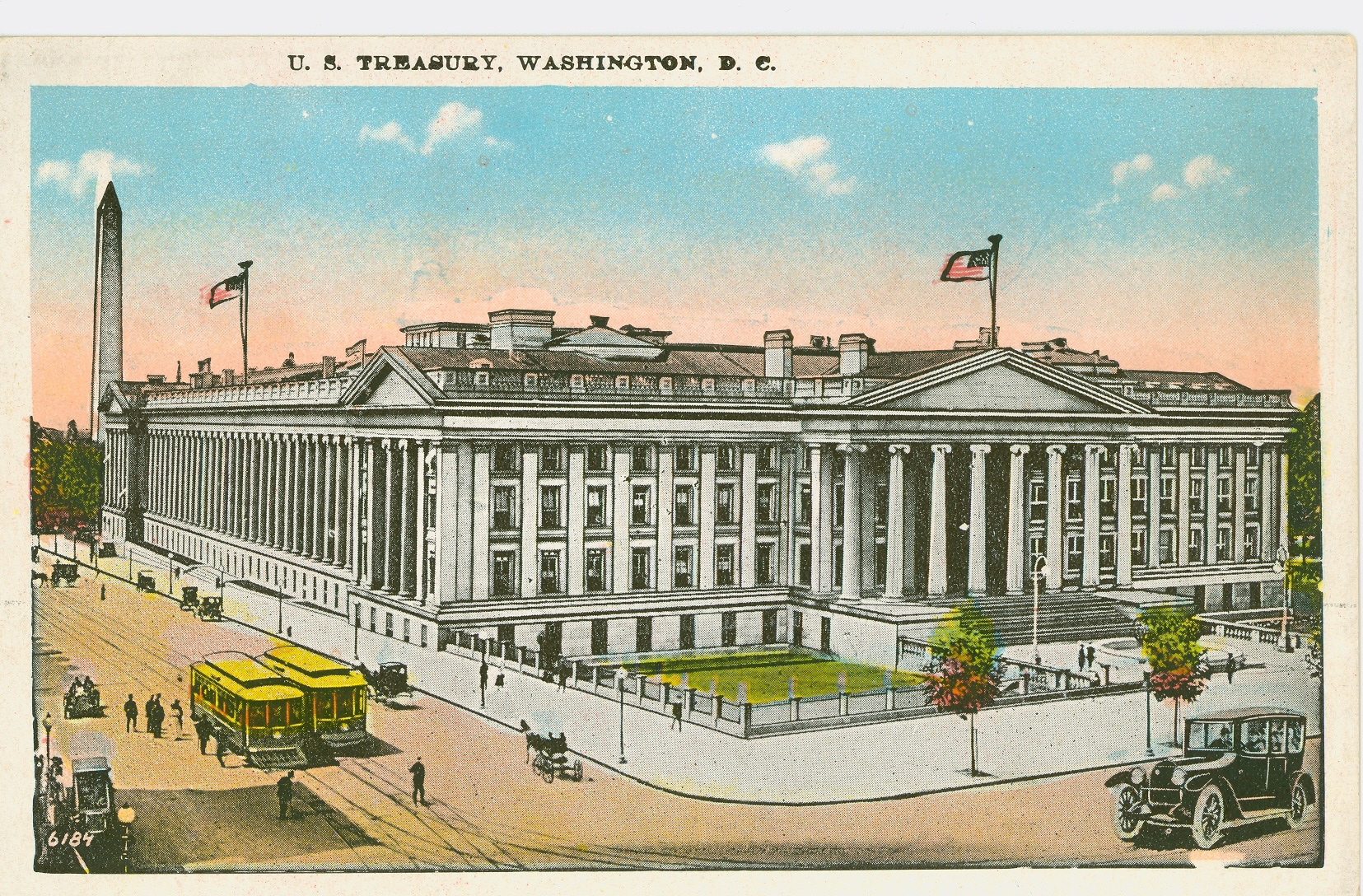
Image note: U.S. Treasury Building photo via Wikimedia Commons, CC0 / public-domain marked media. See references and source notes below.
Check a wallet before you act
Run a FreezeRadar scan for issuer-freeze signals, sanctions exposure, counterparty risk, and freezeable asset sensitivity before moving funds.
What happened on April 8, 2026
Treasury's April 8 package is best understood as an operating blueprint for a maturing stablecoin market. The proposal does not just ask permitted payment stablecoin issuers to run generic compliance programs. It sketches a more bank-like expectation around anti-money-laundering controls, sanctions screening, suspicious activity escalation, customer and intermediary risk handling, and secondary-market obligations where the risk profile warrants it.
The practical message is straightforward: if a stablecoin is designed to function at payments scale, regulators expect the surrounding control environment to function at payments scale too.
That is a meaningful shift for two reasons.
First, it puts more weight on the difference between a purely on-chain transfer and an operationally clean transfer. A wallet can receive a stablecoin successfully at the protocol level and still create immediate compliance questions for the issuer, a redemption partner, an exchange, or an institutional treasury desk.
Second, it reinforces that secondary-market activity is not immune from sanctions logic simply because the transaction happens outside a direct issuer-customer relationship. The closer a market participant is to meaningful flow origination, distribution, settlement, conversion, or redemption risk, the harder it becomes to argue that only direct list screening is enough.
Why this is more than a "stablecoin issuer" story
A lazy reading of the proposal says this is mainly a burden for issuers and regulated intermediaries. The better reading is that it will push expectations outward across the market.
If issuers have to defend stronger AML and sanctions controls, they will lean harder on the entities around them: custodians, exchanges, OTC desks, payment processors, treasury platforms, and counterparties receiving large or recurrent stablecoin flows. That pressure eventually reaches wallet policy.
In operational terms, three things tend to happen when issuer-side expectations rise:
1. Wallet history starts mattering earlier
A counterparty wallet no longer becomes a problem only after it is directly sanctioned, publicly named, or frozen. Its transaction pattern, exposure to higher-risk services, and indirect links to problematic entities start to matter sooner because they influence whether an issuer, exchange, or banking partner views the flow as operationally acceptable.
2. Indirect exposure becomes a business issue, not just an analytics issue
A lot of teams still treat one-hop or two-hop exposure analysis as a "nice to have" reserved for investigations. That is increasingly hard to defend. If the stablecoin perimeter is moving toward more formalized controls, then indirect exposure is no longer academic. It can affect whether funds are held, reviewed, delayed, or escalated.
That is exactly why FreezeRadar has emphasized two-hop exposure analysis and DeFi indirect exposure as operational topics rather than abstract risk research.
3. Treasury segmentation gets more important
A single wallet strategy across customer receipts, partner settlements, exchange transfers, and internal treasury movements becomes harder to justify. The more a stablecoin ecosystem behaves like regulated payments infrastructure, the more wallet purpose should be separated in advance.
The part teams should not underestimate: secondary-market sanctions expectations
The secondary-market angle is where this proposal becomes especially relevant to wallet monitoring.
In crypto, many teams still default to a narrow question: "Is this address directly sanctioned?" That question remains necessary, but it is not sufficient for issuer-controlled assets. Treasury's April 8 move reinforces a broader operational frame: whether a flow is close enough to a sanctions concern, typology, or high-risk network that it should trigger additional review before a team treats the balance as safely usable.
That does not mean every indirect touchpoint should be treated as contamination. It does mean stablecoin users should stop pretending that direct list hits are the only compliance-relevant signal.
The distinction matters most for firms that rely on stablecoins as working capital. If a treasury team receives significant volumes of USDC or USDT, the cost of a bad counterparty decision is not limited to reputational discomfort. It can become a settlement delay, an exchange inquiry, an off-ramp problem, an issuer escalation, or a temporary loss of operational flexibility.
That is the real bridge between rulemaking and wallet risk.
Why this fits FreezeRadar's thesis on freezeable assets
FreezeRadar has taken a simple view from the start: some assets behave less like bearer cash and more like programmable liabilities with real intervention surfaces.
That is what Issuer-Controlled Assets Explained and Stablecoin Compliance 101 were built to show. The April 8 Treasury proposal does not invent that reality. It formalizes it.
For teams holding or receiving issuer-controlled assets, the question is not just whether the token contract allows blacklist or pause behavior. The question is whether the broader market structure around the asset now makes monitoring, escalation, and counterparty selection more consequential.
In that sense, this is not only a legal story. It is a treasury design story.
What operations and compliance teams should do next
The most useful response is not panic and it is not boilerplate policy language. It is tightening the places where wallet-risk decisions become real business decisions.
Re-rank wallets by operational criticality
Start with the wallets whose interruption would hurt the business most: treasury settlement wallets, exchange-facing wallets, redemption-related wallets, and high-volume customer receipt wallets. Those should get the strongest monitoring standards first.
Separate direct screening from usable-funds decisions
A wallet that clears direct sanctions screening may still deserve a temporary hold, enhanced review, or routing restriction if the exposure pattern is poor. Teams should document that difference explicitly rather than improvising it during a live incident.
Treat watchlists as living controls
A good watchlist is not a static folder of "bad addresses." It is an operational queue for counterparties whose risk profile can change. This is where wallet monitoring strategy becomes practical rather than theoretical.
Review DeFi and routing assumptions
If a treasury process depends on the idea that intermediate protocol hops, routers, or aggregators wash away compliance context, the controls need work. Treasury's direction of travel argues the opposite: more context, not less.
Document escalation thresholds before you need them
One of the clearest lessons from stablecoin intervention events is that teams lose time when they have not decided in advance what constitutes a stop, a hold, a manual review, or a monitoring-only alert. The stronger the regulatory perimeter becomes, the more expensive that indecision gets.
What this could change over the next quarter
The immediate impact will not be that every issuer freezes more wallets overnight. The more likely outcome is a gradual tightening of operating norms.
Expect more explicit questions from service providers. Expect more sensitivity around repeated flows from poorly understood counterparties. Expect better-documented screening requirements in institutional relationships. And expect stablecoin operators to spend less time defending why they monitor and more time defending whether their monitoring is actually good enough.
That is a subtle but important change. Once the argument shifts from "Should we monitor this?" to "Why did your system miss this pattern?" the quality of wallet intelligence starts to matter much more.
Key takeaway
Treasury's April 8, 2026 stablecoin proposal is not just a policy signal for issuers. It is a forward indicator for everyone building around issuer-controlled assets.
If your team depends on stablecoins for settlement, treasury movement, customer receipts, or DeFi-adjacent flows, this is the moment to assume that direct sanctions screening alone will look increasingly incomplete. The operational winners will be the teams that tighten wallet segmentation, raise the quality of indirect exposure analysis, and treat stablecoin monitoring as part of treasury infrastructure rather than a compliance afterthought.
References
- U.S. Department of the Treasury, "Treasury Proposes Rule to Implement the GENIUS Act's Requirements to Counter Illicit Finance" (April 8, 2026).
- FinCEN, "Permitted Payment Stablecoin Issuer Anti-Money Laundering Program Rulemaking" (April 8, 2026).
- OFAC, Recent Actions notice on stablecoin sanctions framework implementation (April 8, 2026).
- Covington, "FinCEN and OFAC Propose AML/CFT and Sanctions Framework for Permitted Payment Stablecoin Issuers: Five Things to Know" (April 16, 2026).
- WilmerHale, "Treasury Announces Proposed Rule to Implement the GENIUS Act's Requirements to Counter Illicit Finance" (April 20, 2026).
Source notes
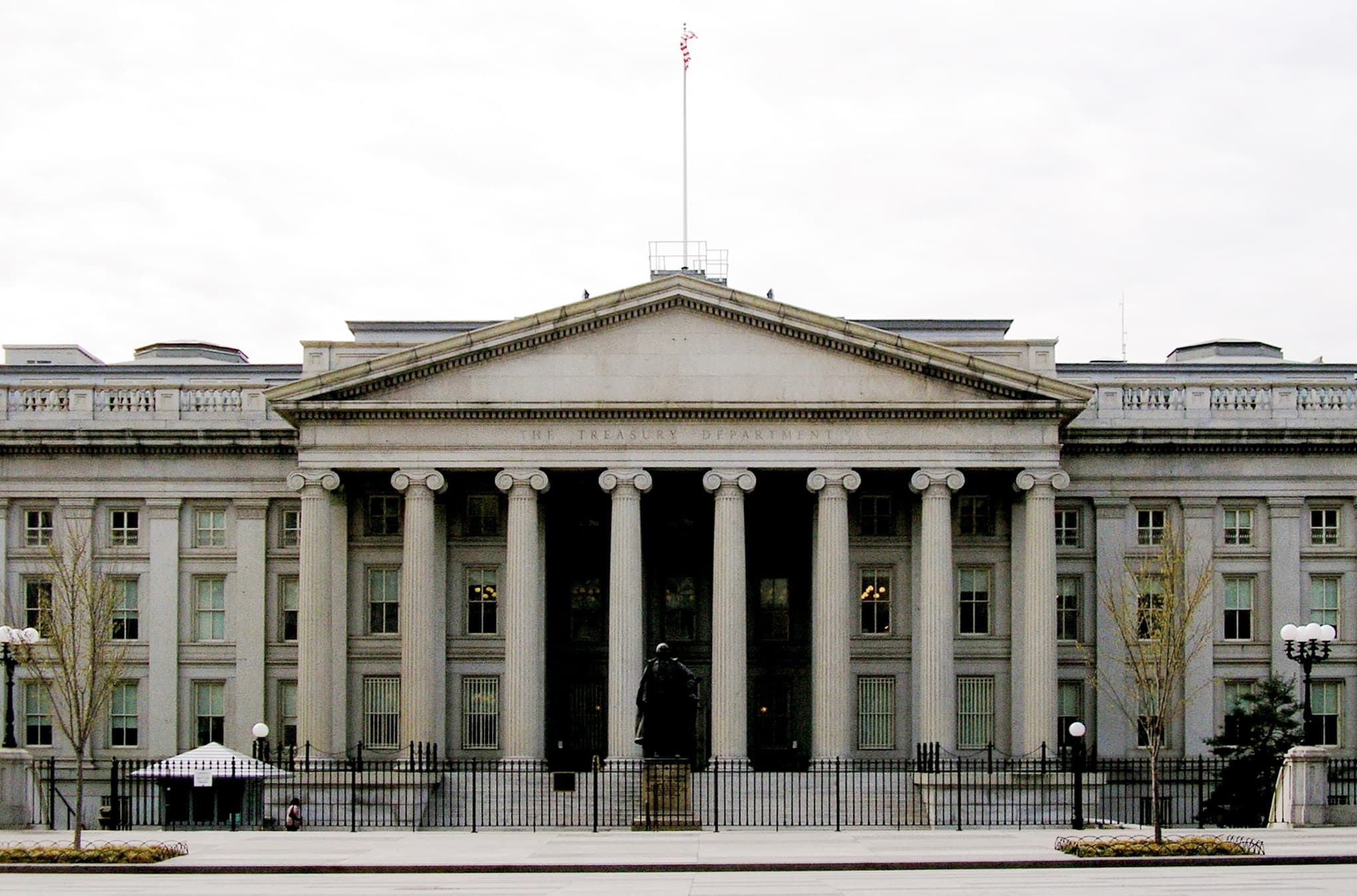
- Cover image: Wikimedia Commons file
US Treasury Building.jpg, downloaded locally to FreezeRadar content media, markedCC0on Commons. - Inline image: Wikimedia Commons file
U.S. Treasury Building.jpg, downloaded locally to FreezeRadar content media, markedCC0on Commons.
Sources (5)
Treasury Proposes Rule to Implement the GENIUS Act's Requirements to Counter Illicit Finance
U.S. Department of the Treasury
Official press release published April 8, 2026.
Permitted Payment Stablecoin Issuer Anti-Money Laundering Program Rulemaking
FinCEN
Official rulemaking page published April 8, 2026.
Recent Actions: Stablecoin sanctions framework implementation
OFAC
Official OFAC notice published April 8, 2026.
FinCEN and OFAC Propose AML/CFT and Sanctions Framework for Permitted Payment Stablecoin Issuers: Five Things to Know
Covington
Related legal analysis published April 16, 2026.
Treasury Announces Proposed Rule to Implement the GENIUS Act's Requirements to Counter Illicit Finance
WilmerHale
Related legal analysis published April 20, 2026.
Related reading
Continue exploring FreezeRadar knowledge content.



On this page
Get posts like this by email
A daily or weekly digest of FreezeRadar freeze activity.
By FreezeRadar Team
Research and product team behind FreezeRadar.