BNY Put USDC Mint and Burn Inside Bank Custody. That Moves Stablecoin Risk Closer to Treasury Operations
BNY and Circle’s June 29 USDC custody expansion is more than institutional distribution. It changes how treasury, compliance, and wallet-risk teams should monitor stablecoin control points.
Check a wallet before you act
Run a FreezeRadar scan for issuer-freeze signals, sanctions exposure, counterparty risk, and freezeable asset sensitivity before moving funds.
What BNY and Circle announced
Circle's announcement says USDC will be the first stablecoin available on BNY's Digital Asset Custody platform. The described service set is broad: custody, transfers, minting, and burning. That matters because mint and burn are not ordinary token transfers. Minting creates new circulating supply after fiat funds are received through an approved route. Burning removes USDC from circulation as part of redemption back into dollars.
In a retail exchange flow, those mechanics are usually hidden behind the exchange balance sheet. In a direct institutional flow, the client may care about the timing, settlement status, wallet destination, asset chain, redemption cut-off, bank account instruction, and audit trail. BNY's role makes those controls look more like an institutional custody workflow than a crypto exchange workflow.
The announcement also follows a larger pattern: stablecoins are moving from crypto-native rails into bank, broker, payment, and asset-management infrastructure. That direction was already visible in policy debates around payment stablecoins, reserve disclosures, and custody standards. The BNY/Circle step is important because it connects a systemically familiar custody brand with a token whose core risk model still depends on smart contracts, issuer discretion, reserve management, and blacklist controls.
The important shift is the control plane
A stablecoin risk review often begins with the asset: USDC versus USDT, Ethereum versus Solana, native versus bridged. Those questions still matter. But for institutions, the more decisive shift is the control plane.
If USDC custody, transfers, minting, and burning are initiated from a bank custody platform, then operational risk moves into the workflow design around that platform. Who can request a mint? Which addresses are pre-approved? Does the custody platform screen the destination address before a transfer? Does the treasury team screen the receiving wallet again after funds arrive? What happens when a counterparty address is clean at instruction time but becomes exposed two hours later through an upstream transfer?
These are not abstract compliance questions. USDC is an issuer-controlled asset. Circle can freeze addresses under its control framework, and USDC smart contracts on supported chains include administrative functions that make issuer intervention possible. That issuer-control feature is part of why institutions can treat USDC differently from a non-upgradeable commodity-like token. It is also why wallet-risk monitoring must be continuous instead of limited to onboarding.
The BNY integration therefore makes a familiar institutional promise: better custody, better controls, clearer operating procedures. At the same time, it reinforces the need to map every address and counterparty that touches the stablecoin workflow. The custody provider may reduce some key-management risk, but it does not remove sanctions, blacklist, indirect exposure, chain-selection, or issuer-freeze risk.
Why mint and burn access changes treasury operations
For a treasury team, the difference between holding USDC and being able to mint or burn USDC through a custody platform is material. Holding a balance is an inventory decision. Minting and burning are liquidity-conversion decisions.
A mint can be used to move dollar liquidity onto a blockchain quickly. A burn can be used to exit token exposure back into bank money. That sounds like a clean operational improvement, especially for funds and market makers that need 24/7 liquidity. But every mint and burn should create an audit event, a wallet-risk event, and a reconciliation event.
Treasury teams should treat the following as separate controls:
- the fiat source or destination account;
- the custody account or sub-account initiating the action;
- the blockchain and token contract used;
- the destination or redemption wallet;
- the pre-transaction sanctions and risk-screening result;
- the post-transaction monitoring state after funds settle;
- exception handling if an address becomes newly risky after instruction.
That last point is where many stablecoin workflows are still weak. A wallet can be clean when a payment is sent and problematic later because of an inbound transfer, a newly identified cluster, an OFAC update, a fraud report, or an issuer action. If treasury only screens at the moment of mint or withdrawal, it is operating with a snapshot. Stablecoin risk is closer to a changing exposure ledger.
The sanctions and issuer-freeze angle
The BNY/Circle announcement did not describe a sanctions event. It is still relevant to sanctions and freeze risk because USDC's value proposition for institutions depends partly on compliance-grade controls. A dollar token used by funds, payment processors, exchanges, and corporate treasuries must be able to coexist with sanctions obligations, law-enforcement requests, and issuer policy.
That creates two operational consequences.
First, wallet monitoring must distinguish between a user's direct address risk and the risk of surrounding counterparties. A custody client may operate a clean receiving wallet, but the counterparties funding it may route through mixers, sanctioned clusters, high-risk exchanges, or compromised wallets. For stablecoin balances, that indirect exposure can become operationally relevant even when the monitored wallet has no direct sanctions match.
Second, issuer intervention changes the downside scenario. With non-freezeable assets, a risky exposure may lead to account closure, enhanced due diligence, a rejected payment, or a law-enforcement process. With USDC, the issuer-control layer means specific token balances at an address can become subject to on-chain restriction. That does not mean every risky wallet will be frozen. It means the asset has an explicit intervention path that treasury and compliance teams must model.
This is why internal links between stablecoin operations and wallet-risk operations matter. FreezeRadar has covered the broader mechanics of issuer-controlled assets, practical stablecoin compliance monitoring, and two-hop exposure analysis. The BNY/Circle story sits at the intersection of those themes.
The monitoring model should change from address checks to workflow checks
The wrong response to this announcement is to add BNY or Circle to a vendor list and move on. The better response is to review the workflow.
For an institutional USDC program, monitoring should cover at least five layers.
1. Wallet inventory
Every custody address, deposit address, withdrawal address, operational hot wallet, redemption wallet, and counterparty wallet should be inventoried with ownership, purpose, chain, asset, and approval status. Unknown addresses should not quietly become permanent treasury rails.
2. Pre-instruction screening
Before mint, burn, transfer, or withdrawal instructions, teams should screen the relevant wallet and counterparty addresses for direct sanctions hits, issuer-blacklist status, high-risk labels, and known exposure paths. For large transfers, one-hop screening is often too shallow.
3. Post-settlement monitoring
After settlement, the same wallets should remain on watchlists. Stablecoin controls are dynamic. A wallet can receive tainted funds later, get clustered with a bad actor, or appear in a regulator update after a transaction closes.
4. Chain and contract controls
USDC is deployed across multiple networks. Institutions should know which networks are approved, which token contracts are canonical, and whether bridged representations are excluded from treasury policy. A chain mismatch can turn a clean operational plan into an exception queue.
5. Freeze and redemption playbooks
If a wallet becomes restricted, a counterparty is designated, or a redemption is delayed, the team needs a response playbook. That playbook should assign responsibility across treasury, legal, compliance, operations, and client service. The worst time to design the process is after funds are already trapped in an exception.
What teams should watch next
The next phase covers more than whether more banks add stablecoin custody. It is how deeply stablecoin issuance, custody, and compliance controls become embedded inside institutional platforms.
Teams should watch for four signals.
First, whether bank custody platforms support only custody and transfer, or whether mint and burn access becomes common. Mint and burn access is the deeper integration because it touches supply creation and redemption.
Second, whether stablecoin issuers publish clearer operational standards for institutional custody partners. Institutions will need to know how address screening, freeze requests, redemption exceptions, and chain support are handled across platforms.
Third, whether policy frameworks push stablecoin issuers and custodians toward more bank-like controls. The more stablecoins resemble payment instruments in policy, the more wallet-risk evidence will need to resemble financial-crime evidence rather than casual blockchain analytics.
Fourth, whether treasury teams treat stablecoin balances as ordinary cash equivalents or as assets with their own control stack. USDC may be dollar-redeemable, but USDC is not operationally identical to a bank deposit or a Treasury bill. It is a tokenized claim moving across public networks with issuer-administered controls.
Key takeaway
BNY and Circle's June 29 announcement is important because it moves USDC deeper into institutional custody and treasury workflows. That is constructive for adoption, but it also raises the standard for operational monitoring.
A mature USDC program should know more than the current balance. It should know which wallets can receive funds, which counterparties have touched those wallets, which chains and contracts are permitted, which workflows can mint or burn supply, and what happens when an issuer, regulator, or custody provider needs to intervene.
For FreezeRadar's lens, this is the core point: stablecoin risk is no longer just an exchange-risk or DeFi-risk topic. It is becoming a treasury-control topic. The institutions that benefit most from bank-grade stablecoin access will be the ones that treat wallet monitoring, sanctions exposure, issuer controls, and redemption workflows as one connected operating system.
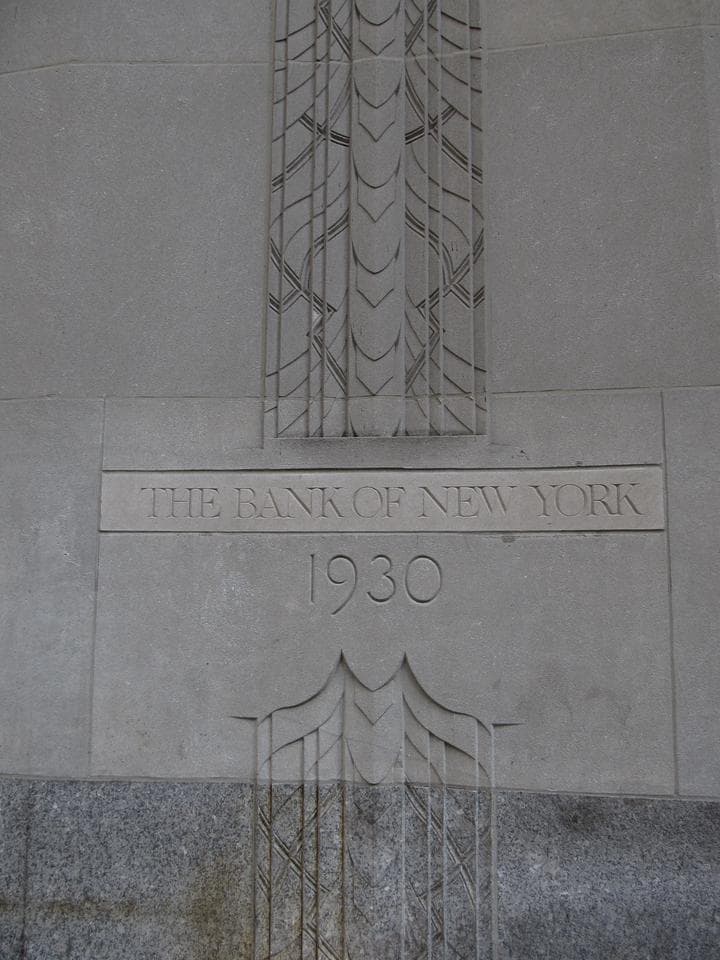
Image credits: cover image uses Ken Lund's Wikimedia Commons photo of One Wall Street, licensed CC BY-SA 2.0. Inline image uses the USD Coin logo from Wikimedia Commons, marked public domain text logo with trademark restrictions.
References
- BNY Expands Relationship with Circle and Adds to Institutional-Grade Stablecoin Enablement Services
- USDC | Powering global finance. Issued by Circle
- Statement on Stablecoins
- Sanctions Compliance Guidance for the Virtual Currency Industry
- Statement of President's Working Group on Digital Assets on the GENIUS Act
- USDC transparency and reserves information
Sources (6)
BNY Expands Relationship with Circle and Adds to Institutional-Grade Stablecoin Enablement Services
Circle
Primary announcement, published June 29, 2026; reviewed for USDC custody, transfer, mint, and burn details.
USDC | Powering global finance. Issued by Circle
Circle
Reviewed for Circle's current USDC reserve, mint, burn, and redemption explanations.
Statement on Stablecoins
U.S. Securities and Exchange Commission
Reviewed for the U.S. policy framing around covered stablecoins.
Sanctions Compliance Guidance for the Virtual Currency Industry
U.S. Treasury OFAC
Reviewed for sanctions compliance expectations around virtual currency activity.
Statement of President's Working Group on Digital Assets on the GENIUS Act
U.S. Treasury
Reviewed for current U.S. stablecoin policy direction after Senate passage.
USDC transparency and reserves information
Circle
Reviewed for reserve/transparency context referenced in treasury-risk analysis.
Related reading
Continue exploring FreezeRadar knowledge content.

On this page
Get posts like this by email
A daily or weekly digest of FreezeRadar freeze activity.
By FreezeRadar Team
Research and product team behind FreezeRadar.