Iran's Hormuz Crypto Insurance Sanctions Show Why Payment Context Matters
OFAC's July 29 action against HormuzSafe turns a crypto-payable maritime insurance scheme into a practical warning for treasury, sanctions, and wallet-risk teams.
Iran's Hormuz Crypto Insurance Sanctions Show Why Payment Context Matters
On July 29, 2026, the U.S. Treasury Department sanctioned two Iranian maritime insurance entities, Persian Gulf Marine Insurance Company and HormuzSafe Marine Services Authority, accusing them of supporting an IRGC-backed system that forced commercial vessels to buy mandatory coverage before transiting the Strait of Hormuz. The part that matters for crypto teams is not simply that the firms were sanctioned. It is that Treasury said HormuzSafe accepted Bitcoin and other digital assets as part of an effort to bypass Western sanctions.
That makes this a different kind of wallet-risk story from the familiar stablecoin freeze headline. There was no public list of Bitcoin addresses, no announced transaction hashes, and no issuer-side freeze order. The case is about payment context: a commercial-looking invoice, in a strategically critical shipping corridor, tied by OFAC to a sanctioned revenue scheme. For teams that monitor wallets, approve treasury payments, or receive digital assets from trading and shipping counterparties, the lesson is direct. The asset is only one layer of risk. The counterparty, corridor, invoice purpose, and sanctions authority matter just as much.
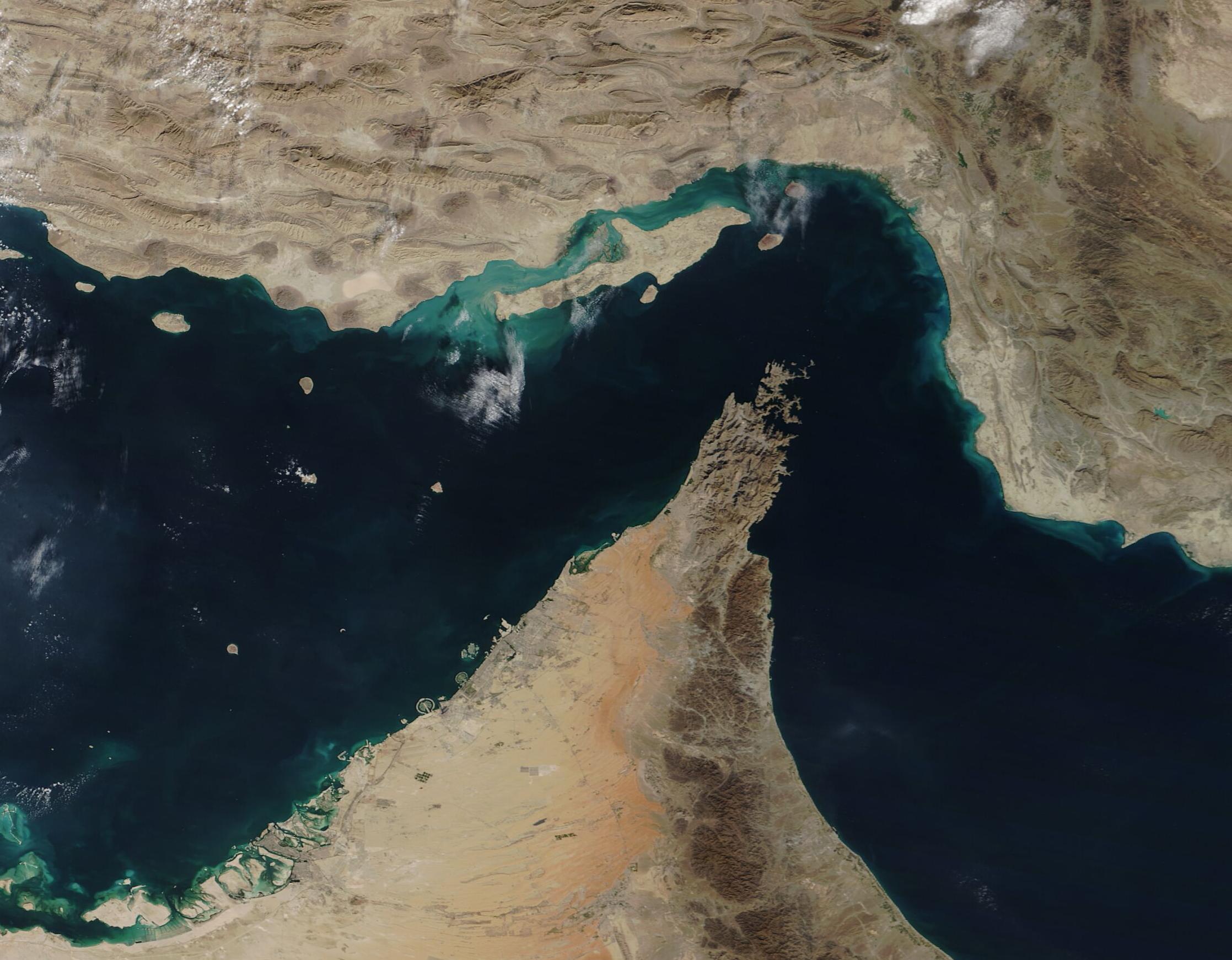
The Strait of Hormuz is not a niche detail. EIA has long treated it as one of the world's most important oil transit chokepoints, and recent coverage of the July 29 action focused on the same operational reality: shipping, energy flows, and payments are now being pulled into the same sanctions-risk surface. A crypto payment connected to that surface cannot be reviewed like an ordinary vendor transfer just because it settles on-chain.
Check a wallet before you act
Run a FreezeRadar scan for issuer-freeze signals, sanctions exposure, counterparty risk, and freezeable asset sensitivity before moving funds.
What Treasury actually said
Treasury's release described the insurance arrangement as an extortion scheme, not a normal marine-risk product. According to OFAC, PGMIC brokered and issued policies approved by the Persian Gulf Strait Authority, an IRGC-backed body previously designated in May 2026. HormuzSafe was described as a digital insurance firm developed by Iran's Ministry of Economy that advertised maritime services such as insurance, traffic control, security, and emergency response for vessels transiting the strait.
The key sentence for digital-asset teams is Treasury's claim that HormuzSafe accepted payment in Bitcoin and other digital assets to bypass Western sanctions. That sentence does not tell us how much value moved, which wallets were used, or whether any particular customer paid. It does, however, convert the platform from a speculative crypto-enabled workaround into an OFAC-designated sanctions target. Once a counterparty is on the SDN list, the operational question changes from "is this payment traceable?" to "are we exposed to blocked-party property, facilitation, or secondary-sanctions risk?"
This distinction is important because several related reports correctly noted what the public release did not include. Crypto.news emphasized that the designation did not publish wallet addresses or transaction hashes. CoinDesk focused on the risk to foreign firms that might deal with the entities even if payment happens in Bitcoin rather than through banks. FDD framed the action as part of a broader effort to pressure the infrastructure around Iran's control of the strait, while arguing that financial enablers remain a live enforcement gap.
Those angles point to the same conclusion: the public blockchain record may be incomplete or unnamed, but compliance teams cannot wait for a perfect wallet cluster before treating a designated service as high risk.
Why this is not just another stablecoin freeze story
FreezeRadar usually spends a lot of time on freezeable assets: USDT, USDC, PAXG, XAUt, and other issuer-controlled tokens where sanctions exposure can become contract-level intervention risk. The HormuzSafe story is different because Bitcoin itself is not issuer-freezeable. There is no Tether-style blacklist function, no Circle freeze authority, and no token issuer that can immobilize funds at a specific address.
That does not make the risk lower. It makes the control model different.
With a freezeable stablecoin, a sanctioned wallet can create two overlapping concerns. First, the recipient may be dealing with blocked property or a blocked party. Second, the token balance itself may be frozen by the issuer if it sits at an address that becomes blacklisted. With Bitcoin or another native asset, the second layer is absent, but the first layer remains. Exchanges, brokers, custodians, banks, insurers, shipping firms, and OTC desks still have to decide whether receiving, transmitting, converting, or facilitating the funds creates sanctions exposure.
That means the monitoring burden moves away from issuer intervention and toward counterparty intelligence, invoice review, source-of-funds analysis, and off-chain context. A clean-looking Bitcoin transaction can still be connected to a prohibited payment if the commercial purpose is a sanctioned service. A stablecoin transfer from the same corridor may carry both commercial sanctions risk and freeze-sensitive issuer risk.
The operational risk is in the wrapper around the wallet
The most useful way to read this case is as a warning about wrappers. A wallet is rarely presented to a business as "an IRGC-linked payment address." It arrives as a QR code, a vendor invoice, a broker instruction, a shipping document, a Telegram message, a payment memo, or an OTC settlement request. The wallet is the payment endpoint, but the risk often sits in the wrapper around it.
For treasury and compliance teams, that wrapper should now include at least five questions:
Is the payment connected to a restricted corridor?
The Strait of Hormuz is a strategic chokepoint, not a neutral geography. When payment requests involve vessel transit, insurance, security, port services, energy cargo, or emergency passage in a sanctioned corridor, the review should escalate before funds move. This is true even if the wallet has no direct sanctions label at the time of screening.
Is the counterparty newly formed, state-linked, or regulator-created?
Treasury said HormuzSafe was developed by Iran's Ministry of Economy and that PGMIC was established by Iran's primary insurance regulator. In other words, formal status does not reduce sanctions risk when the entity sits inside a designated or state-linked revenue scheme. For wallet screening, this means business identity should be checked alongside address-level exposure.
Does the payment method look chosen to avoid banks?
Crypto payments are not inherently suspicious. But when a counterparty insists on Bitcoin, USDT, or another digital asset in a context where conventional banking is blocked or unusually difficult, the reason matters. The payment rail can become a risk signal when it appears designed to bypass sanctions controls rather than improve settlement efficiency.
Can the team explain the economic purpose?
A vague "insurance" payment is not enough in a high-risk corridor. Teams should know who receives the funds, what service is being bought, which vessel or cargo is involved, which jurisdiction governs the transaction, and whether any sanctioned party benefits. If that cannot be documented, the wallet screen is incomplete.
What happens if the asset is freezeable?
The public HormuzSafe claim focused on Bitcoin and other digital assets, not a named stablecoin transfer. But similar payment requests could easily involve USDT or USDC because those assets are common settlement media. If a freezeable stablecoin is used, teams should evaluate both sanctions exposure and issuer-control exposure. Our guides on OFAC wallet screening, stablecoin freeze-risk checks, and USDT on TRON sanctions risk are relevant here because the same address can be operationally risky before any public freeze event appears.
Monitoring should include indirect exposure, not just direct hits
The most dangerous failure mode after a designation like this is treating screening as a one-time direct-name match. Direct SDN matches are necessary, but they are not sufficient when schemes use intermediaries, brokers, shadow-fleet companies, informal exchangers, or newly generated wallets.
For wallet-risk workflows, teams should monitor three layers.
First, direct exposure: has the wallet, counterparty, domain, company, vessel, beneficial owner, or known affiliate appeared in sanctions data or credible risk intelligence?
Second, transaction exposure: has the wallet received from or sent to addresses associated with sanctioned services, high-risk exchanges, mixers, scam infrastructure, or sanctioned jurisdictions? This is where two-hop exposure analysis becomes useful, especially when funds are routed through fresh wallets to reduce obvious links.
Third, contextual exposure: does the business purpose itself match a sanctioned scheme or high-risk typology? HormuzSafe is a strong example because the payment could look like insurance while the authority views it as revenue extraction for a sanctioned actor.
This is also where DeFi and exchange desks need discipline. If a wallet tied to a shipping intermediary swaps into stablecoins, bridges funds, or deposits into a centralized venue, the risk does not disappear. It changes form. Monitoring should preserve the narrative chain from the original payment purpose through subsequent wallet activity.
What treasury teams should do next
The immediate action item is not to block every wallet with a shipping connection. That would be lazy and operationally expensive. The better response is to tighten review rules around high-risk corridors and sanctioned-service typologies.
For digital-asset treasury teams, that means requiring enhanced review for payments connected to maritime insurance, vessel transit, port security, energy cargo, sanctioned jurisdictions, or counterparties formed by state-linked bodies. The review should capture the counterparty name, beneficial ownership where available, invoice purpose, wallet address, asset, chain, expected amount, and the reason a digital asset is being used.
For exchanges and OTC desks, it means watching for customers who present shipping, oil, insurance, or logistics flows with inconsistent documentation. A customer who can explain the commercial purpose and provide ordinary paperwork is different from a customer who wants fast conversion with a vague "transit" memo and no beneficiary clarity.
For stablecoin users, the case reinforces a broader point: issuer-freeze risk does not begin only when a wallet is already frozen. It begins when funds pass through activity that makes an issuer, exchange, or regulator more likely to intervene. That is exactly why FreezeRadar treats sanctions exposure, risky counterparties, behavioral risk, and issuer sensitivity as connected signals rather than isolated checkboxes.
Key takeaway
The July 29 HormuzSafe designation shows how digital assets can become part of a sanctions-evasion payment surface even when the public release does not name a wallet. The strongest control is not panic and it is not blind reliance on address labels. It is layered monitoring: know the counterparty, understand the payment purpose, screen the wallet, trace meaningful exposure, and treat freezeable assets as a separate intervention-risk layer.
For teams moving stablecoins or native crypto in real-world commercial contexts, the question is no longer just "is this address clean?" It is "can we defend why this payment is legitimate if the counterparty, corridor, or service becomes the subject of an OFAC action tomorrow?"
Sources and image credits
- U.S. Treasury, "Treasury Disrupts Iranian Regime's Strait of Hormuz Extortion Network," July 29, 2026.
- Crypto.news, "U.S. sanctions Iranian maritime firm over Bitcoin payments," July 30, 2026.
- CoinDesk, "U.S. sanctions Iran-linked bitcoin insurance scheme for Strait of Hormuz ships," July 31, 2026.
- The Defiant, "US Sanctions Iranian Marine Insurers Taking Bitcoin for Strait of Hormuz Passage," July 2026.
- Foundation for Defense of Democracies, "U.S. Targets Iran's Hormuz Extortion but Leaves Foreign Financial Enablers Untouched," July 31, 2026.
- U.S. Energy Information Administration, "World Oil Transit Chokepoints."
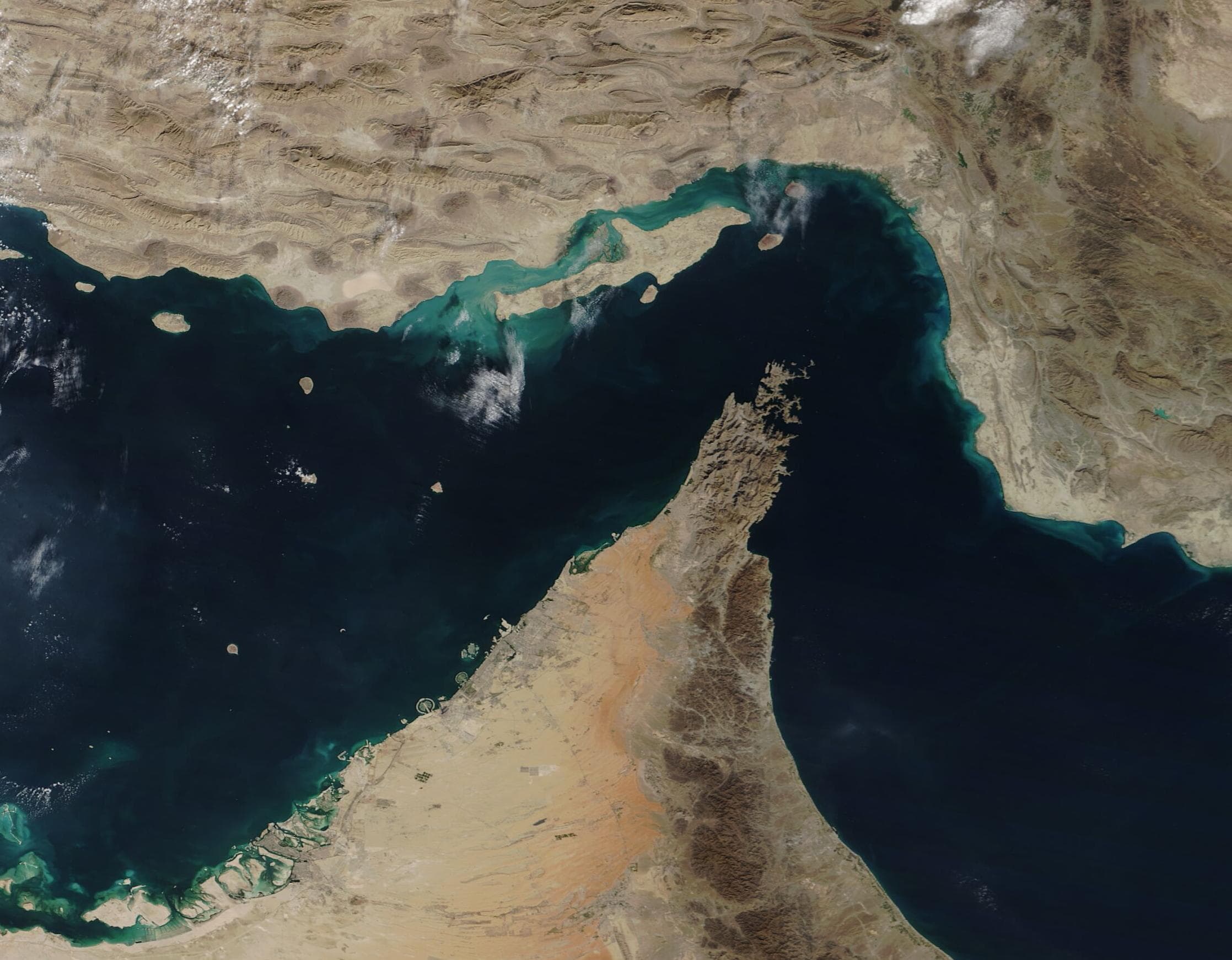
- Cover image: NASA MODIS/Terra image of the Strait of Hormuz, public domain via Wikimedia Commons.
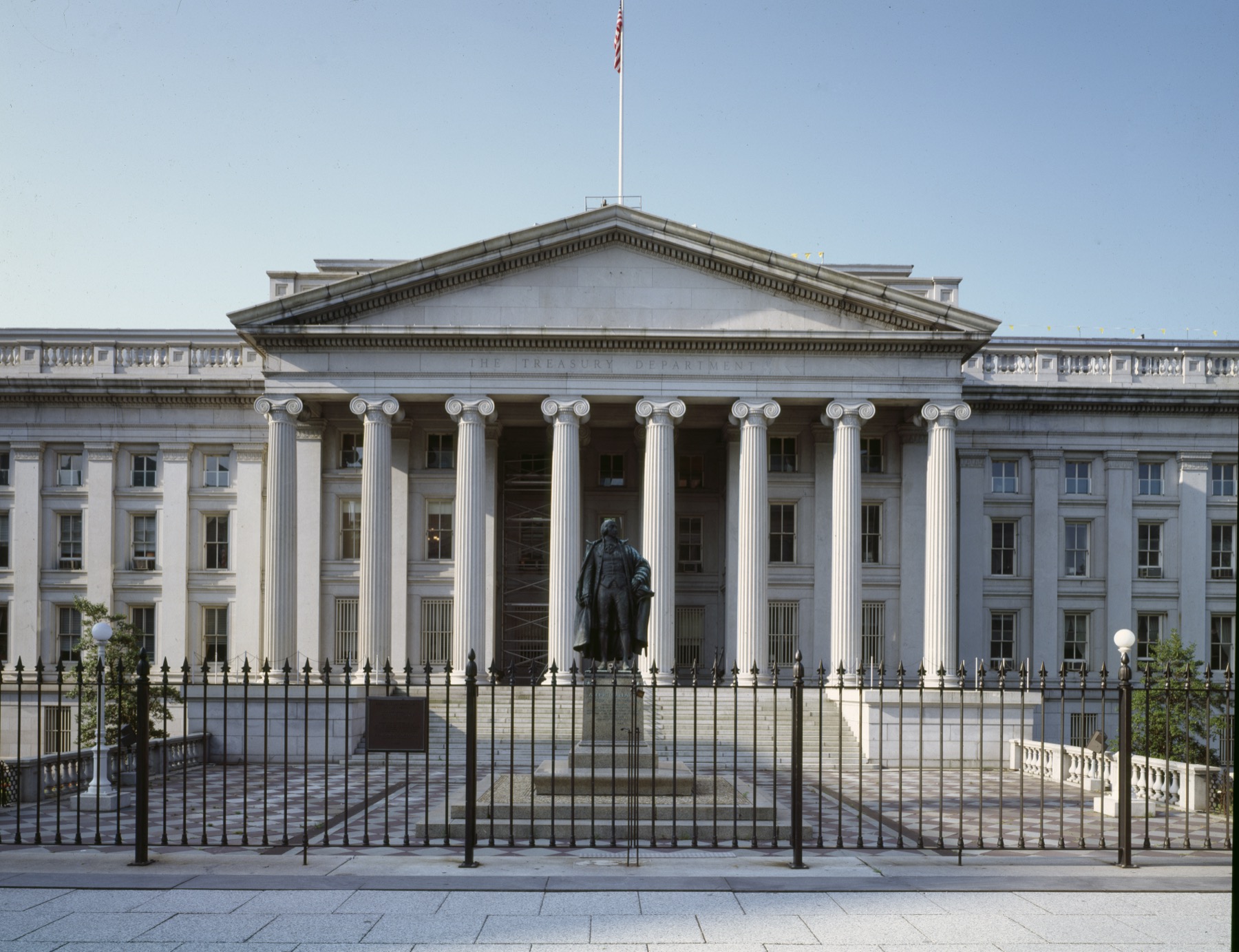
- Inline image: U.S. Treasury Department Building by Carol M. Highsmith, Library of Congress, public domain via Wikimedia Commons.
Sources (6)
Treasury Disrupts Iranian Regime's Strait of Hormuz Extortion Network
U.S. Department of the Treasury
Primary source for the July 29, 2026 OFAC designation.
U.S. sanctions Iranian maritime firm over Bitcoin payments
Crypto.news
Related coverage noting the absence of public wallet addresses or transaction hashes.
U.S. sanctions Iran-linked bitcoin insurance scheme for Strait of Hormuz ships
CoinDesk
Related coverage of secondary-sanctions and shipping-counterparty implications.
US Sanctions Iranian Marine Insurers Taking Bitcoin for Strait of Hormuz Passage
The Defiant
Related coverage of the Bitcoin-for-passage framing and shadow-fleet sweep.
U.S. Targets Iran's Hormuz Extortion but Leaves Foreign Financial Enablers Untouched
Foundation for Defense of Democracies
Policy analysis on sanctions pressure and remaining financial-enabler gaps.
World Oil Transit Chokepoints
U.S. Energy Information Administration
Context on the Strait of Hormuz as an energy transit chokepoint.
Related reading
Continue exploring FreezeRadar knowledge content.


On this page
Get posts like this by email
A daily or weekly digest of FreezeRadar freeze activity.
By FreezeRadar Team
Wallet risk intelligence and stablecoin compliance analysis from FreezeRadar.