Check a USDT Address for a Tether Blacklist
Check whether a USDT address is restricted by Tether, plus sanctions and counterparty signals, before you rely on the balance.
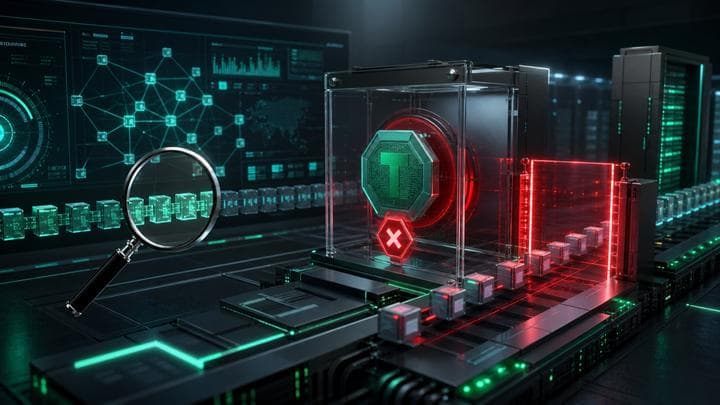
A Tether blacklist check asks whether a USDT address is directly restricted, or whether nearby sanctions and high-risk counterparties make the balance unsafe to trust. A wallet can show a USDT balance while the token contract blocks transfers. Paste the address into a FreezeRadar scan to see direct blacklist or freeze indicators first, then sanctions data, labels, and counterparty context. The result is a documented screen for a transfer or payment review: useful evidence for a payment desk, not legal advice, and not a way to remove an address from Tether’s list.
Check a wallet before you act
Run a FreezeRadar scan for issuer-freeze signals, sanctions exposure, counterparty risk, and freezeable asset sensitivity before moving funds.
Who this check is for
Use this before you send, receive, or treat a USDT balance as spendable. It is for operators who need issuer-blacklist context plus surrounding risk. FreezeRadar cannot add or remove a Tether blacklist entry.
Real-world example
Tether's public Ethereum contract includes blacklist terminology and a separate function for destroying blacklisted funds. That is a concrete example of how issuer controls can exist inside token code. The practical takeaway is that a visible token balance and a spendable token balance are different questions, so screening should include both direct blacklist status and surrounding risk context.
What FreezeRadar checks
FreezeRadar is built for freezeable asset wallet risk, not generic price or portfolio tracking. For this search intent, the scan focuses on:
- direct Tether blacklist or issuer-freeze evidence where provider coverage allows it
- sanctions matches that may explain blacklist sensitivity
- funding sources and counterparties linked to known high-risk activity
- whether the wallet has current or historical freezeable asset exposure
- clear explanation of whether the risk is direct, indirect, or behavioral
The result is an explainable risk assessment. It can help you decide whether to pause, document, escalate, or run a deeper review before sending funds.
How to run the check
- Open FreezeRadar wallet scan.
- Paste the wallet address you want to review.
- Confirm the chain and asset if the page preselects one.
- Run the scan and read the score, direct issuer-freeze signals, sanctions exposure, counterparty context, and evidence notes.
- Preserve the scan URL with your transaction hashes and screenshots if the wallet is part of a dispute, payment review, or compliance workflow.
What the result can and cannot tell you
A scan can show whether FreezeRadar sees issuer-freeze indicators, sanctions matches, risky labels, counterparty exposure, behavioral risk, and freezeable asset sensitivity. It cannot prove that an issuer will freeze a wallet in the future, guarantee that a frozen balance can be restored, or replace legal advice from qualified counsel.
Do not use this page or any FreezeRadar output to bypass sanctions, evade issuer controls, conceal source of funds, or contact unofficial recovery services. If the situation involves a legal order, fraud report, stolen funds, or sanctions exposure, use official issuer, exchange, law-enforcement, or legal channels.
Related reading
- USDT wallet freeze check
- How token freezing works in a smart contract
- How to check a wallet
- How FreezeRadar scores a wallet
FAQ
Is a Tether blacklist the same as losing my wallet?
No. The wallet key can still control other assets. The restriction applies to the token contract and the asset it governs.
Can a blacklisted USDT address receive more funds?
Behavior depends on the token contract and network implementation. Do not assume receive and send behavior is identical without checking the exact asset and chain.
Can FreezeRadar remove an address from a blacklist?
No. Only the relevant issuer or authorized process can change issuer blacklist state.
Why check counterparties if I only care about blacklist status?
Direct blacklist state is important, but nearby sanctions, scam, mixer, or high-risk exchange exposure can explain why a wallet may deserve escalation.
Sources (3)
Help improve this guide
Share a freeze case note, issuer response, missing document, or support-step correction. Do not include seed phrases, private keys, login codes, or exchange passwords.
Related reading
Continue exploring FreezeRadar knowledge content.

On this page
By FreezeRadar Team
Research and product team behind FreezeRadar.