The UK’s New Bank of England Mandate Makes Stablecoin Risk More Operational
HM Treasury’s new innovation objective for the Bank of England is not deregulation. It is a signal that UK stablecoin risk is moving from policy debate into operating rules for issuers, wallets, venues, and treasury teams.

Check a wallet before you act
Run a FreezeRadar scan for issuer-freeze signals, sanctions exposure, counterparty risk, and freezeable asset sensitivity before moving funds.
What changed on August 27
HM Treasury’s announcement creates a new policy direction for the Bank of England’s payments work. The secondary objective will sit below the Bank’s primary financial-stability objective. It will apply to payment systems and “digital settlement assets,” the UK’s legal framing for certain forms of digital money, including stablecoins.
The mechanics matter. The government expects the Bank to report annually to Parliament on how it supports the objective. That reporting requirement gives the policy teeth. It means the Bank will have to explain how it protects stability, and how its approach leaves room for useful payment innovation to develop in the UK.
The Treasury release also sits beside an active consultation on modernizing the UK’s payments-regulation perimeter. The government is trying to make the rules more responsive to new payment models, tokenized settlement, and stablecoins that could become widely used. This is not a standalone stablecoin press release; it is part of a broader attempt to update payment infrastructure oversight.
That is why the announcement is important for wallet-risk teams. Regulatory objectives shape product design long before final rules are published. If the Bank must account for innovation, stablecoin issuers may get more room to design commercially viable models. But if financial stability remains primary, those models will still be judged by redemption resilience, reserve quality, operational continuity, and intervention powers.
Why this is not a repeat of June’s stablecoin rule shift
FreezeRadar already covered the Bank of England’s June 2026 stablecoin policy shift, when the Bank dropped proposed wallet holding caps and moved toward a £40 billion issuer-level guardrail. That was a design change inside the stablecoin framework. The August 27 announcement is different. It changes the institutional mandate that will influence how the Bank supervises payments and digital settlement assets over time.
The distinction matters because operating teams often treat policy updates as isolated rule changes: one cap removed, one reserve ratio adjusted, one consultation deadline added. Real regulatory risk usually moves through the connective tissue. Mandates shape how supervisors interpret trade-offs. Reporting duties shape what regulators must defend in public. Statutory objectives shape how future edge cases are handled when a token grows faster than expected.
The June shift made UK stablecoin rules less hostile to scale. The August objective says the Bank should not treat innovation as a side effect. Together, they suggest the UK wants a supervised stablecoin market that can function, but only inside a perimeter where systemic tokens remain monitorable.
For issuers, that means “UK-regulated” will not be a marketing label by itself. It will be an operating claim that has to survive questions about reserves, redemption, governance, outsourcing, sanctions screening, wallet controls, and incident response.
The operational consequence: more viable tokens, more control points
Stablecoin adoption is more than a legal question. It is an operations question. A token can be legally permitted and still be a poor treasury instrument if redemption is fragile, liquidity is thin, venues are concentrated, or issuer controls are opaque. The UK’s new objective may improve the odds that compliant stablecoins can launch and scale, but it also makes the control map more important.
If more sterling or UK-facing stablecoins become viable, businesses will need to decide whether to accept them, hold them, route customer payments through them, or convert them immediately. Those decisions should not be made from the headline alone. They need a wallet-risk file.
At minimum, teams should know who issues the token, where reserves sit, whether redemptions are direct or intermediated, which exchanges support liquidity, which wallet addresses are operationally critical, and whether the issuer can freeze, blacklist, pause, burn, or reissue balances. They should also track whether the token is merely regulated by the FCA, designated as systemic, or supervised by the Bank under the systemic perimeter.
That last point is easy to miss. A stablecoin can become more systemically important as usage grows. The same token that begins as a niche payment rail may later face stronger oversight because it has become relevant to settlement, consumer payments, or market infrastructure. Treasury and compliance teams should treat that transition as a monitoring event, beyond a legal footnote.
Where sanctions and wallet monitoring enter the picture
The UK announcement is mostly about innovation and payments. But stablecoin operations are inseparable from financial-crime controls. A regulated payment token cannot scale without sanctions screening, wallet monitoring, fraud controls, and a process for responding to law-enforcement or court-driven restrictions.
This is where freezeable assets are different from bearer crypto assets. If an issuer-controlled token has address-level restrictions, the risk is more than that a bad wallet gets blocked. The risk is that counterparties near the blocked wallet become operationally exposed: exchange omnibus wallets, payment processors, market makers, OTC desks, bridges, and treasury receiving addresses can all be affected by issuer action or regulatory pressure.
That is why FreezeRadar’s view of stablecoin risk is broader than a yes/no blacklist check. A wallet may have no direct sanctions match and still deserve attention because its counterparties sit near a risky venue, its flows depend on a vulnerable bridge, or its incoming funds pass through addresses that could become issuer-sensitive under a stricter compliance regime.
The UK’s mandate does not create those risks. It makes them more relevant. If regulators want domestic digital settlement assets to innovate, more real businesses may use them. More real usage means more monitoring responsibility. The higher the commercial adoption, the less acceptable it becomes to rely on manual checks after a problem appears.
What treasuries and payment teams should change now
The immediate change is not to rewrite every stablecoin policy. It is to upgrade the watchlist.
First, track UK stablecoin policy as an operating signal, not a legal-news sidebar. The August 27 objective, the June Bank of England framework, FCA cryptoasset policy statements, and the payments-regulation consultation all point toward a market where stablecoins can be legitimate payment instruments without becoming risk-free instruments.
Second, separate acceptance from holding. A business might accept a stablecoin for customer convenience while converting it quickly into fiat or a more liquid token. Holding it as working capital requires a deeper view of redemption, reserve, and issuer-intervention risk.
Third, monitor issuer and venue concentration. A stablecoin with narrow exchange support can become hard to exit during a regulatory or operational incident. A token with concentrated reserve banking or custody relationships can create hidden dependency risk. A payment flow that relies on one processor or omnibus wallet can turn a single restriction into a broader business interruption.
Fourth, define the escalation triggers before launch. Teams should know what happens if a token is designated systemic, if the Bank changes reserve expectations, if an issuer updates freeze terms, if a major exchange delists the token, or if a sanctions authority names a connected counterparty. These triggers should move wallets into review automatically.
Finally, connect policy monitoring with address monitoring. Reading the Treasury announcement is useful. That alone is not enough. The practical work is mapping which wallets, counterparties, venues, and assets would be affected if the policy direction becomes a concrete rule or supervisory action.
What to watch next
The first milestone is the Financial Services and Markets Bill debate in the House of Lords in September 2026. That is where the secondary objective is expected to be added. The exact statutory language will matter because it defines how much weight the Bank must give to innovation when it supervises payment systems and digital settlement assets.
The second milestone is the Bank’s annual reporting. Once the objective is in force, Parliament will have a recurring window into how the Bank thinks about payment innovation. That could become a useful signal for issuers, exchanges, and treasury teams trying to understand whether the UK is opening a workable path for stablecoin infrastructure.
The third milestone is the interaction between the Bank and the FCA. The UK stablecoin regime is split: the FCA covers broader cryptoasset conduct and non-systemic parts of the market, while the Bank becomes central when payment systems or stablecoins become systemic. Teams should watch where those responsibilities overlap, because handoff points are where operational ambiguity often lives.
The final milestone is issuer behavior. A more innovation-aware mandate may invite more serious stablecoin proposals. The market should judge them by their operating controls, beyond their regulatory ambition. Strong reserve language, clear redemption rules, auditable blacklist mechanics, transparent custody arrangements, and defensible sanctions processes will matter more than broad claims about being “regulated.”
Key takeaway
The UK’s August 27 move is not a green light for careless stablecoin growth. It is a signal that payment innovation is becoming part of the Bank of England’s formal job, while financial stability remains the hard boundary.
That is exactly the kind of environment where stablecoin risk becomes more operational. The tokens that survive will not be the ones with the loudest policy narrative. They will be the ones whose issuers, venues, reserves, wallet controls, and monitoring practices can stand up to real transaction volume.
For treasury, compliance, and wallet-risk teams, the takeaway is direct: do not wait for final rules to build the control file. Track the policy direction now, map the issuer and venue dependencies now, and monitor the wallets that would turn a regulatory decision into an operating event.
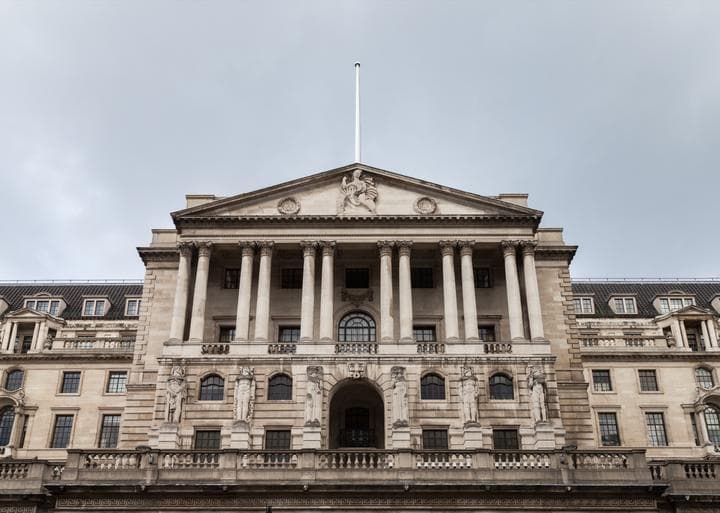
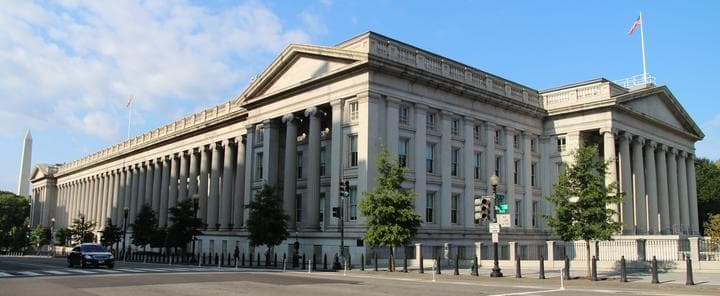
Image credits: cover image “Saturday in the City, 1983: Threadneedle Street and Bank of England” by Ben Brooksbank, Wikimedia Commons, CC BY-SA 2.0; inline image “London: New Government Offices (HM Treasury), WHITEHALL SW1” by Tilman2007, Wikimedia Commons, CC BY-SA 4.0.
References
- Ministers to boost innovation in payments with new objective for Bank of England
- Ministers tell Bank of England to boost innovation in digital currencies
- BoE launches policy statement and draft rules on regulating systemic stablecoins
- The Bank of England and FCA’s approach to joint regulation of systemic stablecoin issuers
- Cryptoasset regime
- Bank of England to receive new secondary objective to support payments innovation
Sources (6)
Ministers to boost innovation in payments with new objective for Bank of England
HM Treasury
Primary announcement published August 27, 2026.
Ministers tell Bank of England to boost innovation in digital currencies
Financial Times
Market and policy context for the new secondary objective.
BoE launches policy statement and draft rules on regulating systemic stablecoins
Bank of England
June 2026 framework context for systemic sterling stablecoins.
The Bank of England and FCA’s approach to joint regulation of systemic stablecoin issuers
Bank of England
Explains the split between Bank and FCA oversight.
Cryptoasset regime
Financial Conduct Authority
FCA context for the wider UK cryptoasset regime.
Bank of England to receive new secondary objective to support payments innovation
Lewis Silkin
Related legal analysis of the August 27 announcement.
Related reading
Continue exploring FreezeRadar knowledge content.

On this page
Get posts like this by email
A daily or weekly digest of FreezeRadar freeze activity.
By FreezeRadar Team
Wallet risk intelligence and stablecoin compliance analysis from FreezeRadar.