D'CENT App Wallet Signing Vulnerability: Victim & Desk Freeze Requests
DCENT’s Sep 2026 App Wallet incident hits software keys and shared mnemonics—not cold hardware by default. Migrate with a new phrase, then file lawful exchange freeze packets with hashes.
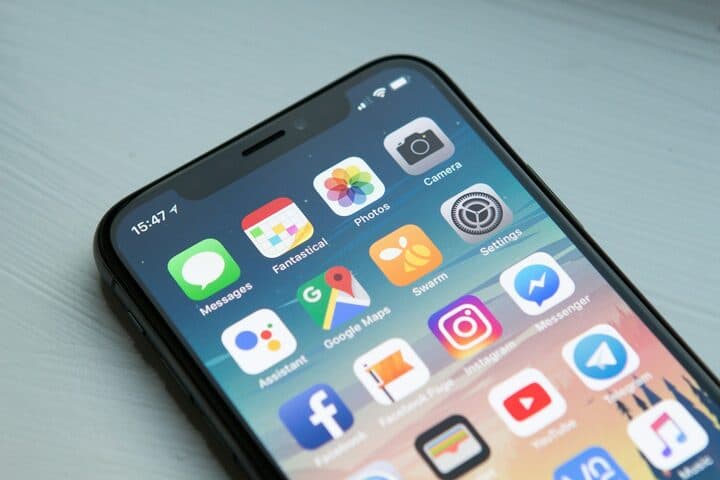
DCENT’s September 2026 App Wallet incident is a software-signing problem first, not a hardware-wallet “device cracked” story. If you used the App Wallet—or ever typed the same recovery phrase into it—treat the phrase as exposed, update only through official stores, then move assets to a new phrase. For funds that already left, the recovery path is lawful tracing plus exchange/issuer holds—not secret bypasses.
Educational only. Not legal advice. Not a recovery service. Not instructions to evade exchange, issuer, or law-enforcement controls. Impersonation risk is high after vendor notices; DCENT says it will never ask for your recovery phrase or for “compensation deposits.”
Check a wallet before you act
Run a FreezeRadar scan for issuer-freeze signals, sanctions exposure, counterparty risk, and freezeable asset sensitivity before moving funds.
Direct answer
As of DCENT’s Preliminary Incident Report (as of 17 Sep 2026 KST) and FAQ (last updated 16 Sep 2026), abnormal transfers were identified in the App Wallet (software keys on the phone). Hardware wallets are not confirmed impacted unless the same recovery phrase was entered into the App Wallet. Risk criteria center on App Wallet addresses with a signing history on app versions earlier than 8.1.0 (released 5 Nov 2025 UTC). Vendor response includes law-enforcement reporting and requests to exchanges to freeze suspected proceeds. Victims and desks should migrate safely first, then open the right freeze tickets with hashes—not restore the old mnemonic onto “safer” hardware.
What DCENT actually said (primary)
Three official posts matter more than secondary loss tallies:
- Preliminary Incident Report: App Wallet Signing Vulnerability — scope table, timeline, ongoing work with LE / exchanges / chain teams, user actions.
- FAQ — DCENT App Wallet Security Issue — App vs hardware modes, mnemonic overlap, migration order, phishing warnings (updated ~16 Sep 2026).
- How to check whether the App Wallet action applies — in-app checker, install-date heuristics around v8.1.0.
DCENT withholds exploit-level technical detail while the investigation is open. That is normal. Do not invent signing primitives or “root cause” claims the vendor has not published.
App Wallet vs hardware wallet (and the mnemonic trap)
| Mode | Where keys live | What the app does | Incident stance (vendor) |
|---|---|---|---|
| Hardware (Biometric / DCENT X / S) | Device secure chip | Display + Bluetooth/NFC UX | Not confirmed impacted if phrase never entered into App Wallet |
| App Wallet | Phone software | Signs with on-device password/biometrics alone | Abnormal transfers identified; migrate |
| Overlap | Same 24 words in both | Same private keys | Both need action; hardware is not isolated |
The FAQ’s blunt rule: pairing a hardware wallet so you can see balances does not put the phrase on the phone. Importing via Manage All Wallets → Add App Wallet → Import does. Same addresses on the same network are a safe overlap check—without typing the phrase into any website or “support” DM.
Version nuance that trips desks: what matters is the app version at signing time, not the version installed today. Pre-8.1.0 signing (coins, tokens, NFTs, approvals, dApp connects) is in the potential-impact set across Bitcoin, Ethereum, XRPL, TRON, and other EVM chains. Tokens (e.g. USDT ERC-20/TRC-20) share the wallet key even if you never sent native coin.
Safe migration order (vendor sequence, desk-ready)
DCENT’s order is deliberate. Skip steps and you create new loss modes.
- Confirm the recovery-phrase backup exists and is readable before you delete anything.
- Update only via official app stores to the latest build (FAQ migration guidance references v10.0.0 or later for the update/move path; do not sideload APKs from DMs).
- Do not sign on the old App Wallet before that update—including “just one” transfer.
- Create a destination wallet from a completely new recovery phrase (new hardware or another wallet you control). Do not restore the old phrase onto hardware and call it fixed.
- Move everything: native coins, tokens, NFTs, stakes, and review token approvals.
- Retire the old phrase permanently. Blockchain addresses are not deletable; do not reuse them for deposits or approvals.
- Watch for impersonation. Official channels are listed on the incident report; messenger “recovery desks” are hostile.
If the same phrase sits on hardware and App Wallet, treat the hardware copy as contaminated for this incident’s purposes even if the silicon is fine.
After a breach: how freezes actually get requested
Self-custody theft has no exchange balance sheet to claw back from by default. Recovery depends on where stolen funds land and whether counterparties cooperate under lawful process. DCENT’s own timeline (16 Sep 2026 afternoon KST) states they requested exchange cooperation to freeze suspected assets, notified partners, contacted foundations, and reported to Korean law enforcement. Ongoing work explicitly includes freezing/tracing with exchanges, authorities, and on-chain specialists—with the caveat that outcomes depend on third parties and chain activity.
That is the same plane FreezeRadar desks already use for stablecoin incidents: venue hold ≠ issuer blacklist ≠ wallet drain. See exchange hold vs issuer USDT blacklist and seed phishing drain vs issuer freeze.
Victim packet (individual)
Assemble before you spam five support forms:
- Vendor ticket / case ID with DCENT (no seed, no PIN).
- Approximate first unauthorized tx time (timezone labeled).
- Source App Wallet addresses per chain.
- Outflow tx hashes and destination addresses.
- Screenshots of in-app “action applies” results if shown.
- App install / update history if available (App Store / Play Store).
- Statement that you will only use official vendor / exchange / LE channels.
Then:
- Freeze requests to exchanges that received funds — use each venue’s security/fraud form with hashes. Ask for account holds on deposit addresses tied to the theft cluster, not “unfreeze my old App Wallet.”
- Issuer plane only if freezeable tokens sit on blacklisted/restricted contracts — read status yourself (read USDT blacklist); do not assume every drain is an issuer freeze.
- Local LE / cybercrime intake — DCENT reported in Korea; victims elsewhere still file locally with the hash packet. US victims often use IC3 for crypto theft reports; follow your jurisdiction’s channels.
- Do not send remaining funds to addresses offered in DMs for “consolidation” or “compensation.”
Desk / OTC / treasury packet
If customer or treasury funds touched a DCENT App Wallet phrase:
| Step | Owner | Artifact |
|---|---|---|
| Quarantine affected addresses | Ops | Address list + chain |
| Screen deposit staging wallets before CEX | Ops | FreezeRadar scan URL + notes (before CEX deposit workflow) |
| Open exchange security tickets on outflows | Compliance | Hash list + case narrative |
| Separate drain vs venue hold vs issuer flag | Compliance | Triage table from hold-vs-blacklist post |
| Rotate to new-phrase wallets | Treasury | New receive addresses; no mnemonic reuse |
| Customer comms | Support | Official DCENT links only; no seed collection |
Do not deposit remaining App Wallet balances to a CEX “for safekeeping” from an un-updated app, and do not stage them through a wallet that still shares the old phrase. Venue AML may still hold deposits that look like rapid pass-through from a known incident cluster—even when your intent is rescue.
Exchange freeze cooperation: what to expect (and not invent)
Lawful freeze paths look like:
- Vendor → exchange bilateral fraud alerts (what DCENT describes requesting).
- Victim → exchange with tx evidence and KYC’d account ownership where applicable.
- LE → exchange legal process (subpoena / freeze order), timelines vary.
- Issuer freeze / blacklist for freezeable stablecoins when the issuer’s criteria and process are met—orthogonal to “App Wallet signing” itself.
None of these are guaranteed recovery. DCENT states recovery depends on third-party cooperation and on-chain movement. Desks should set expectations: speed matters while funds sit on centralized rails; once mixed or bridged, probability drops.
What you must not do: coach customers on structuring withdrawals to avoid holds, mixing, or “clean” hops. That crosses into evasion. Your job is documentation, correct control-plane tickets, and preventing secondary phishing loss.
How this differs from an issuer USDT freeze
| Signal | App Wallet drain (this incident class) | Issuer blacklist | Exchange account hold |
|---|---|---|---|
| On-chain balance | Usually gone after unauthorized send | Often still visible but non-transferable | On-chain deposit may be credited then locked in ledger |
Contract flag (isBlackListed etc.) | Typically false unless separate | True when issuer acted | Irrelevant to personal wallet flag |
| First ticket | Vendor + exchange security + LE | Issuer support + evidence | Exchange support |
| Fix | New phrase + migrate survivors; freeze outflows | Issuer review realism | Venue AML process |
Misfiling a drain as “Tether froze me” wastes the only hours that matter for exchange holds. Misfiling a venue hold as a wallet vulnerability does the same in reverse.
Secondary reporting (label clearly)
Industry write-ups (e.g. SatoshiPick summarizing software-vs-hardware scope; AInvest citing on-chain XRP outflow tallies) can help SERP context. They are not primary. Prefer DCENT’s numbered criteria and FAQ over third-party loss totals until the vendor publishes finalized figures. If you cite secondary numbers internally, mark them provisional.
Honest limits
- Root-cause exploit details are intentionally unpublished; do not reverse-engineer attack steps for “training.”
- In-app checkers can return incomplete results on some networks—FAQ says uncertainty ≠ safety.
- Public scanners (including FreezeRadar) do not see exchange internal risk scores or LE sealed process.
- Updating the app does not re-secure an already-exposed phrase; only a new phrase does.
- This article does not help hide source of funds or defeat freezes.
Key takeaway
Treat DCENT App Wallet exposure as a signing / software-key incident with a sharp mnemonic-overlap edge. Migrate with the vendor’s update-then-new-phrase order. For stolen funds, run lawful exchange freeze and LE packets with hashes while you triage drain vs venue hold vs issuer flag using FreezeRadar’s existing desk posts. Start with a wallet scan on any address you still control before the next CEX deposit.
Media credits
- Cover: Unsplash
photo-1512941937669-90a1b58e7e9c(smartphone) — Unsplash License. - Inline: Unsplash
photo-1614064641938-3bbee52942c7(security / lock) — Unsplash License.
Sources (6)
Preliminary Incident Report: App Wallet Signing Vulnerability
DCENT Wallet
Primary scope table, timeline, LE/exchange freeze cooperation (as of 17 Sep 2026 KST).
Frequently Asked Questions - DCENT App Wallet Security Issue
DCENT Wallet
Primary FAQ; last updated 16 Sep 2026; app vs hardware; v10+ migration; phishing warnings.
How to Check Whether the App Wallet Action Applies to You
DCENT Wallet
Primary checker guidance; v8.1.0 (5 Nov 2025) signing-history criteria.
Exchange Hold vs Issuer USDT Blacklist
FreezeRadar
Internal desk plane split: venue hold vs issuer flag vs drain.
Before CEX Deposit: Wallet Screen Workflow
FreezeRadar
Pre-deposit screening before staging rescued funds to a venue.
Seed Phishing Drain vs Issuer Freeze: How to Tell Them Apart
FreezeRadar
Companion triage when support queues call every loss a freeze.
Related reading
Continue exploring FreezeRadar knowledge content.


On this page
Get posts like this by email
A daily or weekly digest of FreezeRadar freeze activity.
By FreezeRadar Team
Wallet risk intelligence and stablecoin compliance analysis from FreezeRadar.