Exchange Froze My USDT Deposit — Hold vs Issuer Blacklist
Most “frozen deposit” tickets are venue AML holds, not Tether addBlackList. A 15-minute triage: read isBlackListed, collect the exchange ticket, screen counterparties, escalate on the right plane.
When someone says “the exchange froze my USDT deposit,” start by naming the control plane. An exchange hold is a venue account restriction: withdrawals, trading, or credit are paused while the tokens (or their omnibus representation) sit under the exchange’s operational control. An issuer blacklist is a contract-level flag on a specific address: Tether’s isBlackListed / getBlackListStatus returns true on that chain’s official USDT contract, and transfers involving the address revert. Both feel like “I cannot move my USDT.” They are not the same failure, they do not share a support queue, and mixing them up burns days.
This article is for OTC desks, treasury ops, and support leads who triage those tickets. It is informational only—not legal advice, and not a guide to evade holds, blacklists, or lawful process.
Check a wallet before you act
Run a FreezeRadar scan for issuer-freeze signals, sanctions exposure, counterparty risk, and freezeable asset sensitivity before moving funds.
Two failure modes, one complaint string
| Signal | Exchange hold / deposit suspension | Issuer USDT blacklist |
|---|---|---|
| Where it lives | Account / ledger / risk engine at the CEX or broker | Official USDT contract on a named chain |
On-chain isBlackListed for your deposit address | Often false | true on that contract |
| Who can clear it | The venue’s compliance / support path | Tether via removeBlackList (or destroy path) |
| Typical first evidence | In-app banner, email, ticket ID, “under review” | Failed transfer, explorer revert, AddedBlackList event |
| Contagion pattern | Deposit source score, Travel Rule gaps, geo/KYC | Address flagged; neighbors may still be clean |
A desk that opens with “call Tether” on every frozen-feeling ticket will misfire. A desk that only checks the exchange app and never reads the contract will miss a real issuer freeze sitting under a personal wallet.
For the contract mechanics themselves, use Can Tether freeze USDT?. For the short operator checklist on a single address, keep Tether blacklist check and USDT wallet freeze check.
How to tell which one you have (15-minute triage)
- Write down the exact symptom. “Withdrawal button grey,” “deposit not credited,” “on-chain send reverts,” or “DEX swap fails” are different tickets.
- Name the chain and the address that should move USDT. Exchange omnibus hot wallets are not your personal deposit address. If the user only ever held USDT inside the venue, there may be no personal address to blacklist.
- Read blacklist status on the official USDT contract for that chain (
isBlackListed/getBlackListStatus). Step-by-step: Read the blacklist yourself. - If the read is false and the funds are on the exchange, treat it as a venue hold until proven otherwise. Collect deposit txid, internal reference, KYC case number, and any AML questionnaire the venue sent.
- If the read is true, stop retrying sends. Preserve the failing tx, the AddedBlackList transaction if you can find it, and escalate through lawful channels—not through “mixer to clean it” folklore. Incident containment for tainted inbound belongs on Received frozen/blacklisted USDT.
- Screen counterparties anyway. A venue can hold a deposit because of multi-hop exposure even when neither your treasury nor the immediate sender is issuer-blacklisted. That is why FreezeRadar separates sanctions hits, freezeable-asset sensitivity, and counterparty history on a scan.
Why exchanges freeze deposits that are not blacklisted
Venues run their own AML/KYT engines. Common triggers that never touch addBlackList:
- Deposit sourced from a cluster labeled mixer-adjacent, scam, or high-risk exchange—even two hops out
- Mismatch between declared source of funds and on-chain path
- Sudden velocity, new device, or jurisdiction flags on the account
- Law-enforcement or civil process aimed at the account, not at a self-custody address
- Travel Rule / beneficiary information gaps on larger transfers
None of those require Tether to sign a transaction. The USDT may be fully transferable on-chain inside the exchange’s omnibus while your sub-account is locked. That is why “check Tether’s site for my email” fails: there is no issuer ticket yet.
Conversely, when Tether does blacklist an address that funded an exchange deposit, venues often cascade. You can see a true issuer flag and a venue hold in the same week. Triage both planes; do not pick one narrative and stop.
Lawful request paths (no evasion)
Issuers and exchanges both describe cooperation with governments in their terms and request policies. Tether’s Token Terms (updated February 26, 2026) allow freezing, confiscation, and blacklisting for suspected Prohibited Use, and describe sharing information with law enforcement when ordered or when it appears reasonable and necessary. Exchange terms typically reserve the right to freeze accounts pending investigation.
For desks, the operational rule is narrow:
- Preserve records early.
- Use official support and counsel channels the venue or issuer publishes.
- Do not coach users to break apart funds, spoof jurisdictions, or route around a named restriction.
- Distinguish informal cooperation, court orders, and statutory lawful-order language when you write internal notes—FreezeRadar’s informal request vs GENIUS framing is the long form of that distinction.
- When the story moves from freeze into burn/reissue custody, compare issuer playbooks carefully: SDNY USDT burn/reissue versus Circle’s contested USDC recovery path.

Desk playbook: before you accept a CEX-bound USDT flow
- Screen the originating self-custody wallet before the first deposit, not after the hold email.
- Screen again if the user switches deposit addresses or chains (ERC-20 vs TRC-20 are separate blacklist domains).
- Keep a written rule for “hold vs blacklist” triage so L1 support does not invent one under pressure.
- For OTC, require pre-settle screens on both sides; a post-deal surprise is a different product risk (OTC counterparty turned risky owns that narrative).
- Log venue ticket IDs next to scan IDs. When compliance asks “what did we know at T0?”, you need both.
- Teach the difference between score, sanctions match, and issuer blacklist. Opaque AML labels without evidence are not the same as an explainable finding catalog—see /methodology and the score-reading guide.
What recovery looks like in each lane
Exchange hold. Often a document loop: source-of-funds statements, bank proofs, counterparty invoices, renewed KYC. Timelines vary by venue and case type; public “7–30 day” blog claims are anecdotes, not SLAs. Some holds end in account closure and residual withdrawal rules. Track the venue’s written outcome, not Telegram screenshots.
Issuer blacklist. Clearance means Tether removes the flag—or the balance is destroyed and any make-whole sits with law enforcement / issuer process. Retail “unfreeze services” that promise a technical bypass are a scam pattern; our frozen-wallet investigation guide exists to keep people out of that funnel (Investigate freeze reason).
Hybrid. Issuer flag on a personal wallet plus venue hold on credited balance: work the issuer plane for the address, the venue plane for the account, and keep counsel in the loop if sanctions or seizure language appears.
Worked example (composite, not a real case file)
A trader deposits 85,000 USDT (TRC-20) to a major CEX. Two hours later withdrawals freeze. Panic message to the desk: “Tether blacklisted me.”
Triage finds: the personal Tron address that sent the deposit returns isBlackListed = false. The exchange email cites “deposit risk review” and asks for source-of-funds documents naming an OTC counterparty. A FreezeRadar scan of that counterparty shows elevated mixer-proximity findings two hops back—not an issuer flag on the trader.
Correct lane: exchange compliance packet, not a Tether unfreeze myth. Wrong lane would have been paying a Telegram “recovery agent” while the venue clock ran.
Flip the facts: same deposit, but the sending address shows a fresh AddedBlackList event an hour before the transfer. Now the desk freezes further receipts from that cluster, preserves the event hash, and treats venue credit as secondary. The first question is no longer “which support form?”—it is “stop the inbound path.”
Honest limits
Venues do not publish a universal, machine-readable “hold reason code” for every account. On-chain blacklist reads are authoritative for issuer flags and silent on account policy. FreezeRadar can show freezeable-asset sensitivity, sanctions exposure, and counterparty history; it cannot open your Binance ticket or compel Tether to unfreeze. Multi-hop “taint” labels are risk signals, not courtroom findings—see methodology before you treat a hop distance as guilt.
Key takeaway
“Exchange froze my USDT deposit” is usually a venue AML or account hold until an on-chain read proves otherwise. Issuer blacklist is a different switch with a different owner. Triage with a contract read, a ticket file, and a counterparty screen—then escalate on the plane that actually failed. Start with a wallet scan before the next deposit, and keep stablecoin compliance as the hub for training new ops staff.
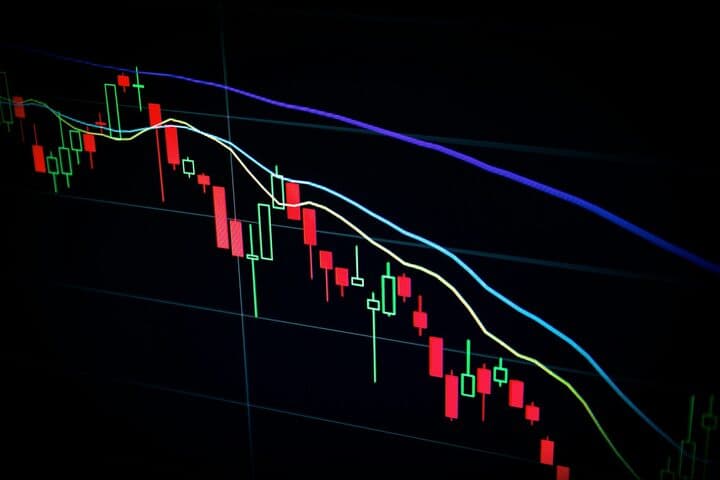
Cover: Unsplash trading chart photo (photo-1611974789855), Unsplash License — https://unsplash.com/photos/1611974789855. Inline: Unsplash desk/documents photo (photo-1450101499163), Unsplash License — https://unsplash.com/photos/1450101499163. Light resize to max width 720px for FreezeRadar. Not an official exchange or Tether image.
Sources (5)
TetherToken (USDT) verified contract — blacklist views
Etherscan
Public isBlackListed / getBlackListStatus reads used to separate issuer flags from venue holds.
Tether Token Terms of Sale and Service
Tether
Issuer may freeze/blacklist for Prohibited Use and share information with LE; distinct from CEX account policy.
Can Tether Freeze USDT? Contract Authority, Chain by Chain
FreezeRadar
Companion evergreen on addBlackList / destroyBlackFunds mechanics.
Informal USDT Freeze vs GENIUS Act Lawful Order
FreezeRadar
Framing informal cooperation vs court/statutory process for internal notes.
Why Is My USDT Frozen? (exchange vs issuer distinction)
BlockSec
Secondary industry explainer contrasting exchange-side freezes with on-chain blacklist; used for SERP uniqueness check, not as primary authority.
Related reading
Continue exploring FreezeRadar knowledge content.



On this page
Get posts like this by email
A daily or weekly digest of FreezeRadar freeze activity.
By FreezeRadar Team
Wallet risk intelligence and stablecoin compliance analysis from FreezeRadar.