Informal Law-Enforcement Requests Aren’t the Same as a GENIUS Act Lawful Order — Why Timing Matters for USDT Freeze Risk
A SDNY complaint alleges Tether blacklisted ~$42.4M USDT on an informal HSI request months before an EDNC seizure warrant. GENIUS Act §2(16) defines a lawful order—wallet teams should track the gap.

An informal law-enforcement request is not the same thing as a GENIUS Act “lawful order.” For wallet-risk teams, the operational question is timing: when did an issuer immobilize USDT, and what formal process—if any—existed at that moment?
A new Southern District of New York complaint makes that gap concrete. On August 31, 2026, Nutthawat Rukthammachalern and Natthawat Kasamvilas sued four Tether entities after approximately 42,417,785.62 USDT across 10 Ethereum addresses was blacklisted on October 30, 2025. The complaint alleges the freeze followed an informal Homeland Security Investigations (HSI) request, with no warrant, subpoena, court order, or other formal legal process directed to Tether at the time. A federal seizure warrant in the Eastern District of North Carolina did not arrive until February 19, 2026—more than three months later.
That sequence is the story wallet teams should track: issuer freeze first, formal process later. Separately, Public Law 119-27 (the GENIUS Act) defines a “lawful order” for payment-stablecoin freezes and burns. Whether courts ultimately apply that definition to this dispute is for litigation to decide. The monitoring takeaway does not wait for a final judgment.

Check a wallet before you act
Run a FreezeRadar scan for issuer-freeze signals, sanctions exposure, counterparty risk, and freezeable asset sensitivity before moving funds.
What the complaint alleges happened
According to the SDNY complaint (CourtListener RECAP for gov.uscourts.nysd.671642):
- Plaintiffs say they acquired the USDT in secondary-market business transactions and had no contract or customer relationship with Tether.
- On October 30, 2025, Tether allegedly used the smart-contract
addBlackListfunction against their addresses. - When a plaintiff contacted Tether about the restriction, the company allegedly pointed him to an HSI special agent rather than documenting a formal legal basis for the freeze.
- On February 19, 2026, EDNC Case No. 5:26-MJ-1267-JG produced a seizure warrant that, per the complaint, contemplated burning the frozen USDT and issuing replacement tokens to a government-controlled wallet via
destroyBlackFunds-style mechanics. - Plaintiffs argue the later warrant cannot retroactively authorize the October freeze and dispute whether a seizure warrant authorizes destroying the specific tokens before a final forfeiture judgment.
None of those allegations has been adjudicated. Tether had not publicly answered the complaint in early-September coverage. Treat the filing as a primary-source allegation set, not as proven fact.
Where the GENIUS Act “lawful order” definition fits
Section 2(16) of the GENIUS Act (Public Law 119-27) defines a lawful order as a final and valid writ, process, order, rule, decree, command, or other requirement issued under federal law by a court of competent jurisdiction or an authorized federal agency, that:
- requires a person to seize, freeze, burn, or prevent the transfer of payment stablecoins issued by that person;
- specifies the payment stablecoins or accounts subject to blocking with reasonable particularity; and
- is subject to judicial or administrative review or appeal as provided by law.
Section 4(a)(6)(B) separately requires permitted payment stablecoin issuers to have the technological capability to comply—and to comply—with the terms of any lawful order. Capability and a completed order are different things. An issuer can be able to freeze addresses without every freeze being the same as compliance with a §2(16) order.
Secondary analysis of the case (including Forkast’s September 2026 write-up) frames the October–February gap against that definition: an informal agent request may lack the formality, particularity, and reviewability the statute describes. FinanceFeeds’ September 2, 2026 coverage centers the same timing dispute without needing to invent Search Console demand: the freeze allegedly preceded the warrant by months.
This article is not legal advice and does not tell anyone how to avoid lawful process. It is an operations note: if your acceptance file still treats “LE asked the issuer” and “a reviewable lawful order arrived” as the same event, you are missing a timestamp that now has a statutory vocabulary.
How this differs from nearby FreezeRadar topics
- Opposite of Circle / Drift USDC freeze litigation: that storyline is about failure or delay to freeze. This one is about a freeze that allegedly arrived before formal process.
- Opposite of NYAG stablecoin freeze-order monitoring: New York testimony pressure has often pushed toward faster freeze-on-request. The SDNY complaint challenges authority and timing from the other direction.
- Different from Treasury’s GENIUS U.S.-access rule: that post is about U.S. access / CIP-style controls. This one is about freeze/burn timing versus a lawful-order definition.
- Related but not duplicate of Tether’s $72M Tron intervention window and the August 2026 USDT ban-wave: those cover speed and volume of blacklists. Here the distinctive signal is process quality and chronology.
What wallet-risk teams should monitor
Treat the case as a checklist for issuer-controlled USDT, not as a prediction of who wins.
1. Separate three clocks
Log, when you can observe them:
- On-chain immobilization time (blacklist / transfer restriction visible on the address).
- Public LE or DOJ narrative time (press release, seizure announcement, thank-you to an issuer).
- Formal process time (warrant, court order, or other reviewable instrument you can point to).
In this alleged timeline, clock 1 is October 30, 2025; clock 2 includes the February 24, 2026 EDNC announcement of a $61M+ USDT seizure thanking Tether; clock 3 is the February 19, 2026 warrant. If your playbook only watches clock 2, you will mis-time risk.
2. Watch burn / reissue risk after a freeze
A blacklist is not the end state. The complaint emphasizes destroyBlackFunds and replacement minting into a government wallet. For treasury desks holding issuer-controlled balances, monitor whether immobilized tokens remain transferable-blocked only, or move toward burn-and-reissue. That changes recovery, insurance, and accounting assumptions even when the original hash is still visible on explorers.

3. Score secondary-market holders differently from direct issuer customers
Plaintiffs stress they never opened a Tether account and bought on the secondary market. Operationally, that is common for OTC desks, payment companies, and DAOs. Your counterparty file should assume issuer intervention can hit non-customers. Terms-of-service comfort is not a substitute for freeze monitoring. Pair that with two-hop exposure analysis and how to reduce wallet freeze risk.
4. Do not collapse DOJ cooperation headlines into wallet guilt
The EDNC February 24, 2026 press release describes a large USDT seizure tied to alleged pig-butchering laundering and thanks Tether for assistance. That is relevant context for issuer cooperation patterns. It does not, by itself, prove any particular plaintiff’s liability or that every dollar in a related warrant is finally forfeitable. Keep investigation narrative, issuer action, and final adjudication on separate lines in the case file.
5. Map GENIUS vocabulary into acceptance criteria
Without practicing law, update internal language:
- “Can the issuer freeze?” (technical control)
- “Did a §2(16)-style order exist at freeze time?” (process checkpoint)
- “Did a later warrant appear?” (post-hoc formalization)
- “Is burn/reissue on the table?” (destruction risk)
Those four fields are enough to make informal-request freezes visible in dashboards that previously only stored “blacklisted: yes/no.”
Practical next step
If you hold, receive, or route USDT (or other issuer-controlled stables), run the addresses you care about through FreezeRadar’s scanner and keep watching for new blacklist events—not only OFAC hash hits. Exact SDN matches remain necessary and not sufficient; issuer freezes can move on a different clock.
Scan a wallet for freeze and sanctions-adjacent risk →
Key takeaway
The SDNY complaint alleges a multi-month gap between an informal HSI-linked USDT blacklist and an EDNC seizure warrant. The GENIUS Act gives U.S. payment-stablecoin law a definition of lawful order that emphasizes finality, particularity, and reviewability. Wallet-risk teams should monitor when freezes happen relative to formal process, and whether immobilized balances later face burn-and-reissue—not only whether an address eventually appears in a government press release.
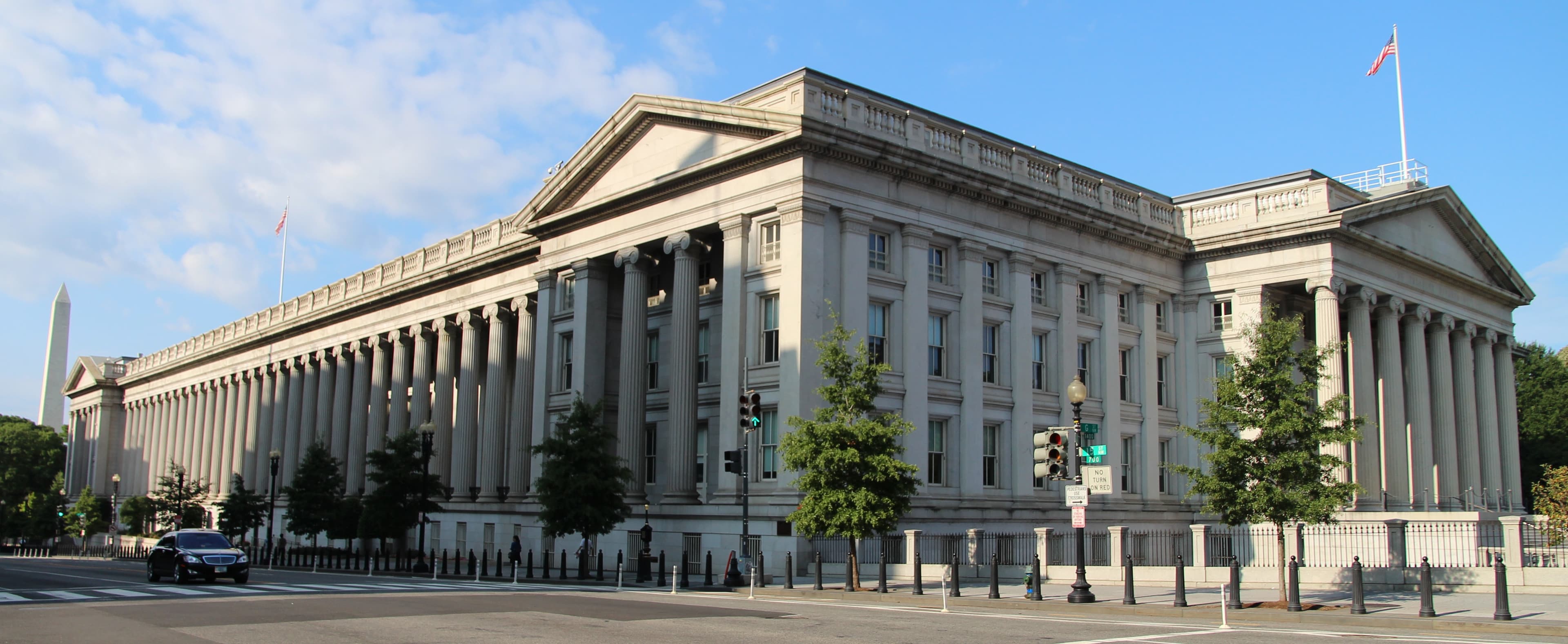
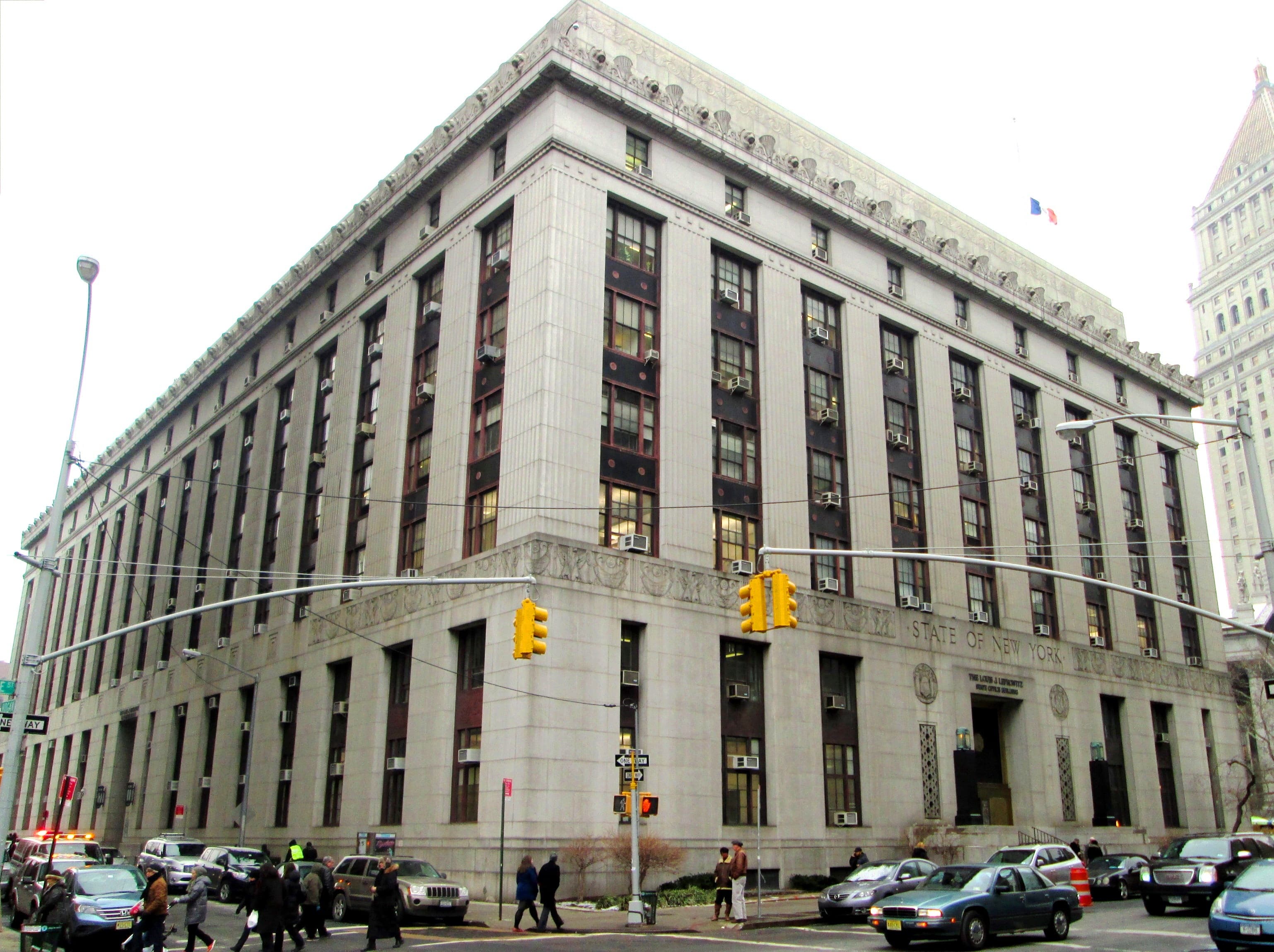
Image credits: cover — Thurgood Marshall United States Courthouse, 40 Centre Street, by Beyond My Ken, Wikimedia Commons, CC BY-SA 4.0; inline — Federal Building, Raleigh, North Carolina, by Jmturner, Wikimedia Commons, public domain (PD-self).
Sources (5)
Complaint, Rukthammachalern & Kasamvilas v. Tether Holdings et al., No. 1:26-cv-07400 (S.D.N.Y. filed Aug. 31, 2026)
CourtListener / PACER RECAP (gov.uscourts.nysd.671642)
Primary complaint PDF: Oct 30, 2025 blacklist of 42,417,785.62 USDT across 10 Ethereum addresses; alleged informal HSI request; Feb 19, 2026 EDNC seizure warrant 5:26-MJ-1267-JG.
Two Thai Businessmen Sue Tether Over Allegedly Unlawful $42.4M USDT Freeze at U.S. Request
FinanceFeeds
September 2, 2026 coverage of the SDNY filing and the freeze-before-warrant timeline.
The Four-Month Gap: Tether, Informal Freezes, and the GENIUS Act
Forkast
Secondary analysis connecting the alleged informal freeze gap to GENIUS Act §2(16) lawful-order language.
Guiding and Establishing National Innovation for U.S. Stablecoins Act (GENIUS Act), Public Law 119-27
U.S. Government Publishing Office / GovInfo
Primary statute: §2(16) lawful order definition; §4(a)(6)(B) technological capability to comply with lawful orders.
U.S. Attorney’s Office EDNC Announces Seizure of $61 Million Dollars’ Worth of Cryptocurrency
U.S. Department of Justice, U.S. Attorney’s Office, Eastern District of North Carolina
February 24, 2026 press release on $61M+ USDT seizure; acknowledges Tether’s assistance.
Related reading
Continue exploring FreezeRadar knowledge content.

On this page
Get posts like this by email
A daily or weekly digest of FreezeRadar freeze activity.
By FreezeRadar Team
Wallet risk intelligence and stablecoin compliance analysis from FreezeRadar.