A $29.6M USDT Blacklist Week Shows How Fast Tron Freeze Risk Can Move
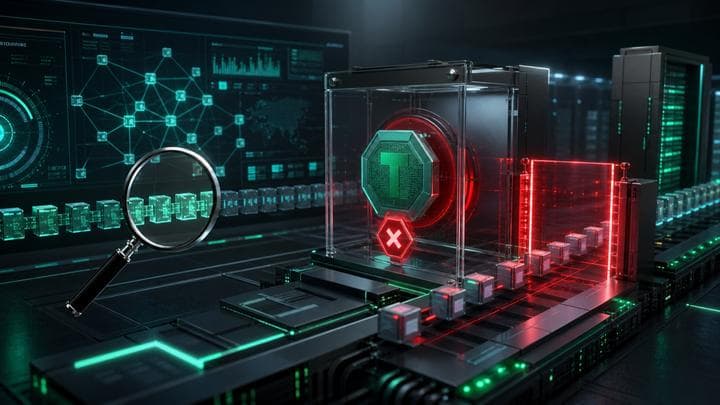
FreezeRadar tracked 64 positive-value USDT blacklist, release, and burn events on Tron from August 21-28, 2026. Here is what the cluster means for wallet-risk teams.

Check a wallet before you act
Run a FreezeRadar scan for issuer-freeze signals, sanctions exposure, counterparty risk, and freezeable asset sensitivity before moving funds.
Actionable Takeaway
Treat USDT blacklist status as a live operational signal, not a static due-diligence checkbox. For high-value Tron USDT flows, screen before accepting funds, preserve transaction evidence, monitor important counterparties after the first check, and separate blacklist status from broader sanctions, mixer, and source-of-funds exposure.
FreezeRadar users can review live activity in the events feed, watch aggregate freeze data on stats, and run a wallet check from scan.
What FreezeRadar Observed
FreezeRadar queried its public freeze-event dataset for positive-value USDT events on Tron from 00:00 UTC on August 21 through the afternoon of August 28, 2026. The result was a concentrated week of issuer-control activity.
| Date | Event type | Count | Observed value |
|---|---|---|---|
| Aug. 21 | AddedBlackList | 20 | $11.01M |
| Aug. 22 | AddedBlackList | 1 | $584,144 |
| Aug. 23 | AddedBlackList | 1 | $1.23M |
| Aug. 24 | AddedBlackList | 6 | $5.09M |
| Aug. 24 | DestroyedBlackFunds | 4 | $2.83M |
| Aug. 25 | AddedBlackList | 9 | $3.14M |
| Aug. 26 | AddedBlackList | 6 | $2.92M |
| Aug. 26 | RemovedBlackList | 1 | $7,315 |
| Aug. 27 | AddedBlackList | 10 | $942,651 |
| Aug. 27 | RemovedBlackList | 2 | $305,223 |
| Aug. 28 | AddedBlackList | 4 | $1.57M |
The largest event in the sample was an August 21 AddedBlackList transaction involving about $4.59 million in USDT. The next largest observed freezes were about $3.46 million on August 24 and about $2.10 million on August 25. Four August 24 DestroyedBlackFunds events accounted for about $2.83 million in observed value, including two roughly $1 million events.
Those numbers are observed balances at event time, not a legal finding, not proof of why the issuer acted, and not a complete claim about every asset a wallet controlled. They are still useful because blacklist, release, and burn events are concrete on-chain control actions.
Why a Ban Wave Is Different From a Single Frozen Wallet
A single frozen wallet tells a team to investigate one address. A cluster changes the workflow question: which counterparties, deposits, treasury wallets, vendors, OTC desks, or exchange rails were close to the affected addresses before the event window?
That distinction matters for three reasons.
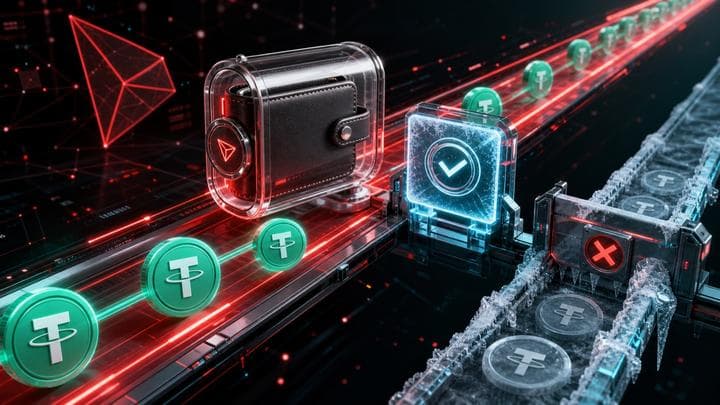
First, a blacklist event is asset-specific. A Tron address can be blocked from moving USDT while other assets or network activity remain outside that particular token-control action. Screening should therefore ask both “is this wallet blacklisted for USDT?” and “what other risk signals surround this wallet?”
Second, a release does not erase the operational event. RemovedBlackList activity can restore transferability for that token, but it remains part of the wallet’s history. Teams that keep counterparty records should preserve both the freeze and the release so later reviews do not misread a currently movable wallet as never having been blocked.
Third, a burn or DestroyedBlackFunds event is more severe than a simple current blacklist flag. It can indicate that frozen token balances were destroyed under issuer control. That is why the August 24 burn events deserve separate treatment from the freeze count.
Who Is Affected
The direct effect is on wallets named in the issuer-control events. The second-order effect is on anyone who recently accepted funds from, sent funds to, or relied on those wallets as liquidity sources.
For OTC desks, the risk is settlement timing. A wallet can look clean during negotiation and become frozen before or after delivery. For exchanges and payment processors, the issue is deposit monitoring: a one-time address check at account opening does not cover later blacklist changes. For treasury teams, the concern is concentration. Large balances in a single Tron USDT counterparty path can become a reporting and liquidity problem if a nearby wallet is frozen or burned.
The practical response is not to panic or over-label every neighboring address. It is to define a review threshold. High-value counterparties, repeated counterparties, and wallets with recent direct exposure to frozen addresses deserve more attention than tiny, old, or incidental flows.
What Readers Should Check Next
Start with the narrow fact pattern.
- Check whether the exact wallet is currently affected by a USDT blacklist event.
- Review recent inbound and outbound counterparties, especially direct transfers and high-share funding sources.
- Separate freeze, unfreeze, and burn events in the record.
- Preserve transaction hashes, dates, token, chain, and counterparties before contacting an exchange, issuer, or counsel.
- Re-check important counterparties after settlement as well as before it.
For Tron USDT specifically, the TRC20 frozen wallet guide explains how token-level freezes differ from ordinary wallet access problems. The Tether blacklist checker guide explains how FreezeRadar separates blacklist status from broader wallet-risk scoring.
What This Data Does Not Prove
This article does not identify the reason Tether acted, does not state that a wallet owner violated sanctions law, and does not provide legal advice. Public event data shows that contract-level control actions happened. It does not always show the off-chain request, investigation, court order, issuer review, or compliance file behind the action.
That limitation is important. FreezeRadar treats direct sanctions matches, risky counterparty exposure, behavioral signals, and issuer-freeze sensitivity as separate signals. A blacklist event is one strong operational fact, but it should be interpreted alongside source-of-funds context, known labels, sanctions lists, timing, and value concentration.
The August 21-28 cluster is still worth watching because it is recent, concentrated, and large enough to affect real workflows. If your business accepts Tron USDT, the lazy fix is not a new policy binder. It is a repeatable habit: check the wallet, record the evidence, monitor the counterparties that matter, and escalate uncertain high-value cases through proper compliance channels.
References
Sources (6)
FreezeRadar events feed
FreezeRadar
Public freeze, release, and burn event feed reviewed August 28, 2026.
FreezeRadar stablecoin freeze statistics
FreezeRadar
Live context for USDT freeze tracking and methodology.
Tether Token Terms of Sale and Service
Tether
Issuer terms and sanctions definitions, last updated February 26, 2026.
USDT on Tron contract
TRONSCAN
Public contract page for Tether USD on Tron.
Largest observed August 21 blacklist transaction
TRONSCAN
Observed AddedBlackList event for a wallet with about $4.59M USDT.
August 24 destroyBlackFunds transaction
TRONSCAN
Observed DestroyedBlackFunds event for about $1.00M USDT.
Related reading
Continue exploring FreezeRadar knowledge content.
On this page
Get posts like this by email
A daily or weekly digest of FreezeRadar freeze activity.
By FreezeRadar Team
Wallet risk intelligence and stablecoin compliance analysis from FreezeRadar.