New York’s Crypto Testimony Turns Stablecoin Freezes Into an Operating Requirement
New York’s attorney general asked Congress to require crypto platforms and stablecoin issuers to freeze wallets on law-enforcement request. For treasury and compliance teams, that turns issuer control into a live monitoring problem.
New York Attorney General Letitia James did not just ask Congress for another round of general crypto oversight on July 27, 2026. Buried inside the written testimony was a more operational demand: require cryptocurrency platforms and stablecoin issuers to temporarily freeze wallets and accounts when law enforcement asks, then return the assets or underlying collateral after a judicial finding of fraud.
That sentence matters because it takes a power many stablecoin users still treat as exceptional and frames it as part of the normal operating model for digital-dollar markets. USDT, USDC, PAXG, XAUt, and other issuer-controlled assets already sit somewhere between public blockchain settlement and private issuer permissions. The New York testimony pushes that hybrid reality into policy language.
For FreezeRadar readers, the lesson is direct. Stablecoin risk is no longer only about reserve quality, peg stability, or whether a counterparty can redeem. It is also about whether a wallet, related wallet cluster, or payment path can become subject to issuer intervention after a transaction has already looked final on-chain.
Check a wallet before you act
Run a FreezeRadar scan for issuer-freeze signals, sanctions exposure, counterparty risk, and freezeable asset sensitivity before moving funds.
What Happened on July 27
The Office of the New York Attorney General submitted written testimony to the Senate Committee on Homeland Security and Governmental Affairs’ Permanent Subcommittee on Investigations. The public release framed the testimony around scams, market oversight, state enforcement authority, and the pending Digital Asset Market Clarity Act.
The freeze language is the part stablecoin operations teams should not skim past. The testimony asks Congress to require crypto platforms and stablecoin issuers to freeze wallets and accounts upon law-enforcement request, and to return assets or collateral after a court finds fraud. It also calls for stronger AML, KYC, cybersecurity, surveillance, and market-integrity obligations.
This is not the same as saying every issuer must instantly freeze every suspicious address. The testimony is a policy request, not enacted law. But it is a useful signal because it describes how an influential state enforcement office wants the future control plane to work: not purely voluntary cooperation, not only ex post enforcement, and not only sanctions-list matching. The proposed model would make freeze capability part of consumer-protection and anti-fraud infrastructure.
That connects directly to current stablecoin practice. Tether can blacklist USDT addresses. Circle can block USDC addresses. Paxos-issued tokens have issuer controls. These controls are not theoretical. Public trackers and issuer-contract events already show thousands of blacklist, freeze, seizure, and reversal actions across stablecoin rails.
Why This Is Bigger Than a New York Policy Fight
The immediate political context is the Clarity Act and the broader fight over federal preemption. New York argues that federal legislation should not weaken state enforcement tools. Crypto market-structure advocates tend to argue that national rules are needed to avoid fragmented oversight. That debate matters, but for operators it can obscure the practical point.
Whether the final rulebook is federal, state, or some stitched-together version of both, regulated digital-dollar activity is moving toward more explicit intervention duties. If a wallet is tied to fraud, sanctions exposure, terrorist financing, market manipulation, or stolen funds, enforcement agencies want a path to stop movement before funds disappear through bridges, mixers, OTC desks, mule wallets, or foreign venues.
Stablecoins are the obvious place to start because issuers already have the technical levers. That makes them more governable than native assets such as BTC or ETH. It also makes them operationally different from the “cash on-chain” story still used in parts of the market.
When a payment team accepts USDT or USDC, it is accepting a claim on issuer-controlled settlement. Finality is not just block confirmation. It includes a second layer: the issuer’s ability, and potentially legal obligation, to restrict a wallet after the transaction.
The Operational Problem: A Freeze Can Arrive After the Payment Looks Done
The hardest version of freeze risk is timing. A treasury desk can check an address before paying. An OTC desk can check a deposit address before crediting a customer. A marketplace can screen a withdrawal destination before sending funds. Those controls help, but they are still snapshots.
BlockSec’s July 26 USDT materials make this point clearly. Its live tracker snapshot showed billions in frozen USDT, thousands of blacklisted addresses, and new freezes in the prior 24 hours. The exact numbers will keep changing, but the implication does not: blacklist state is dynamic. An address that looks clear at 10:00 can become restricted at 10:05 if a pending issuer action executes or if fresh intelligence reaches law enforcement and the issuer.
That is why this NY AG testimony should be read as a monitoring story, not only a legislation story. If the expected standard becomes “freeze on lawful request,” teams handling stablecoins need controls that survive after onboarding and after pre-transaction screening.
A serious stablecoin workflow needs:
- Pre-transaction checks for direct sanctions, direct issuer blacklist status, high-risk labels, and known freeze history.
- Continuous monitoring for addresses already in the customer base, address book, payee list, treasury wallet set, or recent counterparty graph.
- Event-based alerts for blacklist additions, removals, seizure actions, and burn/reissue mechanics where the issuer supports them.
- Escalation rules for indirect exposure, especially when a clean wallet is funded by or pays into a cluster that later becomes associated with fraud or sanctions.
- Evidence retention so compliance teams can show what was known at the time of acceptance, credit, withdrawal, or settlement.
FreezeRadar’s wallet monitoring strategy, two-hop exposure analysis, and stablecoin compliance guide all point in the same direction: one-off checks are necessary, but they are not enough when the risk state can change after money moves.
Treasury Teams Should Treat Issuer Control as Settlement Risk
Treasury teams often separate compliance from liquidity. That split gets uncomfortable with stablecoins.
A frozen stablecoin balance is not just a compliance alert. It is trapped working capital. It can interrupt customer payouts, settlement obligations, exchange flows, payroll rails, merchant payouts, or treasury rebalancing. In the worst case, a business credits fiat value against stablecoins that later become unspendable.
The NY AG proposal would intensify that issue by normalizing faster intervention when law enforcement identifies fraud. That may be socially desirable. It may help victims. It may also create sharper operational duties for anyone sitting between user funds and issuer-controlled assets.
The treasury question becomes: which wallets can create trapped-balance exposure if they are frozen after receipt?
That answer is not always obvious. A receiving address may be clean, but the sender may have just received funds from a risky exchange, a sanctioned cluster, a scam mule, a bridge route, or a wallet that appears in a later freeze dataset. Stablecoin treasury controls should therefore look beyond the immediate transaction and ask how much current balance is attributable to counterparties that could become legally sensitive.
For institutions, the practical control is not “avoid stablecoins.” It is to document the control plane. Know which assets are issuer-freezeable, which chains carry the highest operational volume, which counterparties create bilateral credit risk, and which internal wallets need continuous monitoring rather than periodic review.
Sanctions and Fraud Are Converging in the Same Monitoring Stack
Historically, sanctions screening and consumer-fraud recovery were treated as separate workflows. Sanctions teams watched OFAC and other lists. Fraud teams watched complaints, chargeback-like disputes, stolen funds, and scam patterns. Stablecoins compress those workflows.
A stablecoin issuer control can be triggered by sanctions exposure, law-enforcement cooperation, fraud recovery, stolen funds, or broader compliance pressure. The same wallet-monitoring stack has to ingest several kinds of evidence: official sanctions records, issuer blacklist events, exchange risk labels, mixer exposure, scam reports, bridge flows, and counterparty concentration.
That is why the July 27 testimony is relevant even for teams that do not operate in New York. It points toward a market where intervention requests are not rare edge cases. They are part of the expected enforcement toolkit.
The American Action Forum’s July 29 sanctions analysis makes the same structural point from another angle: stablecoin issuers can freeze tokens and prevent sanctioned users from sending or receiving that issuer’s asset. Eagle Virtual’s stablecoin freeze index shows the public-data layer becoming more systematic. BlockSec’s freeze tracker shows the on-chain event layer. The NY AG testimony ties those pieces to a policy demand.
Together, they describe the next phase of wallet risk: not just “is this address bad?” but “what happens to our operational exposure if this address, its funder, or its recipient becomes restricted tomorrow?”
What Teams Should Watch Next
The first thing to watch is legislative language. If Congress moves market-structure or stablecoin provisions forward, the exact wording around freeze capability, judicial process, law-enforcement requests, state authority, and issuer obligations will matter. A vague requirement to cooperate is different from a defined operational duty with deadlines, safe harbors, dispute rights, and evidence standards.
The second thing to watch is issuer behavior. Tether, Circle, Paxos, and other issuers will keep making policy choices about when to freeze, when to unfreeze, when to burn and reissue, and how much they disclose. Even where law does not force a specific action, issuer practice can become a de facto standard.
The third thing to watch is data quality. Public blacklist and freeze datasets are useful, but they are not magic. Teams need to know whether a feed is chain-complete, whether it separates seed/demo data from confirmed events, whether zero-balance historical freezes remain visible for risk intelligence, and whether source evidence is preserved.
The fourth thing to watch is indirect exposure. A law-enforcement freeze request may name a specific wallet, but operational risk spreads through counterparties. A business may have no direct sanctioned address in its records and still face questions because funds passed through a newly identified fraud cluster, high-risk OTC route, or bridge path.
Key Takeaway
The July 27 NY AG testimony is important because it says the quiet part of stablecoin operations out loud: issuer freeze capability is becoming part of the expected market infrastructure.
That does not mean every freeze is justified, instant, or irreversible. It does mean that teams using stablecoins for treasury, payments, trading, or customer settlement need to treat freeze state as live operational data. Address screening should not stop when a transaction confirms. It should continue while the relationship, wallet, receivable, or balance remains economically relevant.
FreezeRadar’s view is simple: stablecoin controls can reduce harm, but they also create a second layer of settlement risk. The teams that handle that best will be the ones that monitor direct issuer blacklist status, sanctions exposure, high-risk counterparties, and changing evidence over time instead of treating stablecoin transfers as a one-and-done compliance check.
Image Credits
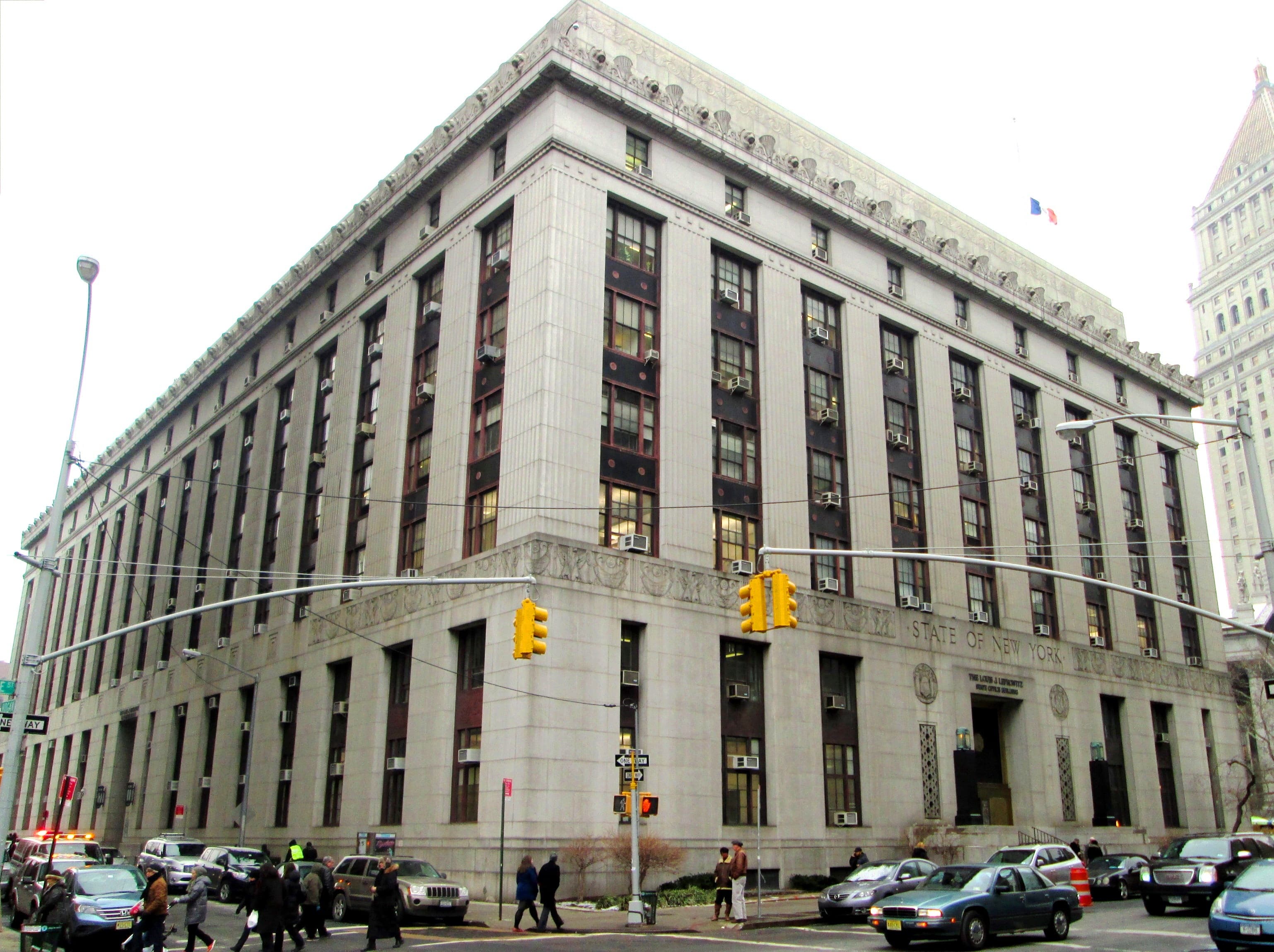
Cover image: Louis J. Lefkowitz State Office Building at 80 Centre Street, photographed by Beyond My Ken and published on Wikimedia Commons under CC BY-SA 4.0 / compatible licenses. Inline image: Tether logo from Wikimedia Commons, public-domain text-logo notice with trademark caveat.
Sources (6)
Attorney General James Urges Congress to Strengthen Oversight of Cryptocurrency Companies to Stop Scams
Office of the New York Attorney General
Primary July 27, 2026 release describing the testimony and policy recommendations.
Cryptocurrency Scams - Congressional Testimony - 2026
Office of the New York Attorney General
Primary written testimony; includes the wallet/account freeze recommendation.
NY Attorney General Letitia James warns Clarity Act would dilute states ability to go after fraud
The Block
Related reporting on the Clarity Act and state-enforcement angle.
Crypto Sanctions & Stablecoin Blacklist Screening
Eagle Virtual
Related freeze/seizure index showing live stablecoin blacklist activity as of July 27, 2026.
How to Check if a USDT Address Is Frozen
BlockSec / Phalcon Compliance
Related July 26, 2026 explainer and live tracker snapshot for USDT freeze mechanics.
Sanctions in the Stablecoin Age
American Action Forum
Related July 29, 2026 policy analysis on stablecoin freeze controls and sanctions effectiveness.
Related reading
Continue exploring FreezeRadar knowledge content.


On this page
Get posts like this by email
A daily or weekly digest of FreezeRadar freeze activity.
By FreezeRadar Team
Research and product team behind FreezeRadar.