Why SDN Address Hits Are Necessary but Not Sufficient for Wallet Freeze Risk
OFAC FAQ 562 says digital currency address listings on the SDN List are not exhaustive. Exact hash hits remain necessary. They do not, by themselves, measure wallet freeze risk.
An OFAC digital currency address on the SDN List is a necessary screening input. It is not a complete wallet freeze-risk program. OFAC FAQ 562 says the agency may publish specific identifiers associated with a blocked person, and that those digital currency address listings “are not likely to be exhaustive.” A wallet with no exact SDN hash match can still be blocked property, sit next to a designated exchange, or hold a freezeable stablecoin that an issuer later restricts.
That is the operational gap this article is about. Exact-match screening against published OFAC hashes remains required. Treating a clean match as a green light for freeze risk is the mistake.
Check a wallet before you act
Run a FreezeRadar scan for issuer-freeze signals, sanctions exposure, counterparty risk, and freezeable asset sensitivity before moving funds.
What FAQ 562 actually tells screening teams
FAQ 562 is short and still current. OFAC may add digital currency addresses to the SDN List to alert the public to specific identifiers associated with a blocked person. The list is a warning system, not a census of every wallet a blocked person controls.
The FAQ also says that parties who identify wallets they believe are owned by, or otherwise associated with, an SDN and who hold such property should take the necessary steps to block the relevant digital currency and report to OFAC. The legal object is the person and the property interest, not only the hash that happens to be in the public file today.
Two screening consequences follow.
First, an exact hit on a published digital currency address is a high-priority event. OFAC FAQ 594 notes that the Sanctions List Search ID field does not use fuzzy logic, so only exact matches return. That makes quality of the hash, the chain tag, and the list file you ingest a real control, not a trivia item.
Second, the absence of a hit is not a finding that the wallet is outside sanctions or freeze risk. It is only a finding that the address is not in the published identifier set you checked at that moment.
This article is educational. It is not legal advice and it is not a guide to evading sanctions. Possible matches belong with qualified counsel, preserved records, and the firm’s escalation path.
2026 made the “not exhaustive” warning concrete
Summer 2026 did not change FAQ 562. It showed why the FAQ was written that way.
On July 14, 2026, OFAC updated the already-listed entry for Bank Markazi Jomhouri Islami Iran. The official recent-actions notice added four TRX digital currency addresses to identifiers that were already on the SDN List. The central bank was not a new designation. The public wallet file grew. A screening program that only stored the older TRX identifiers would have missed the new ones until the list refresh landed.
On June 2, 2026, Treasury designated Nobitex and three other Iranian digital asset exchanges. The Treasury press release said Nobitex processed more than 50 percent of Iranian digital asset inflows in 2025, and it pointed readers to FAQ 1250 and FAQ 1257. That is an entity and program action, not merely a dump of hashes.
On August 7, 2026, OFAC designated the Shelbit network and Aban Tether Exchange and amended FAQ 1257. The official list update and the Treasury release published digital currency addresses for some parties, including SHPS Shelbit, Siavash Kayvanpour, and Crypto Home DMCC. The Aban Tether Exchange entry published a Tehran address, website, and Iranian national ID. It did not publish a digital currency address.
If your only control is “does this transfer match an SDN wallet field?”, Aban Tether is invisible in that control on day one. The designation is still a designation. FreezeRadar already covered the exchange-plumbing story in Shelbit and Aban Tether. The point here is narrower: published hashes and named entities are not the same data product.
Entity blocking is wider than the wallet file
OFAC FAQ 1250, released May 1, 2026, states that Iranian digital asset exchanges meet the definition of an Iranian financial institution and are blocked under E.O. 13599 as implemented in the ITSR, “regardless of whether [the institution] is listed on” the SDN List. U.S. persons who hold such property must block it and report it.
That sentence is easy to skip and expensive to skip. It means a wallet can be associated with blocked property because of what the institution is, not because OFAC has finished typing every deposit address into the SDN file.
FAQ 1257, updated August 7, 2026, then warns that non-U.S. persons and foreign financial institutions that deal with designated Iranian digital asset exchanges, including Nobitex, Wallex, Bitpin, Ramzinex, and Aban Tether, may face sanctions under E.O. 13902 or other Iran-related authorities, including correspondent-account restrictions. Wallet freeze risk for a treasury desk is not only “did we pay a listed TRX address?” It is also “are we touching a designated exchange’s rails, even through a wallet OFAC has not printed yet?”
None of that tells a team to guess guilt by association. It tells a team not to treat the published hash file as the perimeter of the obligation.
The UK list is a second, different identifier system
U.S. teams that only ingest OFAC digital currency address fields still have a multi-jurisdiction problem. Since 28 January 2026 the UK Sanctions List is the only official source for UK designations. The OFSI Consolidated List is closed.
The UK Sanctions List format guide enumerates fields for names, unique IDs, passports, websites, emails, and ship identifiers. It does not define an OFAC-style “Digital Currency Address - TRX” column. Wallet identifiers, when they appear, sit in free-text areas such as Other Information or the UK Statement of Reasons.
That is why FreezeRadar’s public sanctioned address database tracks OFAC, the UK Sanctions List, the UN, the EU, and NBCTF as separate sources rather than pretending one hash file is global. As of this writing the product page shows far more UK entities than UK-published crypto addresses. The mismatch is the point: entity coverage and address coverage are not the same thing on that list either.
A wallet can therefore be sanctions-relevant in the UK data set without ever matching an OFAC digital currency address field. Screening that stops at SDN hashes is incomplete even as U.S. list screening.
Address hits are still necessary
None of the above is an argument for dropping list matching. The 2026 updates only work if you ingest them.
A defensible floor looks like this:
- Ingest official OFAC files, not a one-time spreadsheet. July 14 added TRX identifiers to Bank Markazi without making the bank a new person.
- Match the full identifier, including the digital currency tag. A TRX address and an ETH address are not interchangeable strings.
- Rescreen after each list update. Exact-match tools will not fuzzy-find a new hash.
- Screen the named entity, aliases, websites, and company numbers, not only wallets. Aban Tether is the example.
- Keep UK, UN, EU, and other official lists in the same workflow, parsed for the fields those lists actually publish.
The OFAC screening guide walks through onboarding, transaction, and ongoing checkpoints. The Academy track for compliance teams is the place to put that into a repeatable path. Direct hits still belong at the top of the escalation ladder.
Why a clean SDN match is not enough for freeze risk
Freeze risk is the chance that value you received, hold, or plan to send becomes unusable: blocked as a legal matter, frozen by an issuer, held by an exchange, or rejected by an off-ramp. Published SDN addresses are one input to that chance. They are not the whole model.
A practical review has to separate at least four signals:
- Direct list match. The wallet is a published OFAC digital currency address, or another official list identifier. That is necessary screening, and it is usually an immediate stop.
- Unlisted association. The wallet is not in the file, but it is used by or for a blocked person or a blocked Iranian financial institution. FAQ 562 and FAQ 1250 are the primary sources for why that gap exists.
- Indirect path. The wallet transacted with a designated exchange cluster, a newly added Bank Markazi identifier, or a Shelbit-linked address after the fact. Two-hop exposure is how you look at that without turning every intermediary into a sanctions event.
- Issuer-control risk. USDT, USDC, and other freezeable tokens can be restricted after a legal request even when your receiving wallet was never printed on the SDN List. That is a different control from OFAC’s public hash. See stablecoin compliance and blocked property.
The July 14 Bank Markazi update is the timing lesson. Identifiers can be added to an existing entry. A wallet that was “not on the list” on July 13 can be on the list on July 14 without any change in who owned it. The August 7 Aban Tether entry is the coverage lesson. A designated exchange can appear with no wallet field at all. FAQ 1250 is the legal-scope lesson. Some institutions are blocked whether or not they are listed.
For teams that accept freezeable assets, the workflow implication is blunt. Screen the published addresses. Then screen the entity. Then look at counterparties and asset-level controls. Then monitor, because the file will move again.
If you need a single next step, run a wallet scan before the funds become an operating balance. FreezeRadar checks sanctions exposure, freezeable-asset sensitivity, and counterparty history. It does not replace counsel, and it does not tell you how to move around a restriction.
What this does not mean
A missing SDN address is not permission to transact. A present SDN address is not a puzzle to route around. Indirect exposure is not automatic equivalence to a direct hit. Issuer freezes are not proof of a sanctions violation by every neighboring wallet.
Keep those distinctions in the file. The blocked-property guide is the right companion when a case may be legal rather than a customer-support issue. Do not attempt to evade a restriction. Preserve hashes, timestamps, counterparties, and communications, and escalate.
Key takeaway
FAQ 562 has said since 2018 that OFAC’s digital currency address listings are not likely to be exhaustive. The 2026 Bank Markazi TRX updates, the Nobitex designations, the Shelbit hashes, and the hash-less Aban Tether entry are what that sentence looks like in production data. SDN address hits are necessary. They are not sufficient for wallet freeze-risk screening.
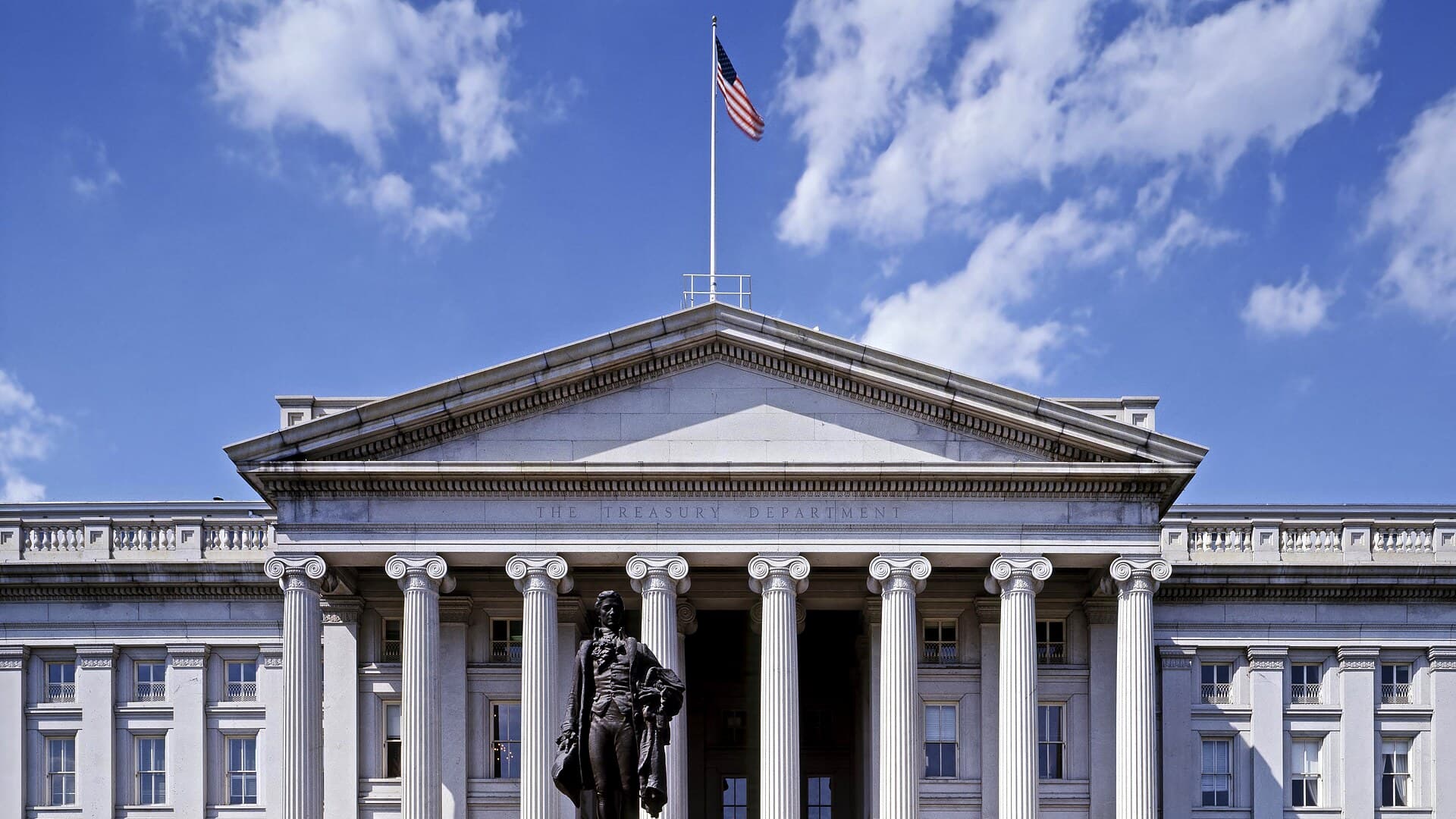
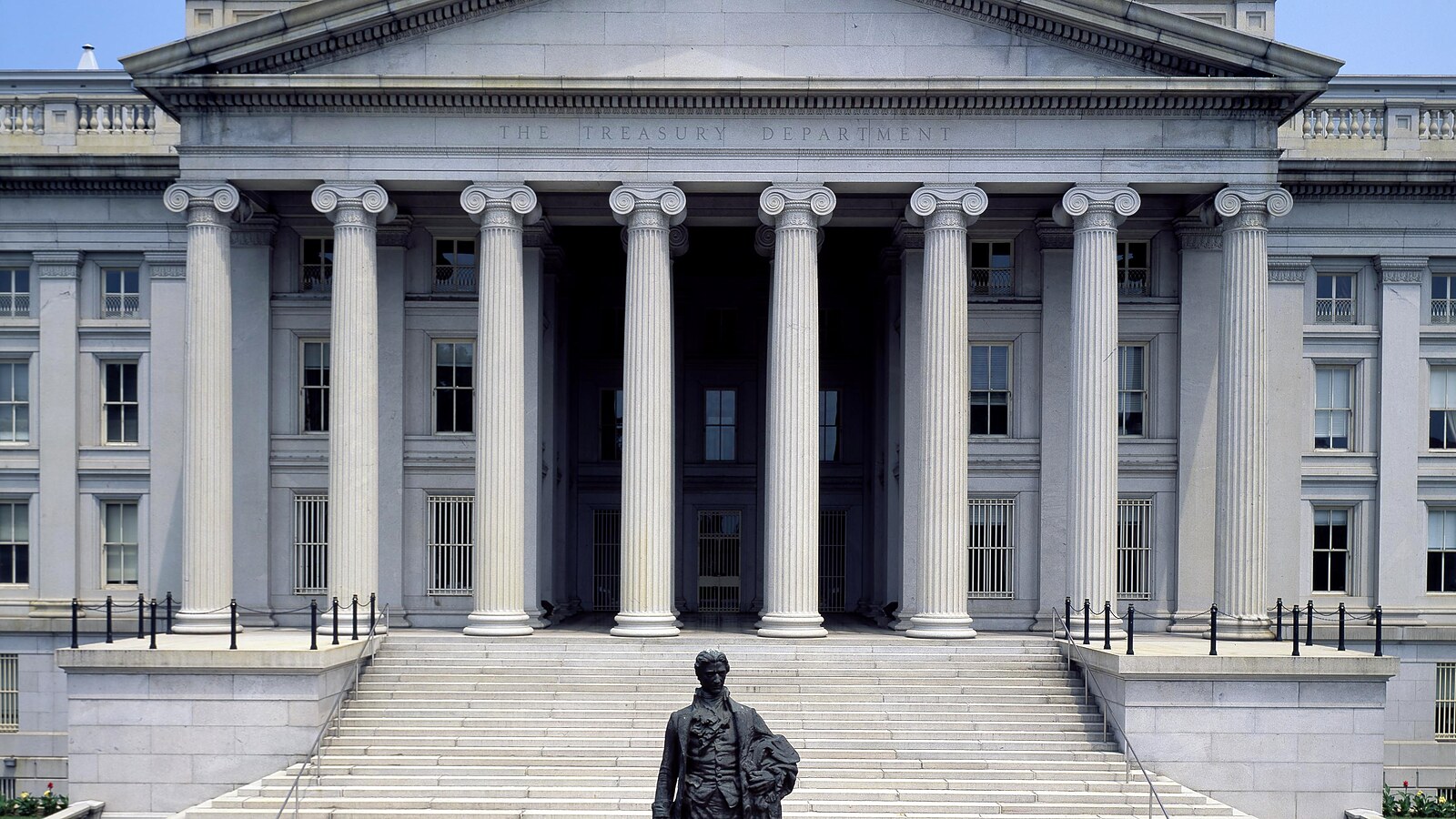
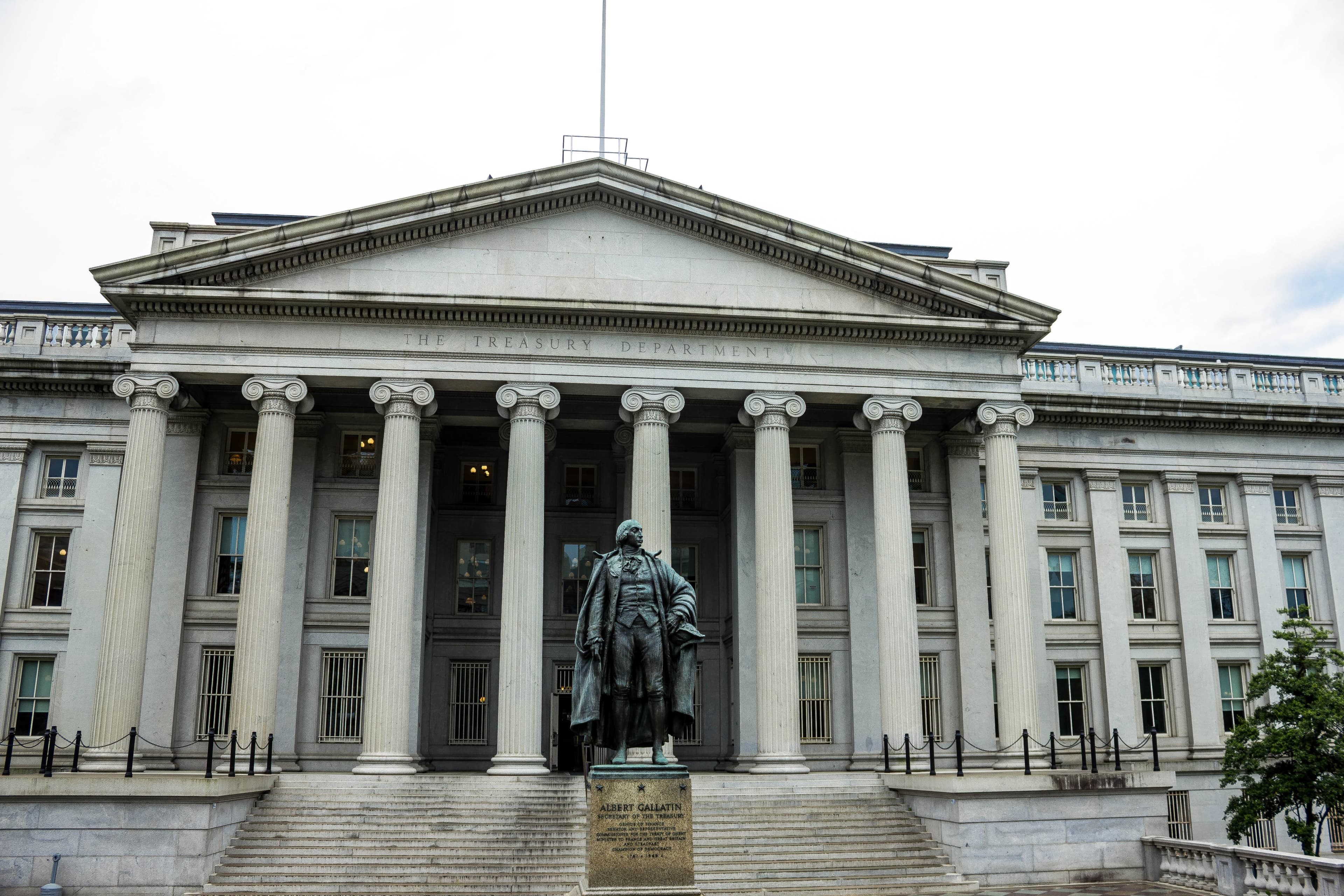
Cover: Carol M. Highsmith, U.S. Treasury building, Washington, D.C. Library of Congress LC-DIG-highsm-12807. Rights: no known restrictions on publication (Highsmith Archive; photographer dedicated the work for copyright-free access). Source: https://www.loc.gov/item/2011631001/. Inline: Carol M. Highsmith, Alexander Hamilton statue in front of the Treasury Building in Washington, D.C. LC-DIG-highsm-13336. Rights: no known restrictions on publication. Source: https://www.loc.gov/item/2011631530/. Light 16:9 crop, contrast, and sharpen for FreezeRadar. Not an official Treasury or OFAC seal.
Sources (6)
562. How will OFAC identify digital currency-related information on the SDN List?
U.S. Department of the Treasury, OFAC
Primary source: digital currency address listings are not likely to be exhaustive. Released March 19, 2018.
1257. Are non-U.S. persons exposed to sanctions for dealing with digital asset exchanges designated pursuant to E.O. 13902?
U.S. Department of the Treasury, OFAC
Updated August 7, 2026 to include Aban Tether alongside Nobitex, Wallex, Bitpin, and Ramzinex.
Iran-related Designations; Iran-related and Counter Terrorism Designation Update; Issuance of Iran-related General License
U.S. Department of the Treasury, OFAC
July 14, 2026 SDN update adding four TRX digital currency addresses to the existing Bank Markazi entry.
Counter Terrorism and Iran-related Designations; Issuance of Amended Iran-related Frequently Asked Question
U.S. Department of the Treasury, OFAC
August 7, 2026 designations including Shelbit-network digital currency addresses and Aban Tether Exchange without a published wallet field.
Economic Fury Targets Iran’s Largest Digital Asset Exchange for Terror Finance and Sanctions Evasion
U.S. Department of the Treasury
June 2, 2026 Nobitex, Wallex, Bitpin, and Ramzinex designations; points to FAQ 1250 and FAQ 1257.
The UK Sanctions List
UK Foreign, Commonwealth & Development Office
Official UK designation list after the OFSI Consolidated List closed on 28 January 2026.
Related reading
Continue exploring FreezeRadar knowledge content.


On this page
Get posts like this by email
A daily or weekly digest of FreezeRadar freeze activity.
By FreezeRadar Team
Wallet risk intelligence and stablecoin compliance analysis from FreezeRadar.