Explainable Stablecoin Risk Scoring for Wallet Desks
How to talk about a FreezeRadar score in tickets without rewriting methodology math: findings, sources, coverage, floors, and what the number is not.
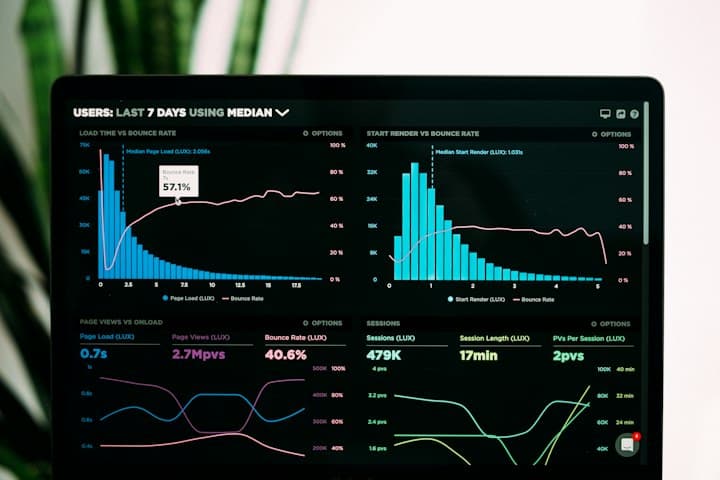
A FreezeRadar score is an explainable, rule-based assessment of freezeable-asset wallet risk. It is not a court finding, not a freeze prediction, and not a license to take a trade. The math lives on methodology and scoring. This post is the desk deepener: how to read the number, what you may say in a ticket, and what you must not invent. It does not replace those pages and it does not change weights, thresholds, or finding types.
Educational only. Not legal advice. Not a bypass for issuer, venue, or lawful-order controls.

Check a wallet before you act
Run a FreezeRadar scan for issuer-freeze signals, sanctions exposure, counterparty risk, and freezeable asset sensitivity before moving funds.
Direct answer
Read a FreezeRadar result as four stacked questions: what official or on-chain facts hit this address, who it transacted with (source-backed only), what behaviour showed up in the tracked window, and how freezeable the assets are. The public scoring page turns those into one overall number with published category bands. Direct issuer blacklist is a special case (overall 100). Direct official sanctions is a high floor. Behaviour-only results stay capped. Coverage gaps lower confidence, not risk. If you cannot point to a finding and a source, do not narrate a story the engine did not score.
Who owns which query
| Question | Owner page |
|---|---|
| Data sources, detection, scoring, limits | /methodology |
| Axes, weights, bands, finding catalog, changelog | /methodology/scoring |
| Pattern encyclopedia | /patterns |
| How a desk should talk about the number | This post |
Do not publish a competing /guides landing for “explainable stablecoin risk scoring.” Link methodology. If the math changes, it changes there first, then here.
What “explainable” means on a ticket
Explainable means a reviewer can reconstruct the result from published rules:
- Findings have types (
DIRECT_ISSUER_BLACKLIST_MATCH,MIXER_INTERACTION,FREEZEABLE_ASSET_EXPOSURE, …). Catalog pages exist under/patterns. - Attribution that affects the score carries a source and a confidence. A nickname without a source is not a finding.
- Hop distance is explicit. One-hop is not two-hop. Service boundaries (for example a reputable exchange) attenuate upstream stories. See tainted USDT without overclaim.
- Coverage is disclosed: transfer window, truncation, targeted two-hop budget, activity-data-available. Zeros in the window are not “the entire history is empty.”
- Access mode may hide detail from Free/guest viewers. The score on a historical snapshot still belongs to that scan. Do not “upgrade” an old Free report in conversation as if the engine changed underneath it.
If any of those five cannot be shown, the sentence in Slack is too strong.
Four axes, without restating the formula
Methodology scoring publishes four weighted components. Desk translation only:
- Sanctions. Official lists and issuer blacklists. Least arguable when the match is direct.
- Counterparty. Who the wallet actually touched, when labels have sources. Incomplete labelling everywhere; unknown is unknown.
- Behavioral. Shapes such as peel, fan-in/fan-out, rapid pass-through. Suggestive. High-throughput wallets can keep some of those as unscored context.
- Freezeability. Holding USDT/USDC/PAXG/XAUt is exposure, not guilt. Direct freeze/blacklist is a different finding.
Do not quote weight decimals from memory in a customer email. Link the scoring page. If you need the current version string, it is stored on the scan as scoringVersion. V3 applies to new scans; old V2 reports keep their stored score unless a maintenance rescore says otherwise.
Hard floors and caps you may mention
These are product facts already on methodology, restated so a trader does not “average them away”:
- Direct issuer blacklist match → overall risk 100.
- Direct sanctions match → overall at least 95.
- A result that is only behavioural/contextual is capped in the LOW band (methodology: 24).
- Confidence has ceilings: behavioural-only, source-backed indirect, and direct official/on-chain are not the same confidence class. Missing activity data caps confidence further. Truncation and failed targeted tracing lower the ceiling. None of that manufactures freeze risk by itself.
If a customer asks “why is this 18 if I have lots of transfers?”, the answer is usually freezeable-asset exposure plus no severe sourced hit — not a secret second engine.
What the result page already explains
Under the gauge, FreezeRadar shows a short Why this score box from score drivers, exposure summary, wallet overview, and coverage. It is allowed in summary mode because it does not dump raw evidence. Use that box in tickets. Do not paste rawEvidenceJson into a Telegram group.
Deep scans add provenance disclosure (deepScanCoverage, balanceProvenance). Heuristic origin of the current balance is not a forensic guarantee. Official-sanctions provenance and curated-risk provenance are separate findings. A curated path must not be rewritten as a direct sanctions flag.

Desk sentences that stay honest
Good: “Scan …. Category MEDIUM. No direct sanctions or issuer blacklist. Top drivers: one-hop high-risk exchange label (source X, confidence Y) and freezeable USDT exposure. Coverage: N transfers in the tracked window; targeted two-hop truncated. Confidence 62. Policy = Review.”
Good: “DIRECT_ISSUER_BLACKLIST_MATCH. Overall 100. Official USDT isBlackListed true at [time]. This is spendability, not a mixing debate.”
Bad: “Score 40 means 40% chance Tether freezes you this week.”
Bad: “Unknown counterparties raised the score.” Unknown lowers confidence. It does not mint risk.
Bad: “We used a different model for this VIP.” Identical evidence must score the same. Address-hash diversification was removed.
Bad: “Two hops from a mixer, so MIXER_INTERACTION.” That finding is first-hop only. Academy: mixer detection.
How this interacts with freeze tickets
A high score with blacklist false is still a review object, not an issuer freeze. Split planes:
- Issuer flag (read USDT yourself; USDC / Solana dialects differ).
- Venue hold (exchange hold vs issuer).
- FreezeRadar findings and category.
Ban-wave weeks are when people smash those together. Keep the ban-wave playbook and this scoring language both pinned.
PAXG and XAUt are freezeable in the registry with issuer-specific controls. They use the same scoring engine and different contracts. Deepeners: PAXG wallet ops, XAUt wallet ops. Do not say “USDT score rules” in a PAXG ticket without naming Paxos.
What a scan will not do
- It will not see the issuer’s unpublished case file.
- It will not see an exchange’s private cluster.
- Standard is a targeted two-hop, not a full graph crawl. Deep is budgeted upstream provenance, inbound freezeable roots, not a complete outbound forensic.
- Bitcoin in this product is sanctions-only: no UTXO wallet-risk theatre.
- Token approvals (allowances) are not scored yet. A phishing drain can empty a wallet while the issuer flag stays false. Tell those apart: seed phishing vs issuer freeze.
When activity data is unavailable, the UI must warn. That gap is confidence, not a hidden HIGH.
Artifact pack for a scored decision
- Scan URL and scan id
- Scoring version
- Category and overall number
- Direct sanctions / issuer blacklist yes-no (plain language)
- Named findings you actually relied on, with hop and source
- Coverage note (window, truncation, tracing)
- Chain, asset, official contract
- Restriction-flag read if freezeable USDT/USDC
If legal later asks “why did we take this?”, that pack is the answer. A screenshot of the gauge is not.
Summary vs detailed, and old scans
Free and guest views are usually SUMMARY. Pro and above get DETAILED. The upgrade card on the result page is only for guest/Free viewers; a currently paid user should not see it even when looking at an older Free snapshot. Data visibility of that scan still follows its stored access mode. Do not tell a Free customer that the public share link will reveal findings it never stored.
Admins may open expired or summary scans for internal audit. That override is ADMIN only. Do not imply a Business plan is an admin role.
If someone asks to “run the new engine on last March’s report,” that is maintenance rescore from rawEvidenceJson, not a live rescan, and it is an admin path. A live rescan fetches chain data again and still must not be described as a different secret model. Link methodology either way.
Queue wait, scan mode (STANDARD vs DEEP), and coverage notes are part of explaining the number. A deep scan that truncated upstream roots is not a complete source-of-funds certificate. A standard scan that skipped a timed-out two-hop is not “clean because tracing failed.”
Honest limits
This article does not re-derive residual-risk aggregation, hop attenuation, or confidence arithmetic. Those belong on methodology and must stay the single source of truth. If you find a mismatch between this prose and the scoring page, the scoring page wins. FreezeRadar claims no certainty. Operational guidance under the gauge (routine checks vs do-not-accept) is still not legal advice.
Related FreezeRadar surfaces
Key takeaway
Explainable stablecoin scoring is named findings, sourced counterparties, disclosed coverage, and published floors/caps — then one number. Link methodology for the math. Use this page to keep tickets from turning a MEDIUM into a prophecy or a LOW into “the chain is empty.” If you cannot cite a finding, you do not have a freeze story.
Related reading
Continue exploring FreezeRadar knowledge content.



On this page
Get posts like this by email
A daily or weekly digest of FreezeRadar freeze activity.
By FreezeRadar Team
Wallet risk intelligence and stablecoin compliance analysis from FreezeRadar.