Will My USDC Get Frozen in a Cold Wallet?
Yes. Circle’s USDC block list is address-level. Cold storage changes who can sign, not who can blacklist. Desk FAQ with custody-type table and contract reads.
Yes. USDC in a cold wallet is still freezable. Circle’s USDC token contracts implement address-level allow/block-list controls; the contract does not ask whether the key lives in a Secure Element, a metal backup, or an air-gapped laptop. Cold storage changes who can sign. It does not change who can blacklist the address that holds the balance.
Educational only. Not legal advice. Not a Circle or hardware-vendor rating. Not a guide to evade freezes. For the USDT-framed custody comparison see hardware vs software wallet USDT freeze risk. This post is the USDC + cold-storage myth FAQ: same address-level plane, Circle’s contract language, lawful-order nuance without pretending cold air is a compliance shield.
Check a wallet before you act
Run a FreezeRadar scan for issuer-freeze signals, sanctions exposure, counterparty risk, and freezeable asset sensitivity before moving funds.
Direct answer
If isBlacklisted(address) (Circle’s spelling) is true on the USDC contract for that chain, transfers, approvals, and related privileged paths that enforce the not-blacklisted modifier can revert—Ledger, Trezor, Coldcard, paper, or multisig vault alike. Moving the same address to a new device does nothing. Generating a new address only helps for future receipts; it does not unfreeze the old one. Self-custody still matters for exchange insolvency and many malware classes. It is orthogonal to issuer freeze risk.
Screen the address, not the product box: USDC blacklist check · stablecoin freeze risk check.
The myth in one sentence
“I withdrew to a cold wallet so Circle / the government can’t touch my USDC.”
That sentence smuggles three different threats into one slogan:
- Exchange insolvency or account lockout
- Remote seed theft / malicious signing
- Issuer block-list on the address
Hardware and air-gapped workflows are built for (2) and help with (1) after withdrawal. They do not remove (3). Marketing that says “your keys, your coins” is about signing authority. USDC’s freeze path is issuer authority under the token contract and Circle’s terms.
What Circle documents about the token contract
Circle’s developer-facing explainer How the USDC Token Contract Works lists distinctive specifications that include an Allow or Block List—described as a safeguard that can prevent certain entities from interacting with USDC—alongside pause/upgrade, minter configuration, and multisig patterns for critical operations. The point for desks is architectural: block-list behavior is a first-class contract feature, not an exchange UI toggle.
On Ethereum-class deployments, Circle’s FiatToken family historically exposes blacklister-controlled functions such as blacklist / unBlacklist and a public isBlacklisted view, with transfer paths gated so blacklisted accounts cannot move USDC under those modifiers. Exact ABI spellings can differ by version and chain; always read the verified contract for the asset you hold. Secondary write-ups of Blacklistable.sol are useful for intuition; primary confirmation is the explorer Read Contract tab plus Circle’s own docs and USDC Terms.
Policy nuance that does not rescue the cold-wallet myth: Circle has publicly discussed treating freezes as tied to lawful process rather than casual discretion. That may change when and why a freeze is executed. It does not move the check from address → device. A court order that names an address still lands on that address whether or not the seed is offline.
Burn/reissue and freeze are also different endings—see Circle Wisconsin USDC freeze vs burn-reissue when the case file moves past a simple block-list flag.
Cold wallet vs hot wallet vs custodial vs CEX (USDC)
| Custody type | Helps against | Fails against issuer USDC freeze? | First evidence when “USDC won’t move” |
|---|---|---|---|
| Hardware / air-gapped self-custody | Many malware and phishing classes; clearer signing UX | Yes, same address flag | Explorer revert; isBlacklisted true |
| Software self-custody | You hold keys; no CEX lock on that balance | Yes | Same contract read; plus device-compromise patterns |
| Custodial app | Recovery UX | App hold and/or flag on the address the app actually uses | App banner and/or contract read |
| CEX account | N/A | Venue policy can lock without any Circle tx | In-app review; personal cold address may still be clean |
Read the middle column aloud: cold and hot self-custody share the issuer-freeze failure mode. They differ on seed exfiltration. Exchange holds are a third plane—do not open a Circle ticket for a Binance review queue.
What cold storage still buys you (USDC edition)
Still useful:
- Separation from exchange insolvency once you have withdrawn
- Harder remote seed theft than a seed in screenshots or cloud notes
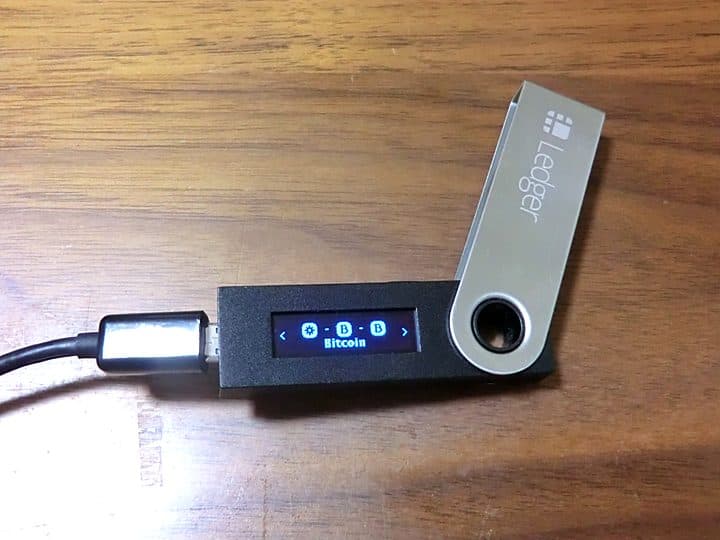
- Device display of destination and amount on many hardware wallets
- Cleaner incident boundaries when a phone is compromised but the seed never left the cold device
Does not buy:
- Immunity from Circle block-list functions
- A different
isBlacklistedresult than the same address would show from a browser wallet - An appeal argument of the form “but it was on a Ledger”
- Cross-chain protection (Ethereum USDC flag ≠ Solana USDC flag; check the deployment you use)
- Protection if you later import the same phrase into a hot app (you still control the same addresses)
If a customer asks “should I buy a hardware wallet so USDC can’t be frozen?”, the honest answer is no. If they ask “should I buy one so an exchange hack or phone malware is less likely to empty me?”, continue that conversation outside the freeze myth.
Solana and other deployments (same myth, extra foot-guns)
USDC is multi-chain. Token-2022 and other program models can add freeze/clawback authorities that are still address- or account-level, not “cold vs hot.” Desk rule: name the mint/contract, name the owner address or token account, then read the freeze/block state for that deployment. Do not inherit an Ethereum USDC conclusion onto Solana without a read. FreezeRadar’s Solana-oriented surfaces and the stablecoin freeze risk guide exist so operators stop copy-pasting EVM intuition blindly—start at stablecoin freeze risk check and academy basics when onboarding a new rail: Academy: basics.
Desk playbook: screen the address before the next receive
- Record chain + exact address (or token account) that will hold USDC. Hardware model is a footnote.
- Read block-list / freeze status on the official USDC for that chain (USDC blacklist check).
- If you also hold USDT, do not copy the USDC result onto USDT or the reverse—run both. USDT custody myth is covered in the hardware vs software USDT post.
- Screen hops before CEX deposit; venue engines often care about graph risk even when Circle has not flagged the address.
- Ticket titles:
ISSUER_USDC_BLOCKLISTvsVENUE_HOLDvsSEED_OR_MALWARE. Mixing them burns the intervention window on the wrong form.
Worked composite: treasury parks 2.4M USDC on a cold multisig. Weeks later a transfer proposal fails. Room temperature takes the blame—“the vault signer glitched.” Contract read: blacklisted. Correct lane: preserve evidence, stop retry storms, open lawful issuer/process paths. Wrong lane: buy three more hardware devices and rotate the same address across them.
If it is already flagged
- Confirm on the official contract/mint for that chain.
- Do not coach “move before clawback” as a clever trick—that is evasion-adjacent and usually impossible once transfer paths revert.
- Separate freeze from burn/reissue endings (Wisconsin path).
- Retail “USDC unfreeze service” DMs are hostile.
- Cold storage photos in the ticket are irrelevant to Circle’s address check.
Honest limits
A contract read is authoritative for issuer block-list state and silent on venue policy, travel-rule holds, and whether a sanctions list named a related identifier. FreezeRadar indexes freeze/block evidence and related screening context; it does not certify that a device is genuine, that a seed was never photographed, or that Circle will unblacklist on any timeline. Circle’s terms, roles (blacklister vs owner), and chain deployments can change—re-read primaries when the case is live. This page does not map Circle’s internal decisioning and does not help anyone hide from a lawful freeze.
Related FreezeRadar surfaces
- Hardware vs software wallet USDT freeze risk
- USDC blacklist check
- Stablecoin freeze risk check
- Circle Wisconsin USDC freeze vs burn-reissue
- Academy: basics
- Scan · Methodology
Key takeaway
Cold wallets protect keys; they do not cancel USDC’s address-level block list. Circle documents allow/block-list behavior as part of the token contract; the enclosure around the seed never appears in that check. Triage with a contract read and a custody-type table, then escalate on the plane that failed. Screen the address on /scan and the USDC blacklist check before the next treasury receive.
References
- Circle — How the USDC Token Contract Works — https://www.circle.com/blog/how-the-usdc-token-contract-works
- Circle — USDC Terms — https://www.circle.com/legal/usdc-terms
- Circle — USDC contract addresses / developer docs hub — https://developers.circle.com/stablecoins/docs/usdc-on-main-networks
- Etherscan — example USDC (FiatToken) verified contract Read Contract — https://etherscan.io/token/0xa0b86991c6218b36c1d19d4a2e9eb0ce3606eb48#readProxyContract
- FreezeRadar — Hardware vs software wallet USDT freeze risk — https://freezeradar.com/blog/hardware-vs-software-wallet-usdt-freeze-risk
- OFAC FAQ 562 — SDN digital currency listings not likely exhaustive (sanctions plane ≠ device plane) — https://ofac.treasury.gov/faqs/562
Cover: Unsplash photo-1639762681485 — Unsplash License — https://unsplash.com/photos/1639762681485-074b7f938ba0. Light resize long edge 720px. Zipic pending. Not a Circle or hardware-wallet endorsement.
Sources (6)
Circle — How the USDC Token Contract Works
Circle
Primary: allow/block list as distinctive USDC contract specification.
Circle — USDC Terms
Circle
Contractual freeze / compliance language.
Circle Developers — USDC on main networks
Circle
Official deployment references by network.
Etherscan — USDC FiatToken Read Proxy
Etherscan
Example verified USDC contract reads.
FreezeRadar — Hardware vs software USDT freeze risk
FreezeRadar
Adjacent USDT custody-type matrix.
OFAC FAQ 562
U.S. Treasury OFAC
Sanctions plane ≠ device plane.
Related reading
Continue exploring FreezeRadar knowledge content.


On this page
Get posts like this by email
A daily or weekly digest of FreezeRadar freeze activity.
By FreezeRadar Team
Wallet risk intelligence and stablecoin compliance analysis from FreezeRadar.