Hardware Wallet vs Software Wallet: Why Neither Stops a USDT Issuer Freeze
USDT issuer freezes key on the address (isBlackListed / addBlackList), not Ledger vs MetaMask. Desk triage: hardware, software, custodial app, and CEX hold.
Check a wallet before you act
Run a FreezeRadar scan for issuer-freeze signals, sanctions exposure, counterparty risk, and freezeable asset sensitivity before moving funds.
The myth: “Ledger / cold storage means Tether can’t touch my USDT”
Support tickets and Telegram threads still collapse three different risks into one sentence:
- Exchange insolvency or account lockout
- Malware / seed phishing / signing compromise
- Issuer blacklist (
isBlackListedtrue on that chain’s USDT)
Hardware wallets are built for (2) and help with parts of (1) when you withdraw to self-custody. They do nothing for (3). The token contract never asks “was this signature produced on a Ledger?” It asks “is this address on the blacklist?” If the answer is yes, transfers involving that address revert, cold storage, hot phone, or browser extension alike.
Marketing pages that say “your keys, your coins” are talking about signing authority. USDT’s freeze path is issuer authority. Confusing the two is how desks waste a wave hour telling a customer to “move to a Trezor” after getBlackListStatus is already true.
What the contract checks
On Ethereum’s verified USDT (0xdAC17F958D2ee523a2206206994597C13D831ec7), the public read path includes isBlackListed(address) / getBlackListStatus(address). The privileged write path includes addBlackList, removeBlackList, and destroyBlackFunds. Those names are the desk vocabulary, see also blacklist vs destroyBlackFunds and read the blacklist yourself.
Tron TRC-20 USDT (TR7NHqjeKQxGTCi8q8ZY4pL8otSzgjLj6t) is a separate contract and a separate blacklist domain. Moving from ERC-20 to TRC-20 is not an unfreeze. Air-gapping a device is not an unfreeze.
Tether’s Token Terms (last updated 26 February 2026) describe blacklisting Digital Tokens Addresses and freezing User Wallet holdings when Tether determines or suspects Prohibited Use, or when required by applicable law / where Tether determines it is prudent. The Law Enforcement Requests policy sits beside those terms. The legal layer talks about addresses and wallets in the issuer sense, not Ledger vs MetaMask SKUs.
Circle’s USDC story is parallel for desks that hold both rails: the USDC token contract exposes allow/block-list controls at the contract level (Circle: how the USDC token contract works), and USDC terms carry freeze / compliance language. Address-level again. Brand of signer again irrelevant. Desk comparison: USDT vs USDC freeze risk.
Custody-type triage table
| Custody type | What it protects | What it fails against | First evidence when “USDT won’t move” |
|---|---|---|---|
| Hardware self-custody (Ledger, Trezor, etc.) | Seed offline from most malware; clearer signing UX; reduces exchange-custody insolvency exposure once funds are withdrawn | Issuer addBlackList on that address; phishing that still extracts a signature; physical seed theft | On-chain transfer revert; isBlackListed / getBlackListStatus true |
| Software self-custody (mobile/extension/desktop) | You hold keys; no CEX account freeze on that balance | Same issuer blacklist; higher malware/seed-exfil surface than HW | Same on-chain blacklist read; plus device compromise patterns |
| Custodial app / hosted wallet | UX and recovery UX for non-technical users | Issuer flag on the app’s deposit/omnibus address or app account hold; you may lack direct key export | App banner and/or blacklist on the address the app uses |
| CEX account hold | N/A (you are not self-custodied) | Venue AML / risk engine; no need for Tether to sign | In-app “under review”; often isBlackListed false on any personal address |
Read the middle two columns aloud to L1: hardware and software self-custody share the issuer-freeze failure mode: They differ on seed-theft and malware. Exchange holds are a different plane entirely, triage that with exchange hold vs issuer blacklist.
Do not brand-bash a specific vendor in the ticket. Device choice is orthogonal to whether address 0x… / T… is flagged.
What a hardware wallet still buys you
HW is not useless. It is just useless for this particular risk.
Still buys:
- Separation from exchange insolvency and many account lockouts (after you withdraw)
- Harder remote seed theft than a seed stored in a notes app
- Clearer “what am I signing?” UX when the device shows destination and amount
- A cleaner incident boundary when the phone is compromised but the seed never left the device
Does not buy:
- Immunity from
addBlackList - A different
isBlackListedresult than the same address would show from MetaMask - Unfreeze leverage (“we used a cold wallet” is not a Tether appeal argument)
- Cross-chain protection (Tron flag ≠ Ethereum flag, and neither cares about the enclosure)
If a customer asks “should I buy a hardware wallet so Tether can’t freeze me?”, the honest answer is no. If they ask “should I buy one so an exchange hack or phone malware is less likely to empty me?”, that conversation can continue, outside this freeze matrix.
Same story on USDC (and why desks still confuse the two)
Circle documents contract-level allow/block-list behavior for USDC. Ops that treat “Circle is more regulated, so cold wallets are safer from freezes” are mixing licensing narratives with token mechanics. Regulation may change how an issuer decides to freeze. It does not move the check from address to device.
Practical rule for dual-rail treasuries:
- Screen the address on each freezeable asset you care about.
- Do not inherit a USDT blacklist conclusion onto USDC or the reverse without a read.
- Keep issuer playbooks separate when the case moves toward burn/reissue (Circle Wisconsin path is not Tether’s destroy path).
Desk playbook: screen the address before the product page
Before receive / before CEX deposit:
- Name the chain and the exact address that will hold or send USDT. Hardware model is a footnote.
- Read blacklist status on that chain’s official USDT (
isBlackListed/getBlackListStatus). Operator landing: Tether blacklist check · USDT wallet freeze check. - Screen hops with a wallet scan, venue holds often fire on multi-hop exposure even when the immediate address is clean (before CEX deposit workflow).
- Log device type only if it matters for the seed-compromise hypothesis. It does not belong in the “is this an issuer freeze?” column.
- Separate planes in the ticket title:
ISSUER_BLACKLISTvsVENUE_HOLDvsSEED_OR_MALWARE. Mixing them produces the wrong escalation path.
Worked composite (not a case file): treasury receives 120k USDT ERC-20 to a Ledger-controlled address. Transfer later reverts. Panic: “cold wallet broken.” Read shows isBlackListed == true. Correct lane: preserve the failing tx and AddedBlackList evidence, stop retrying sends, open issuer/lawful review, not “factory-reset the Nano.” Wrong lane: buy a second hardware wallet and shuffle.
Flip it: same Ledger, isBlackListed == false, but Binance deposit flagged “under review.” Correct lane: venue packet (exchange hold vs issuer). Hardware is irrelevant again.
If transfers revert: confirm, separate, escalate (no bypass)
- Confirm on-chain blacklist on the official contract for that chain.
- If true: treat as issuer freeze. Do not coach “move before they destroy.”
destroyBlackFundsis a separate privileged call on already-blacklisted balances, see freeze vs destroy. - If false and funds sit on an exchange: venue hold until proven otherwise.
- Issuer review / unfreeze is a process lane, not a technical bypass: how USDT unfreeze works. Retail “unfreeze service” Telegram offers are a scam pattern.
- Seed-phishing drains look different from issuer freezes (empty balance + attacker txs vs revert + blacklist flag). Keep that tell-apart for the scheduled deepener; do not collapse it into “buy hardware.”
Honest limits
An on-chain blacklist read is authoritative for issuer flags and silent on venue policy. FreezeRadar indexes executed freeze/blacklist evidence and related graph risk; it does not certify that a hardware device is genuine, that a seed was never photographed, or that an exchange will clear a hold. Device SKUs change; contract owners and thresholds can change (USDT owner multisig key risk). This page does not map signer identities, does not rank wallet brands, and does not help anyone evade a freeze.
Related FreezeRadar surfaces
- Can Tether freeze USDT?
- Exchange hold vs issuer USDT blacklist
- Read USDT blacklist status yourself
- Before CEX deposit wallet screen
- USDT vs USDC freeze risk
- How USDT unfreeze works
- Guides: Tether blacklist check · USDT wallet freeze check
- Scan · Methodology
Key takeaway
Hardware vs software custody changes seed and signing risk. It does not change USDT issuer freeze risk. The contract checks the address (isBlackListed / getBlackListStatus); Tether’s terms and Circle’s USDC contract docs describe the same address-level plane. Triage with a contract read and a custody-type table, then escalate on the plane that failed, issuer, venue, or device compromise. Screen the address on /scan before the next receive or CEX deposit.
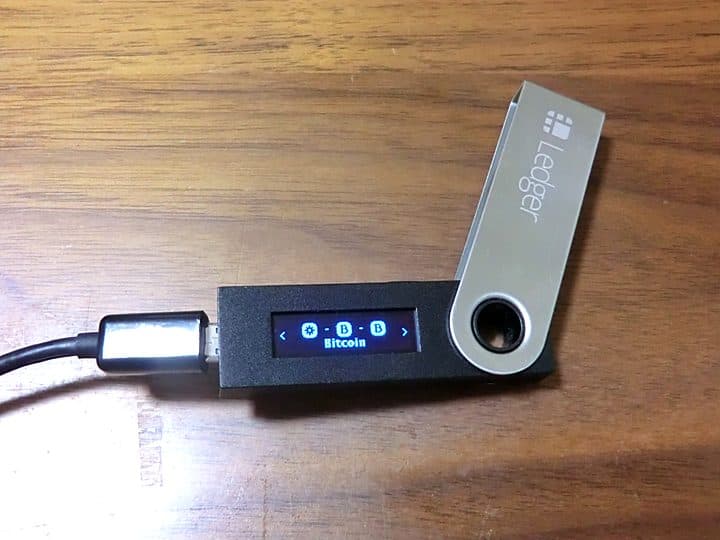
Cover: Motokoka / Wikimedia Commons, Ledger Nano S cold-storage photo, CC BY-SA 4.0,https://commons.wikimedia.org/wiki/File:Ledger_Nano_S_-_Hard_Wallet_-_Cold_Storage_for_Cryptocurrency_04.jpg. Inline: Tima Miroshnichenko / Pexels 5380664, Pexels License, https://www.pexels.com/photo/person-using-laptop-computer-5380664/. Light resize long edge 720px + optimize for FreezeRadar. Not an official Tether, Circle, or wallet-vendor endorsement.
References
Sources (6)
Tether USD (USDT) verified contract — Read Contract
Etherscan
Official Ethereum USDT; isBlackListed / getBlackListStatus / addBlackList / destroyBlackFunds.
Tether Token Terms of Sale and Service
Tether
Last updated 2026-02-26; blacklisting Digital Tokens Addresses / freezing User Wallet holdings.
Tether Law Enforcement Requests
Tether
Incorporated LE request policy alongside Token Terms.
How the USDC Token Contract Works
Circle
Primary: USDC allow/block-list at contract level (address-level, not device).
USDC Terms
Circle
USDC freeze / compliance contractual language.
TRC-20 USDT contract (Tron)
Tronscan
Separate chain blacklist domain; same address-level control pattern.
Related reading
Continue exploring FreezeRadar knowledge content.

On this page
Get posts like this by email
A daily or weekly digest of FreezeRadar freeze activity.
By FreezeRadar Team
Wallet risk intelligence and stablecoin compliance analysis from FreezeRadar.