Iran’s Digital-Asset Sector Is Now Covered by E.O. 13902 — Secondary Sanctions Risk for Wallets, OTC, and Exchanges
OFAC’s Aug. 24, 2026 E.O. 13902 determination adds Iran’s digital-asset sector. FAQ 1257 and Operation Economic Outcast expand secondary sanctions exposure for wallets, OTC desks, and exchanges.
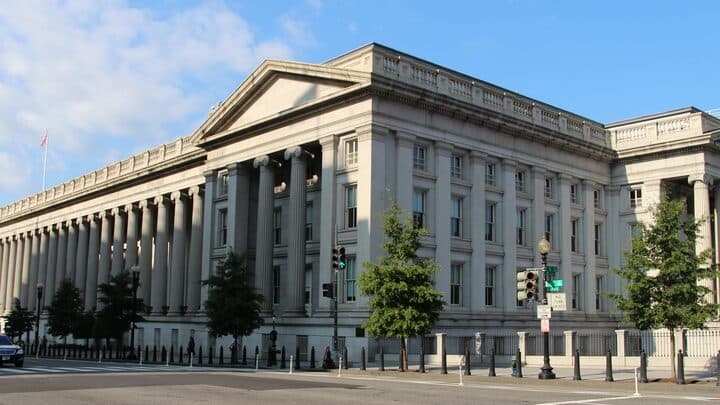
Iran’s digital-asset sector is now an Executive Order 13902 sector. That is the operational change wallet, OTC, and exchange teams should treat as live screening risk—not a press-release headline.
On August 24, 2026, OFAC published a determination under section 1(a)(i) of E.O. 13902 applying that authority to the aviation, digital asset, gold, shipping, and technology sectors of the Iranian economy, effective the same day. Treasury’s Operation Economic Outcast press release (sb0613) describes the determination as expanding the agency’s ability to sanction any person, regardless of location, determined to operate in or provide services in support of those sectors. For crypto desks, the practical reading is narrower and sharper: sectoral digital-asset coverage expands secondary-sanctions exposure for activity tied to Iran’s crypto rails, not only for named SDN wallets.
This article is educational. It is not legal advice, not a sanctions opinion, and not guidance on how to structure around restrictions. Escalate possible matches to qualified counsel and your firm’s escalation path.
Check a wallet before you act
Run a FreezeRadar scan for issuer-freeze signals, sanctions exposure, counterparty risk, and freezeable asset sensitivity before moving funds.
What changed on August 24, 2026
E.O. 13902 already let Treasury designate persons for operating in Iranian economy sectors that Treasury determines. Until August 24, the digital-asset sector was not among those determined sectors in the same way petroleum, petrochemicals, and financial had been. The signed determination (OFAC media 936781) closes that gap: section 1(a)(i) now applies to Iran’s digital asset sector (alongside aviation, gold, shipping, and technology).
Treasury’s sb0613 framing matters for operators: OFAC can now pursue persons globally who operate in or support Iran’s digital-asset sector under that sectoral tool, without needing a separate terrorism or proliferation theory for every case. That is different from—and broader than—waiting for every Iran-linked wallet to appear as a published SDN digital currency address.
It is also distinct from FreezeRadar’s earlier Bessent $1B Iran-linked crypto seizure piece. That post tracked seizure totals and wallet-risk lessons from enforcement outcomes. This post is about the sector determination itself and the screening posture change it creates.
FAQ 1257 already pointed at secondary exposure
OFAC FAQ 1257 (updated August 7, 2026) answers whether non-U.S. persons face sanctions risk for dealing with digital asset exchanges designated under E.O. 13902. The answer is yes. The FAQ names Nobitex, Wallex, Bitpin, Ramzinex, and Aban Tether, and it spells out two familiar secondary-sanctions pathways:
- Designation risk for persons that materially assist, sponsor, or provide financial, material, or technological support for, or goods or services to or in support of, a designated digital asset exchange.
- Correspondent / payable-through account restrictions on foreign financial institutions that knowingly conduct or facilitate significant financial transactions for or on behalf of such an exchange.
FAQ 1257 was already live before the August 24 sector determination. The determination does not replace the FAQ. It widens the sectoral aperture around the same Iran digital-asset problem set. Teams that only updated their exchange-name blocklists after June/August designations, and then stopped, are behind the August 24 control change.
For how published SDN hashes relate to entity designations, see Why SDN address hits are necessary but not sufficient and Shelbit and Aban Tether.
What wallet, OTC, and exchange teams should change now
Treat the sector determination as a screening-program update, not a one-day watchlist import.
1. Expand the Iran digital-asset risk object beyond named exchange tickers.
Exact SDN digital currency addresses remain necessary. They are not the perimeter. Sectoral coverage means risk review should also ask whether a counterparty, venue, OTC desk, bridge, or support vendor is operating in or supporting Iran’s digital-asset sector—including activity that never hits a published hash. That is an entity, geography, and service-pattern problem as much as a hash problem.
2. Re-tier OTC and P2P onboarding for Iran-nexus indicators.
OTC desks that previously treated “no SDN hash hit” as clearance for Iran-adjacent flow need a harder stop: documented source-of-funds, venue history, and refusal rules when the commercial story is Iran digital-asset market access. Do not invent volume metrics. Use primary designations, FAQ 1257, and your existing escalation criteria.
3. Exchange and custody screening should cover support services, not only deposit addresses.
FAQ 1257’s assistance language is about goods and services in support of designated exchanges. Wallet providers, market-makers, liquidity brokers, and API integrators should map which products could be characterized as support and who can approve exceptions. If your only control is inbound address matching, you will miss hash-less entities such as Aban Tether’s day-one SDN presentation.
4. Keep issuer-freeze monitoring separate from sanctions designation risk.
USDT/USDC immobilizations after law-enforcement or issuer action are a different control plane from E.O. 13902 sectoral designation. Do not collapse them into one alert type. FreezeRadar’s informal-request vs GENIUS lawful-order coverage is a separate story; this post does not retread that complaint timeline.
5. Monitor list deltas and counterparties on a schedule.
Sectoral authority increases the chance of future designations against operators and facilitators. Rescreen after OFAC updates. Review two-hop paths to known Iran digital-asset clusters without treating every intermediary as a designation. See two-hop exposure analysis.

A practical pre-trade checklist
Before accepting, sending, or making markets against a wallet with possible Iran digital-asset nexus, record answers to these questions in the case file:
- Is the counterparty, venue, or beneficial operator on OFAC’s SDN List—or named in FAQ 1257—as a digital asset exchange or related facilitator?
- Does the flow involve services that could be characterized as operating in, or supporting, Iran’s digital-asset sector under the August 24 determination?
- Have you refreshed official OFAC files since the last trade, including entity fields that may lack a digital currency address?
- Is any remittance narrative relying on a suspended general license rather than a current specific authorization?
- Who owns the escalate-or-refuse decision, and is counsel already in the thread?
If any answer is unclear, pause. Clarity belongs in the file before the settlement, not after a correspondent bank or issuer raises the same questions.
Remittance General License BB: informational context only
As part of the same August 24 package, OFAC suspended several Iran-related general licenses, including the authorization for certain noncommercial personal remittances under 31 CFR § 560.550, and issued General License BB for a limited wind-down through 12:01 a.m. eastern daylight time, September 8, 2026.
That remittance wind-down is not the digital-asset sector thesis. It is adjacent package context for compliance calendars. As of the publication date of this article (September 8, 2026), the GL BB wind-down clock has reached its stated end. Teams that relied on the suspended remittance authorization should treat GL BB as historical wind-down text and escalate any live remittance question to counsel—not as crypto-trading permission and not as a workaround for sectoral digital-asset risk.
What this does not mean
- It does not mean every Iranian retail user wallet is automatically designated.
- It does not mean a missing SDN hash is a green light.
- It does not authorize evasion, structuring, or “informational” workarounds for restricted activity.
- It does not replace jurisdiction-specific advice for U.S. persons, non-U.S. persons, or foreign financial institutions.
Primary sources for operators remain the determination PDF, Treasury sb0613, FAQ 1257, and GL BB. Related FreezeRadar reading: Hormuz crypto insurance sanctions, the OFAC screening guide, and the public sanctions address database.
Key takeaway
E.O. 13902’s August 24, 2026 digital-asset sector determination expands the sanctions aperture for anyone operating in or supporting Iran’s crypto sector. Wallet, OTC, and exchange teams should update screening for sectoral and secondary exposure—not only for published SDN hashes—and keep remittance GL BB in the informational column. If you need a concrete next step before funds become an operating balance, run a wallet scan. FreezeRadar checks sanctions exposure, freezeable-asset sensitivity, and counterparty history. It does not replace counsel.
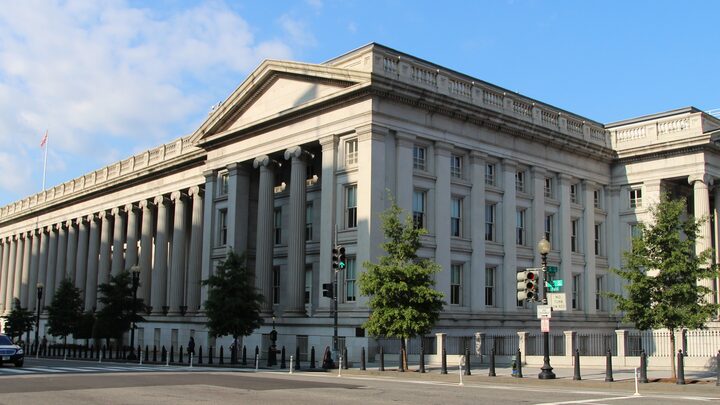
Cover: Rchuon24, United States Treasury Building, Washington, D.C. License: CC BY-SA 3.0. Source: https://commons.wikimedia.org/wiki/File:United_States_Treasury_Building.JPG. Inline: APK, Freedman's Bank Building (Treasury Annex housing OFAC), Washington, D.C. License: CC BY 4.0. Source: https://commons.wikimedia.org/wiki/File:Freedman's_Bank_Building.jpg. Resized to 720px wide, lightly cropped/optimized for FreezeRadar. Not an official Treasury or OFAC seal.
Sources (5)
Determination Pursuant to Section 1(a)(i) of Executive Order 13902 — Aviation, Digital Asset, Gold, Shipping, and Technology Sectors of the Iranian Economy
U.S. Department of the Treasury, OFAC
Primary determination PDF (media 936781). Effective August 24, 2026. Signed by OFAC Director Bradley T. Smith.
Treasury Launches Unprecedented Campaign Against Iranian Regime on Economic D-Day (Operation Economic Outcast)
U.S. Department of the Treasury
August 24, 2026 press release sb0613 announcing five sectoral determinations including digital assets and expanded secondary sanctions exposure.
1257. Are non-U.S. persons exposed to sanctions for dealing with digital asset exchanges designated pursuant to E.O. 13902?
U.S. Department of the Treasury, OFAC
Updated August 7, 2026. Secondary sanctions pathways for dealing with Nobitex, Wallex, Bitpin, Ramzinex, and Aban Tether.
Iran General License BB — Authorizing the Wind Down of Certain Transactions Previously Authorized Under the ITSR
U.S. Department of the Treasury, OFAC
Wind-down through 12:01 a.m. EDT September 8, 2026 for transactions previously authorized under suspended GLs including 31 CFR § 560.550 remittances. Informational context only.
Publication of a Determination Issued Pursuant to Executive Order 13902
Federal Register
Federal Register republication confirming the August 24, 2026 determination text and effective date.
Related reading
Continue exploring FreezeRadar knowledge content.

Blog · 9 min read
Why SDN Address Hits Are Necessary but Not Sufficient for Wallet Freeze Risk

Blog · 9 min read
Shelbit and Aban Tether Show How Sanctions Risk Moves Through Exchange Plumbing

Blog · 9 min read
Bessent Says U.S. Iran-Linked Crypto Seizures Reached $1 Billion. The Wallet-Risk Lesson Is Bigger Than the Number
On this page
Get posts like this by email
A daily or weekly digest of FreezeRadar freeze activity.
By FreezeRadar Team
Wallet risk intelligence and stablecoin compliance analysis from FreezeRadar.